By Truth Media
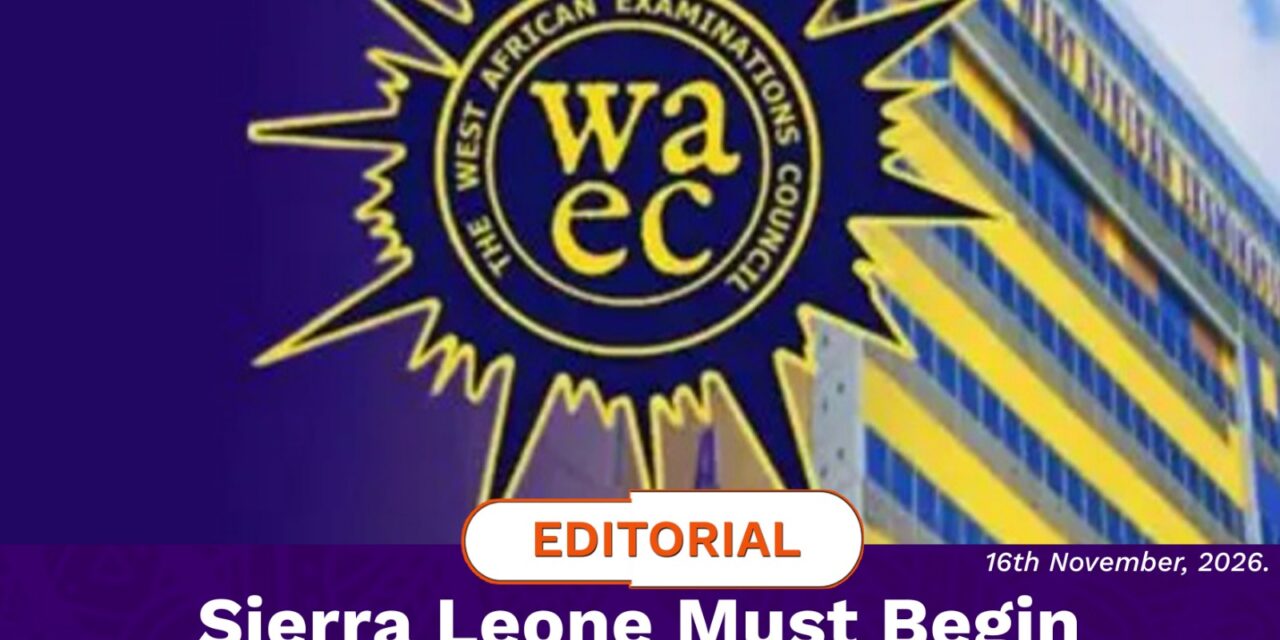
Freetown, 16th November 2026- The controversy surrounding the 2026 West African Senior School Certificate Examination (WASSCE) results has exposed deep concerns about the integrity of Sierra Leone’s examination system. While public attention has largely focused on the more than 47,000 withheld results, the more important conversation should now be about solutions.
Examination malpractice is not a new problem. It has persisted for years despite repeated warnings, investigations and reforms. What makes the current situation particularly alarming is the suggestion that the very institution entrusted with safeguarding the credibility of public examinations may itself be compromised. When allegations of malpractice implicate those responsible for maintaining standards, confidence in the entire system is inevitably shaken.
It is important to acknowledge that the 2026 examination results were not entirely negative. Many students excelled and many schools recorded commendable performances. Yet the withholding of more than 47,000 results has understandably overshadowed every other statistic. Behind that figure are thousands of young people whose futures hang in the balance, parents who have made sacrifices to support their children’s education, and taxpayers whose resources continue to fund the Free Quality School Education programme. Such numbers demand more than concern; they demand action.
Truth Media believes the time has come for Sierra Leone to begin exploring credible alternatives to the West African Examinations Council (WAEC). This is not a call for Sierra Leone to abandon WAEC. Nor is it an argument against regional examinations. Rather, it is a call to diversify the country’s assessment system by introducing alternative examination pathways that can operate alongside WAEC while maintaining equally rigorous standards.
Several countries within the region have multiple recognised examination bodies and certification routes. Sierra Leone should carefully study such models and determine whether alternatives can strengthen competition, improve quality assurance and restore public confidence in external examinations.
Any alternative body must be independent, transparent and subject to strong oversight. The objective should not be to create an easier route to certification but to establish an equally credible system capable of assessing students fairly and effectively. Competition often drives improvement, and the presence of alternatives could encourage higher standards across the entire examination sector.
The debate should also extend beyond external examinations. For far too long, admission into higher education has depended almost entirely on WASSCE results. While public examinations remain important, universities should be encouraged to strengthen their own admissions processes and develop assessment mechanisms that allow them to identify capable students whose academic potential may not be fully reflected in examination outcomes.
Many universities around the world use a combination of school results, entrance examinations, aptitude tests and other assessment criteria to determine admission. Such systems recognise that a single examination should not always be the sole measure of a student’s ability or future potential.
The broader issue, however, remains the integrity of the country’s education system. If allegations that elements within WAEC facilitated malpractice are true, then serious questions arise. How many examination results can the public confidently trust? How many deserving students have been disadvantaged? What are the implications for universities, employers and the quality of the nation’s future workforce?
These questions matter because education remains the foundation of national development. Whether Sierra Leone seeks to achieve food security, drive industrialisation, attract investment or improve public service delivery, success will depend on the quality, competence and integrity of the people leading those efforts. A flawed examination system ultimately becomes a threat to national development itself.
For this reason, external examination reform should become a national priority. Government must take the lead, not only because education falls within its mandate but also because restoring confidence in public examinations requires clear political commitment. Tackling malpractice, strengthening oversight and exploring alternatives should form part of a broader strategy to protect the credibility of the education sector.
Encouragingly, Parliament has already taken an important first step by tasking its Committee on Basic Education to investigate both WAEC and the Ministry of Basic and Senior Secondary Education. That investigation must be thorough, impartial and evidence-based. Its findings should identify weaknesses within the current system, hold those responsible accountable and recommend reforms capable of restoring trust.
The stakes are too high for half measures. Sierra Leone cannot afford a situation in which examination malpractice becomes normalised and public confidence continues to erode.
As we have argued before, the Free Quality School Education programme remains one of President Julius Maada Bio’s most significant policy achievements. It transformed access to education and expanded opportunities for thousands of children.
However, increased access must be matched by credibility and quality. The success of the programme will ultimately be judged not only by the number of children enrolled in school but also by the integrity of the qualifications they obtain.
The current crisis should therefore serve as a turning point. Sierra Leone must strengthen oversight, confront examination malpractice decisively and begin a serious national conversation about alternative pathways for assessing academic achievement. Inaction is no longer an option. The future of the country’s education system depends on the decisions taken now.