By Truth Media
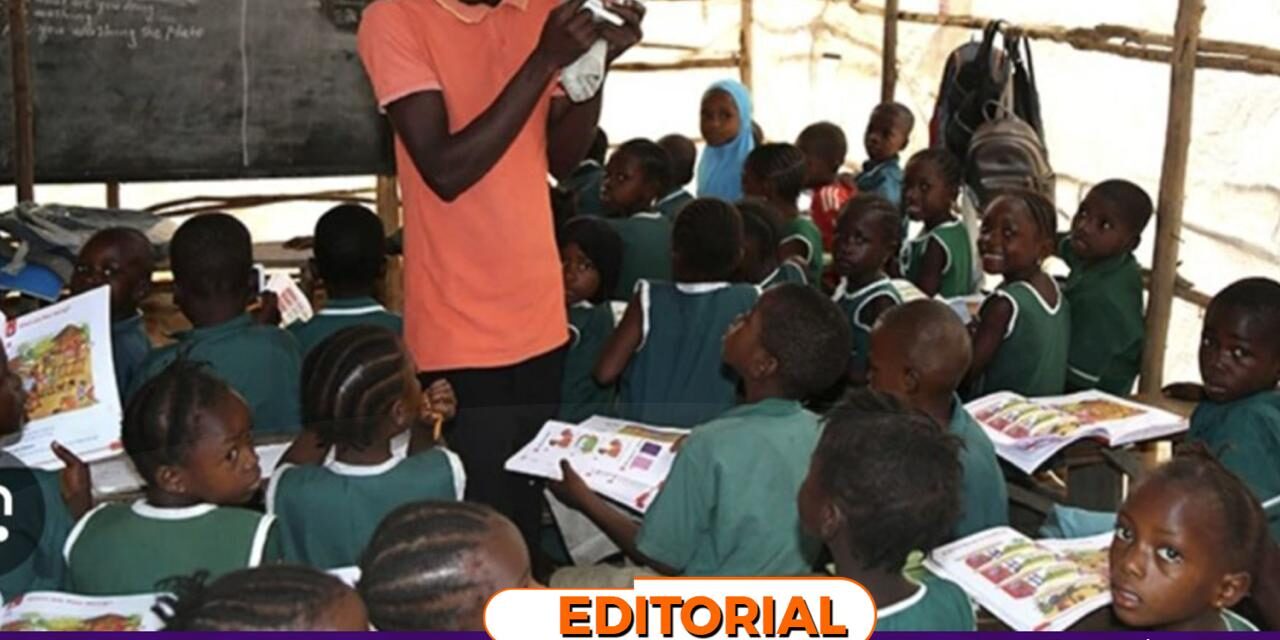
Freetown, 1st September 2026- The free, quality school education initiative launched by President Julius Maada Bio in 2018 has been a life‑changing opportunity for thousands of pupils across Sierra Leone. It spurred unprecedented school enrollment, gave hope to families, and earned the country global recognition for championing human capital development. President Bio has often emphasized that these are only immediate wins, with the true results to be seen in the future.
Eight years on, however, challenges are threatening to derail these gains. Chief among them are examination malpractice, delayed payment of subsidies, and infrastructural gaps in underserved communities.
Examination malpractice, in particular, has become a pressing concern. This week, education stakeholders gathered at the Miatta Civic Centre for a special civic town hall to diagnose the problem. Ibrahim Bankapoma Kargbo, President of the Sierra Leone Teachers Union (SLTU), listed five factors driving malpractice, including a general lack of integrity in society, misuse of technology, and low wages. He lamented that, despite holding a Master’s degree and serving as a school head, his salary is just Le 2,500 — barely over $100.
Of all his points, the issue of poor teacher remuneration drew responses from Minister of Information and Civic Education Chernor Bah and Anti‑Corruption Commissioner Francis Ben Kaifala. Their counterargument was clear: low wages should not be used to justify corruption. We agree.
Yet Kargbo was not arguing that poor conditions of service justify corruption. He was pointing to a deeper problem undermining morale and fueling malpractice. When we hosted Kaifala in July, we asked him what he considered the key drivers of corruption. His first response was low wages — the same point raised by the SLTU leader. We challenged him, noting that even highly paid officials engage in corruption. Still, he maintained that low‑paying jobs leave individuals more vulnerable.
The reality is that a teacher dissatisfied with their conditions of service rarely gives their best. In such cases, children are deprived of quality education, the programme fails to achieve its intended outcomes, and the president’s vision is compromised.
Kargbo’s point reflects the frustrations of thousands of teachers who are the backbone of the free, quality school education initiative. Since its launch, government has increased teachers’ salaries twice — an estimated 70% to 75% cumulative nominal increase. Yet these adjustments have not brought teachers’ pay in line with other civil servants, nor fulfilled the president’s promise to make the classroom attractive. With teachers openly displeased, one cannot deny that the classroom remains unattractive.
Beyond wages, subsidies are often delayed, stalling school projects and disrupting daily operations. As Kargbo noted, if any top government official were in that position, delivering effectively would be difficult.
Schools are scheduled to reopen on September 12, but teachers fear effective teaching hangs in the balance. Subsidies for school fees have not yet been paid, leaving funds for repairing furniture, covering recurrent expenditure, and paying non‑pincoded teachers and auxiliary staff unavailable. Minister of Basic and Senior Secondary Education Conrad Sackey acknowledged the problem on AYV, promising that third‑term subsidies would be paid before reopening.
Kaifala, at his press conference, argued that salaries should not be discussed alongside exam malpractice. He advised teachers to raise salary concerns directly with their employer — the government. This is precisely the point of our editorial. Laws such as the Education Act and the Anti‑Corruption Act clearly outline punishments for examination malpractice. Those found culpable — whether parents, security personnel, or school authorities — must be dealt with accordingly to serve as deterrence.
At the same time, government must play its role. In the final years of his presidency, Bio must engage teachers and address low wages — not as a justification for corruption, but as a critical issue undermining education quality. This directly affects the calibre of leaders Sierra Leone will produce and the future of the nation. Bio often says, “Where there is a will, there is a way.” That same determination should be applied to education, a sector that will define his legacy and serve as a yardstick for his administration’s success.
With growing calls to end the free, quality school education programme, dialogue with teachers and concrete actions are urgently needed to restore trust. Ending the initiative would be complacent and disastrous: children would drop out, and the long‑term effects would be far‑reaching. When a programme faces challenges, you do not abandon it — you reform it. Reform is what this flagship initiative needs now, and teachers must be prioritized.