By Alpha Conteh
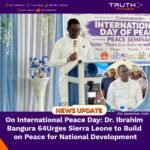
Freetown 21st September 2026- Dr. Ibrahim Bangura, peace scholar and flagbearer aspirant of the All People’s Congress (APC), has called on Sierra Leoneans to transform peace into tangible social and economic progress, stressing that peace must be more than the absence of war.
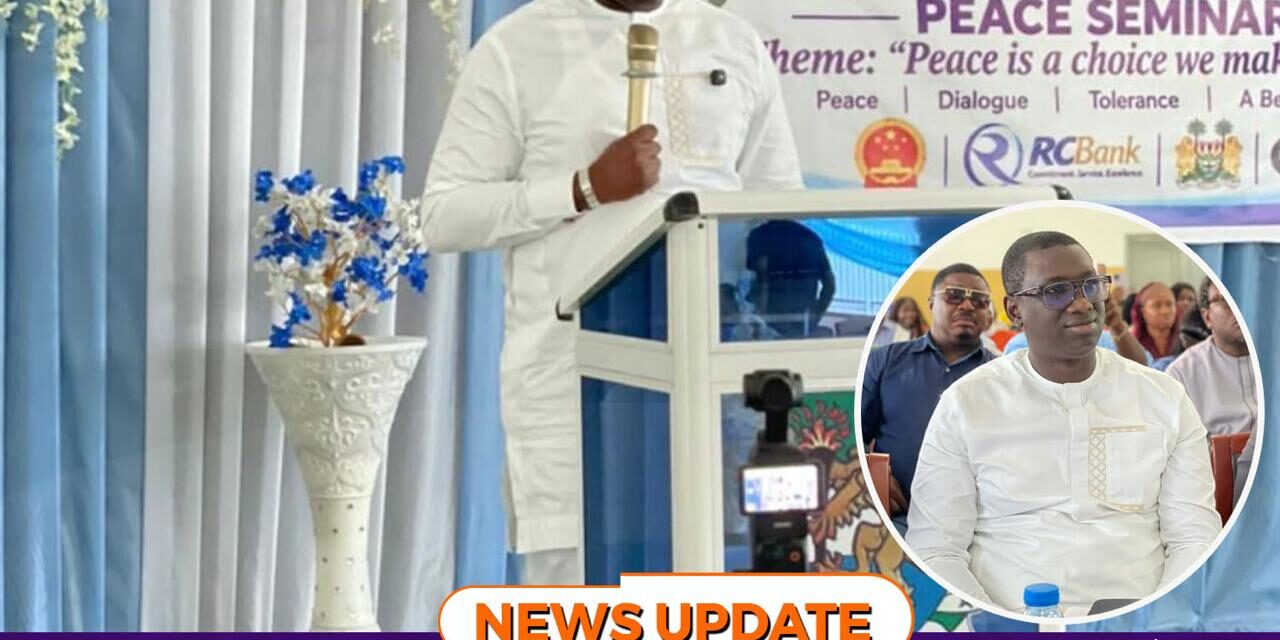
Delivering the keynote address at the International Day of Peace commemoration organized by the Peace Society of Fourah Bay College, University of Sierra Leone, Dr. Bangura challenged citizens and institutions to ensure that peace delivers justice, opportunity, and dignity for all. The event was held under the theme “Peace Is a Choice We Make Every Day.”
“Peace allows children to learn, families to plan, businesses to grow, institutions to strengthen, and communities to rebuild trust,” he said. “But the true measure of peace is not simply that a nation is no longer at war. It is what that nation can build because peace exists.”
Reflecting on Sierra Leone’s history of conflict and recovery, Dr. Bangura emphasized that sustainable peace requires both the absence of violence and the presence of justice, social cohesion, and accountable institutions. He warned that security alone is insufficient if citizens lack education, livelihoods, and opportunities.
Drawing from his experience in South Sudan and other conflict‑affected societies, he noted that rebuilding trust between citizens and institutions takes far longer than reconstructing infrastructure. “Trust grows when people are treated fairly, grievances are heard, institutions work, leaders act responsibly, and citizens believe that the rules apply to everyone,” he observed.
Dr. Bangura outlined five foundations for sustainable peace: justice, opportunity, inclusive development, accountable institutions, and social cohesion. He envisioned a Sierra Leone where education equips young people to solve problems, agriculture creates prosperity, women and persons with disabilities participate fully in national life, and public institutions command confidence through fairness and integrity.
He also urged political leaders and citizens to embrace pluralism and respectful disagreement. “Our citizenship must be bigger than our partisanship,” he said. “No political party, ethnic group, region, or generation can build Sierra Leone alone. We need one another, and we must build peace before a crisis begins.”
Addressing students, Dr. Bangura described universities as laboratories for citizenship, where intellectual freedom and respectful dialogue strengthen peace. He challenged the Peace and Conflict Studies community at Fourah Bay College to focus not only on studying conflict after it happens, but also on identifying pressures that could lead to future crises.
The keynote, titled “Building Sustainable Peace to Enhance Social Development,” underscored the need to connect peacebuilding with nation‑building, ensuring that Sierra Leone’s next phase of development delivers tangible benefits to all citizens.