Freetown, 6th November 2026- The MCC FY2027 scorecard paints a picture of steady but uneven progress. Sierra Leone’s biggest achievements were in inflation control, business reforms, governance, anti-corruption efforts and education outcomes, allowing the country to increase its passing indicators from nine to eleven and maintain eligibility under the MCC’s governance requirements.
However, the scorecard also highlights persistent structural weaknesses in job creation, access to credit, child health, natural resource protection, property rights and international market access.
The sharp decline in Employment Opportunity and International Market Access suggests that while governance reforms are yielding results, the benefits have not yet translated into broad-based private-sector growth and employment gains.
The overall message from the FY2027 MCC Scorecard is that Sierra Leone is making notable progress in governance and economic stability, but significant work remains to strengthen the productive sectors of the economy and improve social and economic outcomes for citizens.
Major Successes
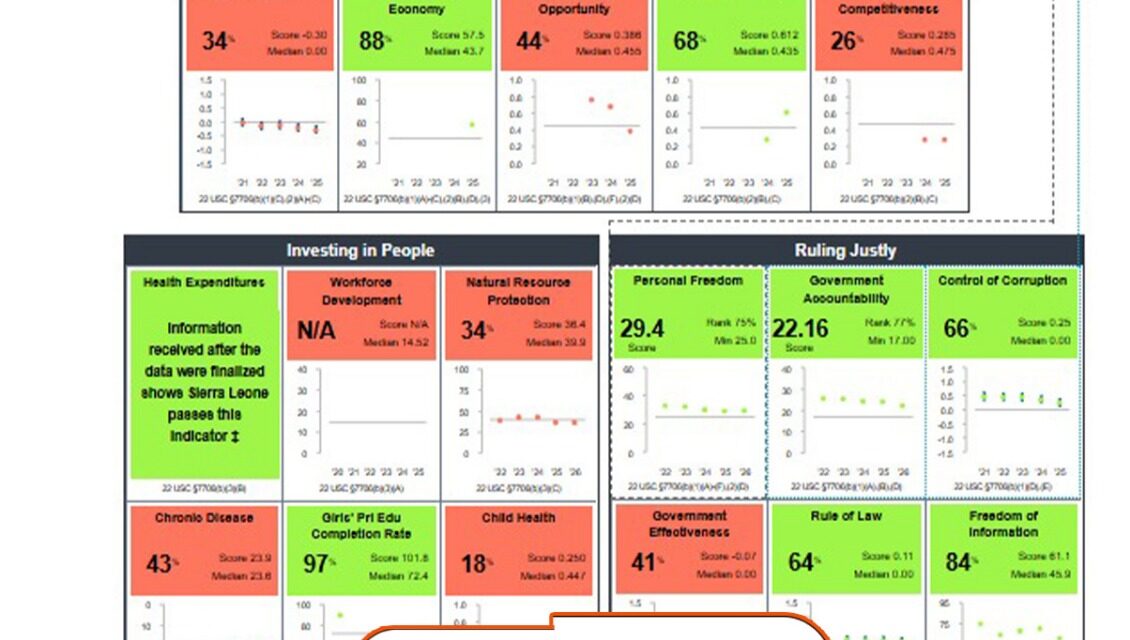
Significant Improvement in Inflation Management: One of the most notable gains was in the Inflation indicator. Sierra Leone moved from a failing score of 28.4 percent in FY2026 to a passing score of 7.6 percent in FY2027.
This shift transformed Inflation from one of the country’s weakest indicators into a passing indicator and reflects improved macroeconomic stability compared to the previous assessment period.
New Pass in Business Start-Up: Sierra Leone recorded another breakthrough by passing the Business Start-Up indicator.
The score improved from 28 percent in FY2026 to 68 percent in FY2027, indicating progress in business registration processes and the broader regulatory environment for entrepreneurs and investors. This was one of the key reasons the country increased its total passes from 9 to 11.
Continued Strength in Governance: Sierra Leone maintained strong performances in several governance indicators:
- Personal Freedom: 32.4 → 29.4 (still passed)
- Government Accountability: 21.8 → 22.16 (passed)
- Control of Corruption: 71 → 66 (passed)
- Rule of Law: 60 → 64 (passed)
- Freedom of Information: 95 → 84 (passed)
Despite some declines in scores, the country continued to pass five of the six indicators under the Ruling Justly category. This suggests that Sierra Leone’s governance reforms remain among its strongest areas of performance.
Outstanding Performance in Girls’ Education- The country maintained an exceptional 97th percentile ranking for Girls’ Primary Education Completion in both FY2026 and FY2027.
This continues to be one of Sierra Leone’s strongest indicators and reflects sustained gains in access to primary education for girls.
Strong Performance for Women in the Economy- Although the score dropped from 95 percent to 88 percent, Sierra Leone remained well above the passing threshold. The indicator shows that women continue to enjoy comparatively strong participation in economic activities relative to peer countries within the same income category.
Improvement in Government Effectiveness: Government Effectiveness improved from 38 percent in FY2026 to 41 percent in FY2027. Although still below the passing threshold, the upward trend suggests gradual improvements in public administration and service delivery.
Improvement in Rule of Law- The Rule of Law score increased from 60 to 64, reinforcing progress in legal and judicial governance.
Health Expenditures Likely Passed- While the FY2027 scorecard notes that the indicator was not initially scored because additional data were received after the assessment, MCC subsequently indicated that Sierra Leone would have passed the Health Expenditures indicator based on the newly available information.
Areas of Continued Concern
Despite the gains, several indicators remain persistent weaknesses.
Access to Credit Remains Weak– Access to Credit improved from 11 percent to 18 percent, but Sierra Leone still failed the indicator. Limited access to finance remains a major obstacle for businesses, especially small and medium enterprises.
International Market Access Declined Sharply: International Market Access dropped dramatically from 43 percent in FY2026 to 7 percent in FY2027. This represents one of the largest deteriorations on the scorecard and points to continuing challenges in trade competitiveness and integration into international markets.
Employment Opportunity Fell Significantly- Employment Opportunity declined from a passing score of 82 percent in FY2026 to a failing score of 44 percent in FY2027. This is one of the most concerning developments because it suggests worsening labour market conditions during the assessment period.
Market Competitiveness Remains Low- Market Competitiveness remained below the passing threshold despite a slight improvement in the score. The indicator continues to signal structural challenges affecting private sector growth and competitiveness.
Property Rights and Land Rights Still Failing- Property Rights and Land Rights improved marginally from 40 percent to 43 percent, but the country still failed the indicator. This suggests that land governance, tenure security and property protections continue to require reform.
Natural Resource Protection Remains Weak- Natural Resource Protection rose slightly from 31 percent to 34 percent, but remained below the median. The result suggests continued environmental governance challenges, particularly around the management and protection of natural resources.
Child Health Remains a Major Challenge- The Child Health indicator remained one of Sierra Leone’s weakest areas. The score was virtually unchanged, moving from 18 percent in FY2026 to 18 percent in FY2027, reflecting persistent challenges in child health outcomes.
Chronic Disease Indicator Still Failing- The Chronic Disease score improved slightly from 42 percent to 43 percent, but remained below the passing threshold.
Workforce Development Still Not Scored- The Workforce Development indicator remained N/A in both years because data were unavailable. This suggests ongoing difficulties in collecting and reporting labour-force and skills-development data required by MCC.