By Samuel Hinga Norman
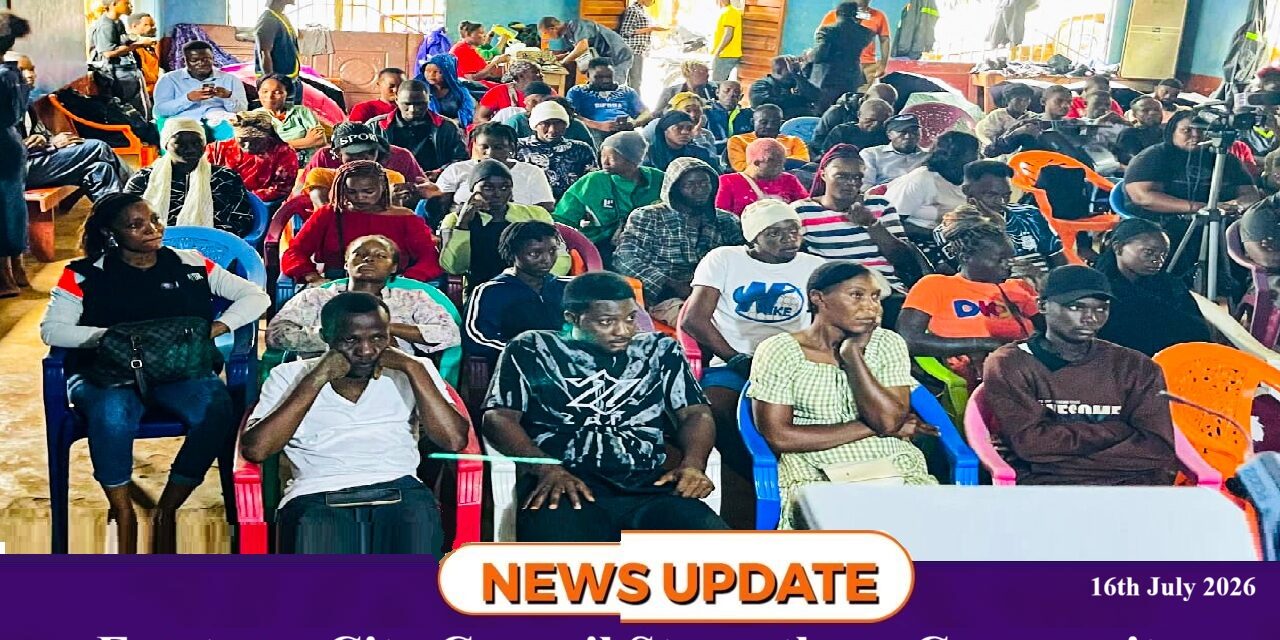
Freetown, 16th July, 2026 – The Freetown City Council (FCC), through its Freetown Tree Town Project, has intensified efforts to build climate resilience by training Community Climate Action Ambassadors from several hillside and coastal communities across the capital. Held at the Dwarzak Community on 15th July 2026, the training brought together participants from Catchments C3, C1, C2A, and C2B, covering major parts of Freetown’s hilltop and coastal communities.
The initiative is designed to equip residents with practical knowledge and skills to promote environmental conservation and climate action within their communities. It forms part of the Council’s broader strategy to tackle indiscriminate tree cutting, deforestation, forest reserve destruction, mangrove degradation, poor waste management, unplanned settlement expansion, and the growing impacts of climate change, all of which contribute to flooding, landslides, soil erosion, biodiversity loss, water pollution, and increased public health risks.
Speaking during the programme, the Green Infrastructure and Field Operations Officer, Lahai Daramy, described the initiative as a community-driven approach to environmental protection. “This is a community-led project that works with communities to identify the best ways of planting trees that will help protect them from natural disasters and other environmental challenges affecting their communities,” he said, adding that the project also trained residents to be tree trackers, daily workers, and volunteers to support implementation. He noted that the Freetown Tree Town Project is the Council’s flagship environmental initiative, targeting the planting of four million trees by 2028 to restore degraded landscapes, expand urban green spaces, reduce climate risks, and build a more sustainable and resilient city.
Dwarzak Community Councillor, named Thaimu on the Road, welcomed the initiative, describing it as timely and beneficial to the community. He said the training would help reduce indiscriminate tree cutting, which has contributed to recurring environmental disasters. “My role is to engage residents to stop activities that expose our community to disasters, especially the cutting down of trees,” he said. He further urged residents to protect the environment by disposing of waste responsibly. “I want all of us to remain vigilant by stopping the dumping of rubbish in gutters and other prohibited places, and by protecting the trees in our community,” he added.
One of the participants, Humama Aisha Kargbo, expressed appreciation for the training, saying it had increased her understanding of water catchment areas and environmental protection. “This training means a lot to us as community members. I have learnt about water catchment areas, and I am ready to serve as a Community Climate Action Ambassador,” she said. She pledged to educate others on environmental laws and raise awareness within her community.
During the training, participants received practical lessons on climate change, environmental stewardship, tree planting and maintenance, community mobilisation, public awareness creation, and effective communication strategies.
The training concluded with the presentation of certificates to participants, officially recognising them as Community Climate Action Ambassadors and empowering them to champion environmental conservation and climate awareness at the grassroots level.
The event attracted community members, local councillors, community representatives, and other stakeholders, highlighting a shared commitment to safeguarding Freetown’s environment through collective action.
By investing in community leadership and environmental education, the Freetown City Council continues to demonstrate that sustainable climate action depends not only on policy interventions but also on informed and empowered citizens working together to protect their communities for future generations.