By Davida Spaine‑Solomon
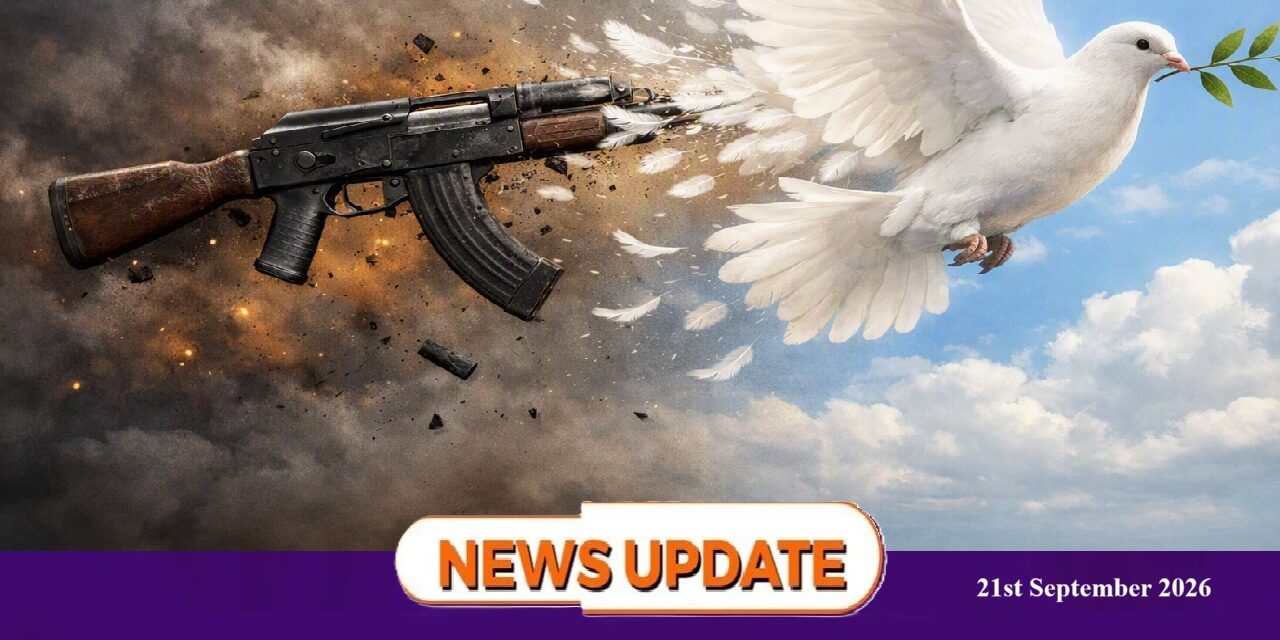
Freetown, 21st September 2026- As Sierra Leone joins the world in commemorating the International Day of Peace, the country’s more than two decades without civil war are being weighed against the political, social, and community tensions that continue to shape the everyday lives of its citizens.
For peacebuilders, the silence of guns is only one measure of peace. True peace, they argue, is about whether citizens can participate in politics without fear, whether women and young people have meaningful opportunities to lead, whether disputes over land and resources are resolved without violence, and whether citizens can question those in power without intimidation.
The question, therefore, is not simply whether Sierra Leone is at war, but whether Sierra Leoneans are truly living in peace.
Badriatu Turay, National Coordinator of the Young Women in Democracy Forum, believes the International Day of Peace is both a celebration and a challenge.
“Peace is not the absence of war,” she said. “It must also mean inclusion, tolerance, and the ability of citizens to participate in political and electoral processes without fear.”
Turay recalled entering political spaces in her mid‑20s, often as the only woman, the youngest person, and the only one wearing a hijab. “I was young, I was a woman, and I wore the hijab,” she said, describing how intimidation can begin with assumptions about who belongs in leadership.
She pointed to cyberbullying, sexualised attacks, and political labelling as further barriers. Women who comment on politics, she noted, are quickly branded as supporters of either the APC or SLPP, discouraging many from speaking out.
“Democracy is stronger when women participate freely in an environment free from fear,” she said, adding that laws alone are insufficient without enforcement and mentorship to prepare young women for leadership.
Adikalie Sheku Kamara, Director of Conflict Resolution at the Independent Commission for Peace and National Cohesion, said Sierra Leone has made progress since the war but faces new challenges.
Emerging conflicts include political tensions, flooding, climate change, boundary disputes, misinformation, and illiteracy. The Commission works with mediators, traditional authorities, and community groups to prevent escalation.
Kamara urged political actors to use their influence to encourage peaceful behaviour, stressing that citizens can belong to different parties without becoming enemies.
Tony McCarthy, Head of Programmes at Talking Drums Studio, warned that land disputes, resource conflicts, and lack of opportunities for young people echo grievances from before the war.
He cited mining communities in Kono, where resentment has grown over perceived unfair treatment, and noted that access to agricultural land often favours larger farmers over smaller ones.
Community radio, he said, remains vital for dialogue, allowing citizens to voice concerns before tensions escalate.
For Mariama Sahid, CEO of Secure Her Empowerment for Peace, peace must also be measured by dignity.
She argued that access to education, menstrual hygiene products, and protection from gender‑based violence are peace issues. “If we want young women to contribute to peace, we have to give them what they need to grow,” she said.
Sahid called for young people to be given space to ask questions, participate in decision‑making, and act as ambassadors for peaceful communities.
McCarthy emphasised the role of the media in preventing conflict, particularly as misinformation and hate speech spread. Journalists, he said, must fact‑check quickly and provide accurate information, while institutions must respond to citizen concerns.
“Peace and democracy go together with truth,” he said, stressing accountability from those in power.
This year’s International Day of Peace is being marked with a National Peace Walk from Upgun to Kallon Car Park, featuring peace talks, bubu music, and performances under the theme “Invest in Peace, for Everyone, for Everywhere, and at Every Day.”
But the voices gathered for this story suggest that investing in peace goes far beyond September 21. It means political spaces free from intimidation, communities where disputes are resolved peacefully, institutions that respond to citizens, and opportunities for young people to shape their future.
More than two decades after the civil war, Sierra Leone may no longer be fighting a war. The continuing challenge is whether peace can be made visible in the everyday lives of its people.