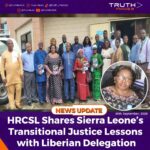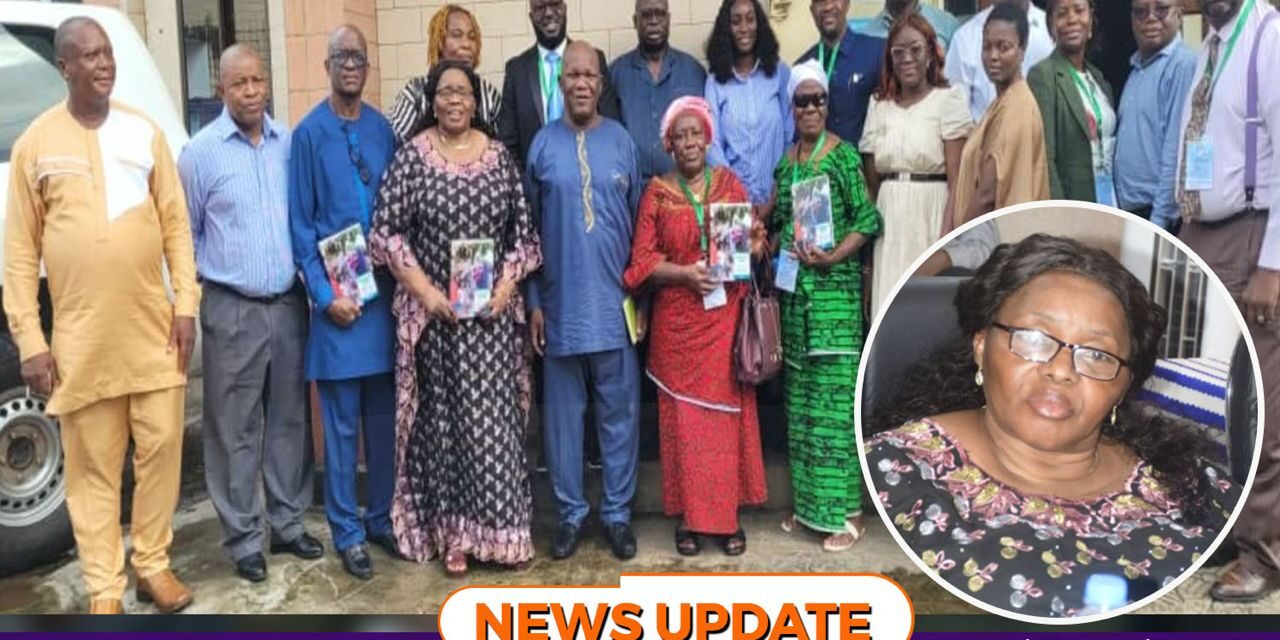
Freetown, 30th September, 2026 – The Human Rights Commission of Sierra Leone (HRCSL) has hosted a delegation from Liberia’s War and Economic Crimes Court, offering insights into Sierra Leone’s post-war justice and reconciliation journey.
The Liberian team visited HRCSL to learn from Sierra Leone’s experience with transitional justice, particularly the Truth and Reconciliation Commission (TRC) and the Special Court for Sierra Leone.
HRCSL Chairperson, Mrs. Patricia Narsu Ndanema, outlined the Commission’s origins in the Lomé Peace Agreement of 1999 and the TRC’s recommendations. Established in 2004, HRCSL was mandated to protect and promote human rights nationwide.
She explained that the Commission played a critical role in monitoring the implementation of TRC recommendations, serving as a liaison between government and citizens. “We actually played that monitoring role, and organized the first and second national conferences on the implementation of the TRC recommendations,” she said, noting strong collaboration with the National Commission for Social Action (NaCSA).
Commissioner Hassan Samba Yarjah highlighted ongoing challenges, including the plight of over 1,000 amputees and the tendency of new organizations to overlook past reparations efforts. He stressed the importance of safeguarding TRC archives and warned Liberia’s delegation to weigh financial and logistical costs before embarking on transitional justice processes.
“As you return to establish this important mechanism, please ensure to take into consideration these two major objectives – to serve justice fairly and to prevent reoccurrence,” he advised.
Philip Nushan, who led the Liberian delegation, emphasized that the team’s mission was to “listen, learn, and understand” Sierra Leone’s successes and challenges. “Our mandate is to come here, listen to you, and understand how you did it, what worked for you, challenges encountered and what advice you have for us as we embark on this process to establish our own codes,” he said.
HRCSL’s Director of Treaty Bodies Reporting and International Mechanism, Brima Kelson Sesay, shared lessons from the hybrid Special Court, which combined Sierra Leonean and international law. He noted that public awareness was limited when the court was introduced, and language barriers required the recruitment and training of interpreters during proceedings.
The Liberian delegation expressed gratitude for the candid insights and pledged to incorporate Sierra Leone’s lessons as they prepare to establish mechanisms to address war and economic crimes.