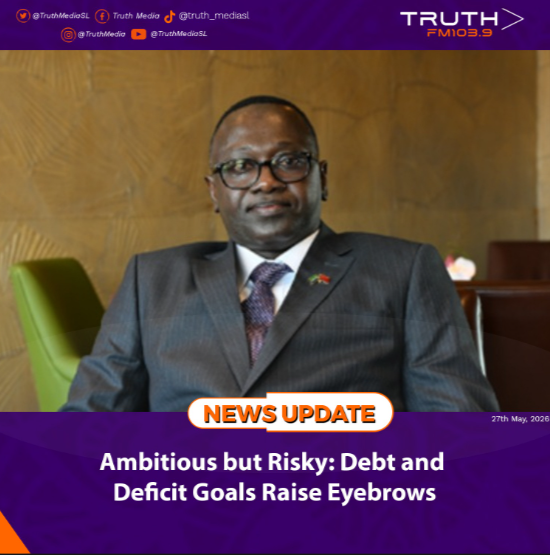
Freetown, 27th May 2026 – The Government’s newly released Fiscal Strategy Statement (FSS) 2026–2028 has laid bare ambitious targets to rein in debt and deficits, but the numbers have raised eyebrows.
The report, submitted to Parliament by Finance Minister Sheku Ahmed Fantamadi Bangura, admits that Sierra Leone’s fiscal deficit stood at 7.2 percent of GDP in 2025. The government now pledges to slash this to 2.3 percent in 2026, and further down to 1 percent in 2027. Such a sharp adjustment in just two years is unprecedented in recent fiscal history.
Equally striking is the debt trajectory. The FSS projects total public debt will fall from 49.1 percent of GDP in 2025 to 42.5 percent by 2028. External debt is expected to decline to 25.4 percent of GDP in 2027, while domestic debt should shrink to 17 percent by 2028.
“Reduce the overall budget deficit, including grants, to 2.3 percent, 1 percent, and 1.3 percent of GDP in 2026, 2027, and 2028 respectively from an estimated 7.2 percent of GDP in 2025,” the statement declares.
Why This Raises Eyebrows
Debt service burden: The government admits debt service currently consumes 140 percent of domestic revenue. The plan is to cut this to 70–80 percent, but achieving such relief will require either radical revenue expansion or debt restructuring.
Revenue targets: Domestic revenue is projected to rise from 10.9 percent of GDP in 2025 to 12.2 percent by 2028. Critics argue this is optimistic given past collection challenges.
Expenditure cuts: Total government spending is expected to shrink from 18.1 percent of GDP in 2025 to 15.5 percent by 2028. With rising social demands, this could mean painful trade‑offs in health, education, and infrastructure.
Wage bill control: The wage bill is capped at 4.2 percent of GDP, a politically sensitive move that may spark resistance from public sector unions.
Looking forward the FSS insists these measures are necessary to meet ECOWAS convergence criteria for the planned single currency, which requires deficits below 3 percent of GDP and debt under 70 percent.
But the pace of adjustment, cutting the deficit by more than five percentage points in one year is what brings in questioning of feasibility. Aggressive fiscal tightening could slow growth, but may be the only way to restore credibility with international lenders.