By Davida Spaine-Solomon
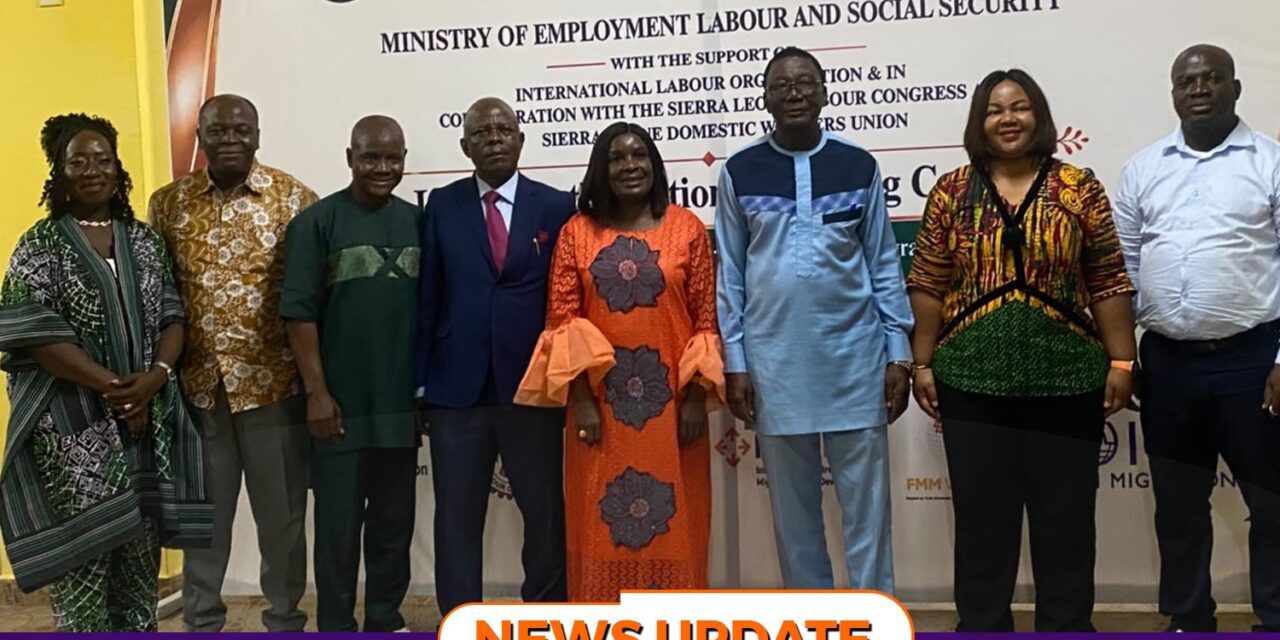
Freetown, 15th July, 2026 – The Ministry of Employment, Labour and Social Security (MELLS) has launched a National Steering Committee (NSC) to strengthen protection, rights and welfare of domestic workers across the country, in line with the implementation of the International Labour Organization (ILO) Convention No. 189.
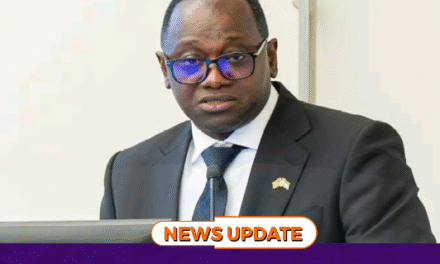
Speaking at the launch, which occurred at the Sierra Leone Labour Congress Hall, on Wallace Johnson Street, Freetown, 14th July 2026, Deputy Minister of Employment, Labour and Social Security, Mohamed Lansana Dumbuya, described domestic workers as among the country’s most vital, yet least protected workers. He noted an estimated 76 million people worldwide are employed in domestic work, accounting for 4.5 percent of the global workforce. Of that figure, he said 76 percent are women, while 81 percent are employed in the informal economy.
Dumbuya highlighted Sierra Leone’s efforts to strengthen labour protections under the administration of President Julius Maada Bio, citing the country’s ratification of ILO Convention No. 189 in August 2021, stating that the commitment has since been reinforced through the Employment Act 2023, the Overseas Employment and Migrant Workers Act 2023, and the development of a Tripartite Action Plan to guide implementation of the Convention.
According to the Deputy Minister, the National Steering Committee was established following recommendations made during a stakeholders’ workshop, which called for a dedicated body to oversee the implementation of the Convention.
He said the committee would supervise the 2026–2028 Tripartite Action Plan, strengthen coordination among stakeholders, promote social dialogue, monitor implementation, improve data collection, raise public awareness and mobilise resources to advance the rights of domestic workers. He also stated that the committee would enhance regional collaboration through ECOWAS and the Mano River Union while ensuring Sierra Leone’s implementation of the Convention remains aligned with national legislation and international labour standards.
Representing ILO’s Country Director, Senior Specialist Inviolata Chinyangarara, said the establishment of the committee demonstrated Sierra Leone’s commitment to advancing decent work through a coordinated, multi-sectoral approach. She commended the inclusion of representatives from the Ministries of Employment, Justice, Foreign Affairs and International Cooperation, and Internal Affairs, describing the committee as an inclusive platform for protecting the rights and welfare of domestic workers.
Chinyangarara stressed that the Domestic Workers Convention, 2011 (No. 189) recognises domestic work as legitimate employment, deserving of fair wages, safe working conditions, protection from violence and harassment, and effective labour inspection mechanisms.
She also acknowledged the financial support of the European Union, which is funding the second phase of the ILO project supporting the implementation of Convention No. 189 in selected countries, including Sierra Leone. She said the project has been instrumental in facilitating the establishment of the National Steering Committee.
The Executive Director of the Sierra Leone Domestic Workers Union, Chelcy Alma Heroe, said the committee would strengthen national coordination for the implementation of Convention No. 189 while ensuring compliance with national laws, policies and international labour standards. She added that the committee would support the implementation of the Tripartite Action Plan, promote effective social dialogue among government, employers and workers, strengthen monitoring and accountability mechanisms, improve inter-agency collaboration and data sharing, and reduce duplication of efforts among implementing institutions.
The event brought together representatives of the ILO, government ministries, the Sierra Leone Labour Congress, the Sierra Leone Employers’ Federation, development partners and other key stakeholders.