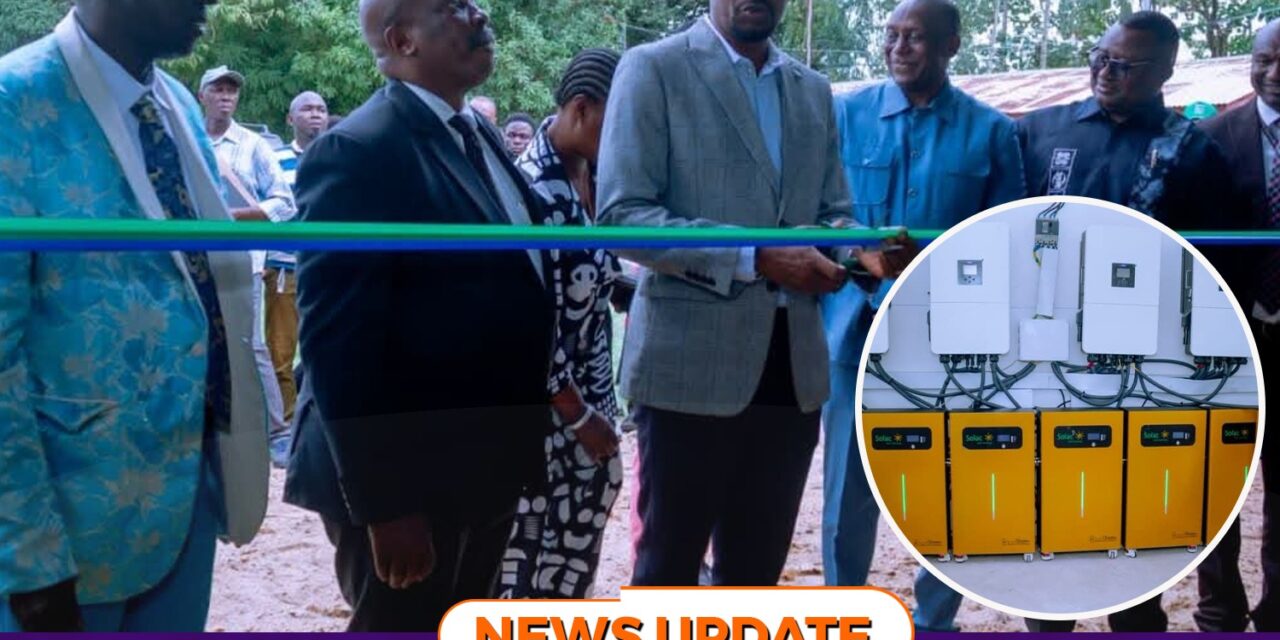
Freetown, 30th June 2026- The Deputy Minister of Technical and Higher Education, Sarjoh Aziz-Kamara, has commissioned the University-wide Solar Electrification Project at the Ernest Bai Koroma University of Science and Technology (EBKUST), describing it as a major milestone in strengthening higher education through sustainable energy solutions.
Representing the Minister of Technical and Higher Education, Dr. Haja Ramatulai Wurie, at the commissioning ceremony, the Deputy Minister congratulated the University’s leadership for what he described as a remarkable achievement that reflects visionary leadership, strategic planning, and a strong commitment to creating an enabling environment for teaching, learning, research, and administration.
He noted that the project represents a practical investment that will deliver long-term benefits to the University community while improving the institution’s overall capacity to provide quality higher education.
The Deputy Minister emphasised that reliable and sustainable electricity is essential for the effective operation of any modern university, as it powers classrooms, laboratories, libraries, information technology infrastructure, and administrative services.
He said the University’s investment in renewable energy would ensure uninterrupted academic and administrative services while promoting environmentally sustainable, cost-effective, and resilient energy solutions.
According to him, students, lecturers, researchers, and administrative staff stand to benefit significantly from the project. He explained that students will have improved access to learning facilities and digital resources, while academic and administrative staff will be better equipped to carry out their responsibilities efficiently, thereby enhancing the quality of higher education delivery.
The Deputy Minister further commended EBKUST for the progress it continues to make in supporting the Human Capital Development Agenda of His Excellency President Dr. Julius Maada Bio. He said the University has continued to contribute meaningfully to national development by expanding access to quality science and technology education, promoting innovation, and strengthening institutional capacity.
Describing the solar electrification project as a testament to the University’s forward-looking leadership, he encouraged other higher education institutions across the country to emulate the initiative by pursuing innovative and sustainable solutions that improve institutional performance and service delivery.
He reaffirmed the Ministry of Technical and Higher Education’s commitment to supporting Ernest Bai Koroma University of Science and Technology in fulfilling its mandate and pledged continued collaboration with the University’s leadership and development partners to advance initiatives that strengthen higher education and contribute to national development.