Freetown, 30th June, 2026 — Sierra Leone has been ranked among the fastest-growing tourism destinations in West Africa, recording a 23 percent increase in aviation passenger arrivals during the first quarter of 2026, according to the latest global Tourism Watch: June 2026 report.
The report highlights Sierra Leone as one of the region’s top-performing tourism markets alongside Chad and Cabo Verde, underscoring the country’s growing appeal to international travelers despite global economic and geopolitical challenges.
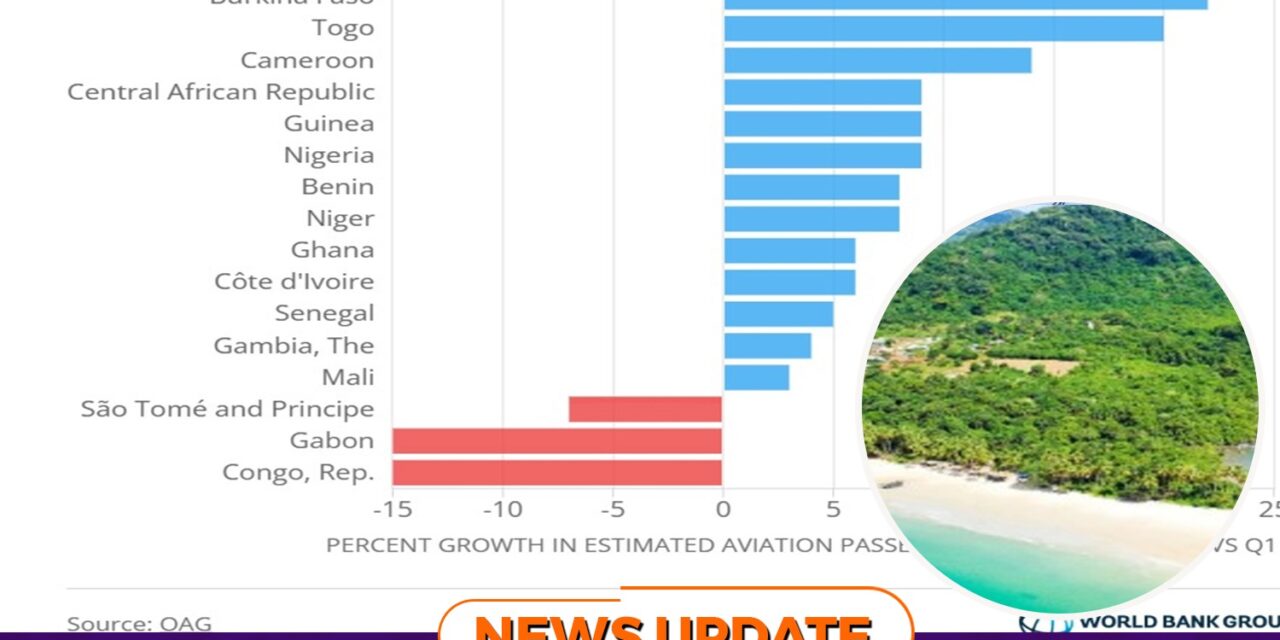
Across Western and Central Africa, Chad led the region with a 25 percent increase in aviation passenger arrivals, followed closely by Cabo Verde with 24 percent and Sierra Leone with 23 percent during the January-March period.
The report attributes the figures to growing travel demand across several African destinations, even as the global tourism industry faces mounting pressures from rising travel costs, geopolitical tensions and disruptions to international air connectivity.
Globally, international tourism remained resilient in the first quarter of 2026, with approximately 307 million international tourists travelling worldwide, representing a two percent increase compared to the same period last year. However, growth slowed towards the end of the quarter following escalating conflict in the Middle East, higher oil prices and increased transport costs.
Despite these challenges, Africa recorded a four percent increase in international tourist arrivals, making it one of the strongest-performing regions globally. While North Africa posted particularly robust growth, Sub-Saharan Africa also maintained steady gains, reinforcing the continent’s growing role in the international tourism market.
The report, which also draws on aviation passenger data from global travel intelligence firm OAG, notes that passenger traffic worldwide rose by about five percent in the first quarter of 2026. Within Africa, West Africa emerged as one of the strongest-performing sub-regions, with several countries posting significant increases in international passenger arrivals.
For Sierra Leone, the 23 percent growth places the country ahead of many of its regional peers. In contrast, São Tomé and Príncipe recorded a seven percent decline in passenger arrivals, while Gabon and the Republic of Congo each experienced declines of 15 percent.
Beyond West Africa, Burundi topped tourism growth in Eastern and Southern Africa with a 35 percent increase in passenger arrivals, followed by Namibia and Rwanda. In Europe, North Macedonia led regional growth with a 40 percent increase, while Paraguay and Haiti were among the strongest performers in Latin America and the Caribbean.
The report cautions, however, that global tourism growth is becoming increasingly uneven. While established destinations continue to benefit from strong tourism revenues, many countries remain vulnerable to geopolitical instability, rising travel costs and disruptions to air transport.
It concludes that international travellers are increasingly opting for shorter-haul and regional destinations as uncertainty and higher travel expenses reshape global tourism patterns.
For Sierra Leone, the latest figures signal continued momentum in the country’s tourism recovery and strengthen its position as one of West Africa’s emerging tourism destinations, offering renewed optimism for the sector’s contribution to economic growth and job creation.