By Andrew Chokpeleh
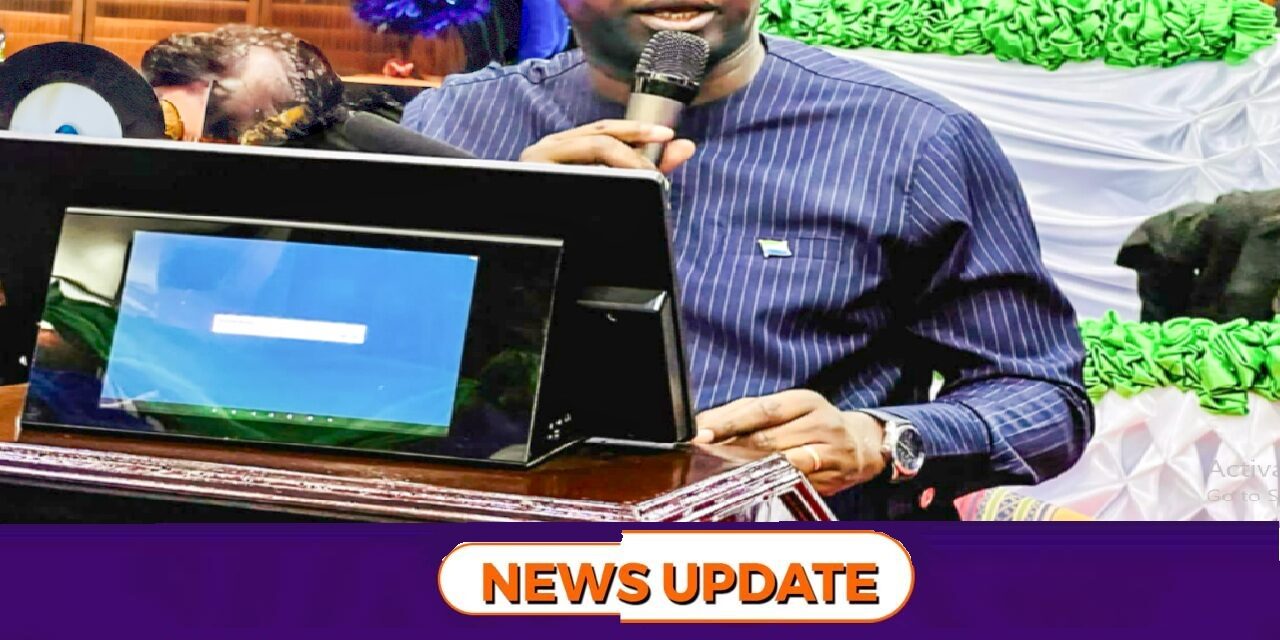
Freetown, 25th February 2026 – A proposed $124 million Congress Centre in Lungi has ignited heated debate in Sierra Leone’s Parliament, with government officials touting its potential to attract international conferences while opposition MPs warn of misplaced priorities and rising debt risks.
Presenting the agreement for ratification, Finance Minister Sheku Ahmed Fantamadi Bangura explained that the project will deliver a state‑of‑the‑art facility comprising a modern conference centre, a presidential villa, and a hotel.
He stressed that the government will not directly finance the project but will act as a guarantor for a private partner responsible for securing the loan. Bangura said the centre is intended to host high‑level international events, including an upcoming ECOWAS conference, and noted that efforts are underway to complete construction within six to nine months.
Supporters of the project, including Hon. Alhaji K. Vandi, Chairman of the Parliamentary Oversight Committee on Finance, described the investment as timely. He argued that Sierra Leone currently lacks a venue capable of accommodating more than 1,000 participants, and the new centre would meet international standards while opening up Lungi to greater economic activity. Vandi urged the establishment of a dedicated committee to oversee loan negotiations, warning that poor terms could saddle the country with high interest rates.
But opposition voices were equally strong. Chief Whip Hon. Abdul Karim Kamara criticized the project as failing to address the everyday challenges of Sierra Leoneans. He pointed to persistent transport difficulties between Lungi and Freetown, where travellers often face long delays for boat crossings, and questioned why such funds could not be directed toward subsidizing university fees or investing in road infrastructure to boost agriculture.
Kamara also raised alarm over Sierra Leone’s growing debt burden, noting that much of the nation’s revenue is already consumed by debt servicing. While the Finance Minister insisted that acting as guarantor would not add to the national debt, Kamara countered that the absence of direct borrowing “in writing” does not guarantee the country will escape financial responsibility if the private partner defaults.