Freetown, 1st June 2026- Sierra Leone’s fiscal operations for April 2026 reveal mounting expenditure pressures and widening deficits, with government spending outpacing revenue collections by a significant margin.
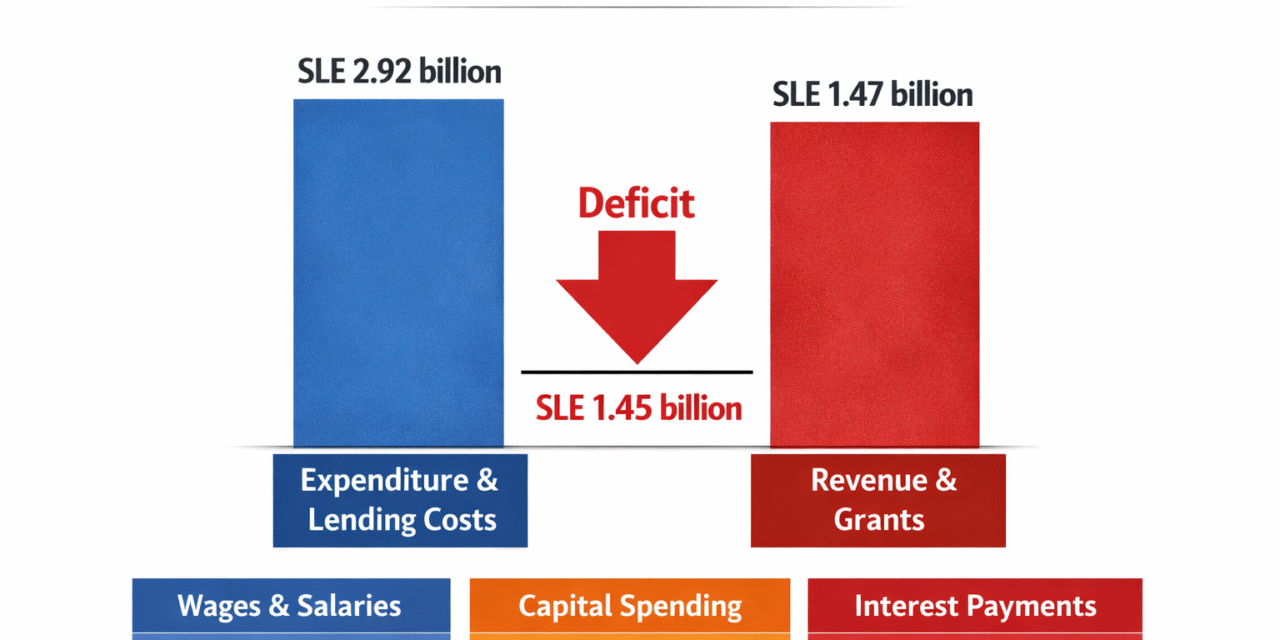
The Statement of Fiscal Operations for April 2026 shows total expenditure and lending costs at SLE 2.92 billion, compared to revenue and grants of SLE 1.47 billion for the same month. This left the government with a cash deficit of SLE 1.45 billion in April alone.
Cumulatively, the deficit for January–April reached SLE 4.26 billion, already exceeding the full‑year budgeted deficit of SLE 4.40 billion.
Wages and salaries: Payroll costs rose to SLE 677.99 million in April, up from SLE 621.40 million in March. Year‑to‑date spending on wages and employee benefits totaled SLE 2.75 billion, against a budget of SLE 7.87 billion.
Non‑salary recurrent expenditure: Registered SLE 872.82 million in April, bringing cumulative spending to SLE 2.91 billion, nearly 41% of the SLE 7.07 billion annual allocation.
Transfers and grants: Fell to SLE 289.77 million in April from SLE 495.64 million in March. Year‑to‑date transfers stood at SLE 1.14 billion, well below the SLE 3.29 billion budget.
Capital expenditure: Dropped to SLE 325.42 million in April, with cumulative spending of SLE 878.64 million, against a budget of SLE 8.39 billion.
Domestic interest payments: Rose to SLE 1.01 billion in April, up from SLE 897.66 million in March. Year‑to‑date interest costs reached SLE 3.43 billion, already more than half of the SLE 6.43 billion annual provision.
External interest payments: Increased to SLE 32.68 million in April, bringing cumulative external debt service to SLE 126.83 million.
Total expenditure and lending costs for January–April amounted to SLE 10.09 billion, against cumulative revenue and grants of SLE 5.84 billion. This imbalance underscores the government’s reliance on borrowing and arrears clearance to sustain operations.
The April figures highlight a tightening fiscal framework: Rising interest payments are consuming a growing share of resources. Capital spending remains far below target, raising concerns about infrastructure investment. The deficit trajectory suggests the government could overshoot its annual financing gap well before year‑end.
With nearly two‑thirds of the year remaining, fiscal authorities face urgent pressure to strengthen revenue mobilization, rein in recurrent costs, and manage debt servicing to prevent further deterioration of the fiscal balance.