By Ishmael Zay-Bangura
Freetown, 5th June 2026- The vibrant flutter of wings that once painted the skies of Sierra Leone is fading into a scarce, desperate flicker. Across the country, from the once pristine wetlands to the deep shade of primary forests, the nation’s butterflies are facing a silent, devastating erosion.
Their decline is not a single catastrophe but a slow, creeping death driven by many human hands. The very landscapes that nurtured them are being torn apart, burnt, and drained away, threatening an irreplaceable piece of Sierra Leone’s natural heritage. This is the story of that loss and the scientific warnings we can no longer afford to ignore.
Sierra Leone lies within the Upper Guinean forest, a global biodiversity hotspot. This small nation supports at least seventeen endemic butterfly species found nowhere else on Earth, alongside a vast total of over 750 species across the African continent. Rare forest specialists such as Osmodes adon and Andronymus hero, both first described from Sierra Leone, face acute risk as the dense forest canopies they depend on are destroyed.
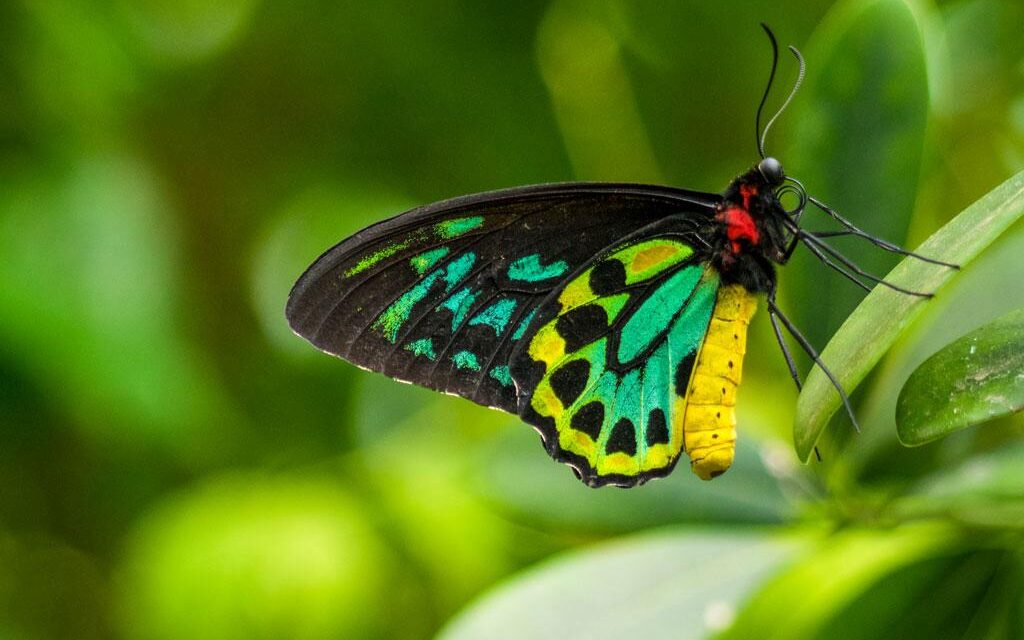
The spectacular African Giant Swallowtail, which inhabits the canopy of primary rainforests, now finds its refuge shrinking from Sierra Leone eastward. Even the subtle blues of Lipaphnaeus aderna and the magnificent blue diadem Hypolimnas salmacis are becoming rarer sights. Yet as butterfly expert Hassanatu Patrick warns, despite their ecological importance, “butterfly diversity in Sierra Leone is poorly studied outside a few areas,” meaning the true scale of the catastrophe is likely far worse than we know.
Mayor of Freetown Yvonne Aki-Sawyerr, in an exclusive interview with Truth Media, said “the destruction of mangroves is even causing butterflies to disappear.” And when the butterflies go, something beautiful and essential leaves with them a silence where there used to be flutter.
Perhaps the most direct and overlooked killer is burnt wood production, locally known as “charcoal .” For countless Sierra Leoneans, it is a lifeline for cooking, but the cost is staggering. Deforestation drivers include “agricultural expansion, illegal logging, mining, urbanization, and charcoal production,” according to multiple field assessments.
Research in Uganda, whose findings apply widely across West Africa, scientifically confirms that “charcoal burning and grazing had significant negative correlations with diversity within forest sites.” When a tree is turned into charcoal, it is not just timber that disappears it is the entire microhabitat of leaf litter, shade, and host plants where butterflies lay their eggs and their caterpillars feed.
Wetlands are another vital lifeline for butterfly communities, a fact underscored by the research of Rosina Kyerematen and Fatmata Kaiwa. Their study in Sierra Leone directly tested a stark hypothesis: “different environmental stressors affect butterfly communities in wetlands in Sierra Leone and the higher the stress the lower the butterfly diversity in an area.”
In the degraded Sierra Leone River Estuary, they found this to be tragically true, with high levels of “mining, agriculture and pollution from factories” causing a notable decline in butterfly abundance and richness compared to a healthier sanctuary. Without clean water, intact shorelines, and the specific plants that thrive in wet soils, wetland butterfly species simply vanish.
Meanwhile, the relentless demand for timber and fuelwood fuels the chainsaw’s song of deforestation. A 2024 study by James Feika and Aiah Lebbie provides stark, quantitative evidence of this destruction. While counting over 2,500 butterflies across different habitats, they concluded that forest conversion has “a significant and detrimental effect on butterfly species composition and diversity.” The richest, most diverse communities of butterflies were found only within the forests themselves, forests that are being felled at an alarming rate.
Industrial agriculture, especially oil palm plantations, delivers another blow. Feika and Lebbie’s research found that such plantations “recorded the lowest number of individuals and species, with only four species restricted to this habitat.” Each new acre of plantation replaces a rich, layered forest with a green, empty wasteland.
The loss of butterflies is more than an aesthetic tragedy; it is a biological alarm, signalling the unraveling of entire ecosystems. Their fate is intertwined with our own. The fight to save them is, in essence, a fight to save the natural wealth of Sierra Leone itself. Community-managed reserves, wetland restoration, butterfly-friendly farming, and alternative livelihoods for charcoal producers, such as butterfly farming, which has succeeded elsewhere in Africa, can all turn the tide. Raising awareness from a young age, as projects in Outamba‑Kilimi National Park aim to do, can foster a new generation of environmental stewards. The choice is clear: we can continue to watch the colours of our skies fade, or we can act now to ensure that the butterflies of Sierra Leone continue to fly for generations to come.