Freetown, 3rd July 2026 — The World Bank Group has released its July 2026 Country Income Classifications, confirming that Sierra Leone remains in the Low-Income category.
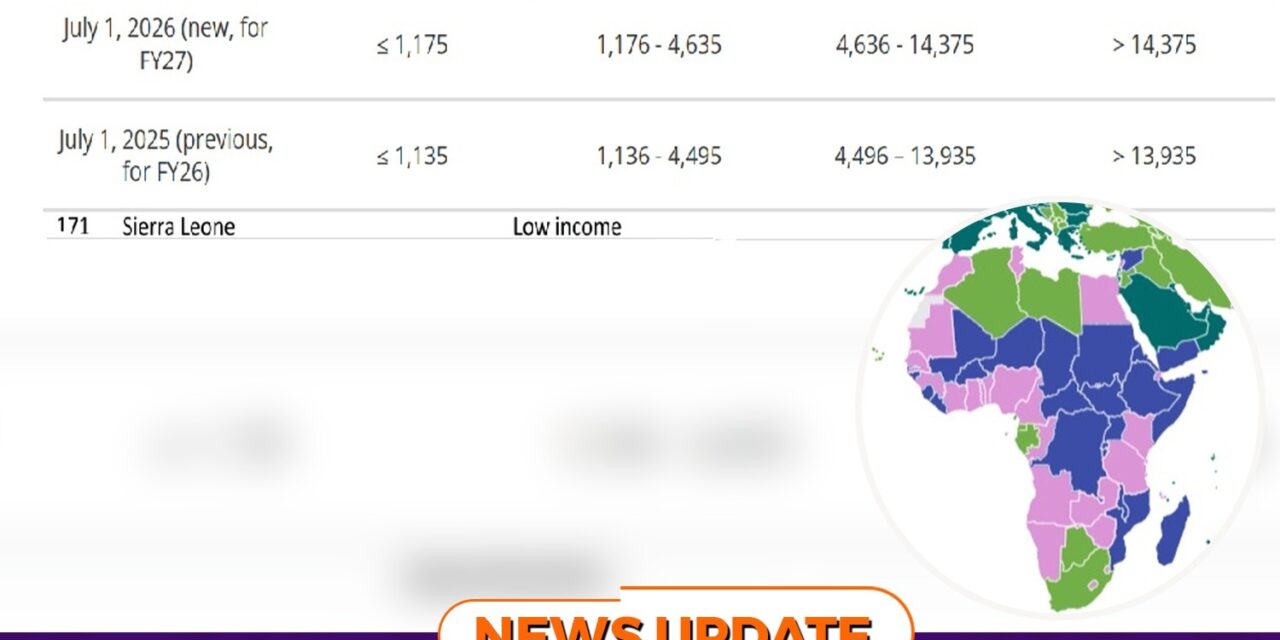
According to the FY26 update, countries are classified based on their Gross National Income (GNI) per capita using the Atlas method. For FY26, the thresholds are:
Low-Income: ≤ US$1,135, Lower-Middle Income: US$1,136 – 4,495, Upper-Middle Income: US$4,496 – 13,935, High-Income: ≥ US$13,935
Sierra Leone’s GNI per capita falls below the US$1,135 threshold, keeping the country in the low-income bracket.
Remaining in this category means Sierra Leone continues to qualify for concessional financing from the International Development Association (IDA), which provides grants and low-interest loans to support development projects. However, it also underscores the economic challenges the nation faces in raising per capita income, improving productivity, and expanding opportunities for its citizens.
Togo, Sierra Leone’s West African counterpart, has moved from low-income to lower-middle-income status.
While Sierra Leone has made progress in infrastructure, governance, and social programs, sustained growth in income levels is needed to move into the lower-middle income bracket. This would require stronger investment flows, diversification of the economy, and improvements in human capital development.
The World Bank’s classification serves as both a benchmark for international partners and a reminder of the structural reforms needed to accelerate Sierra Leone’s economic transformation.