By Andrew Chokpeleh
Freetown, 4th August, 2026 — Sierra Leone has embarked on one of its most significant national statistical exercises in recent years with the launch of the 2026 Demographic and Health Survey (DHS), a nationwide initiative designed to generate critical data for health reforms and development planning.
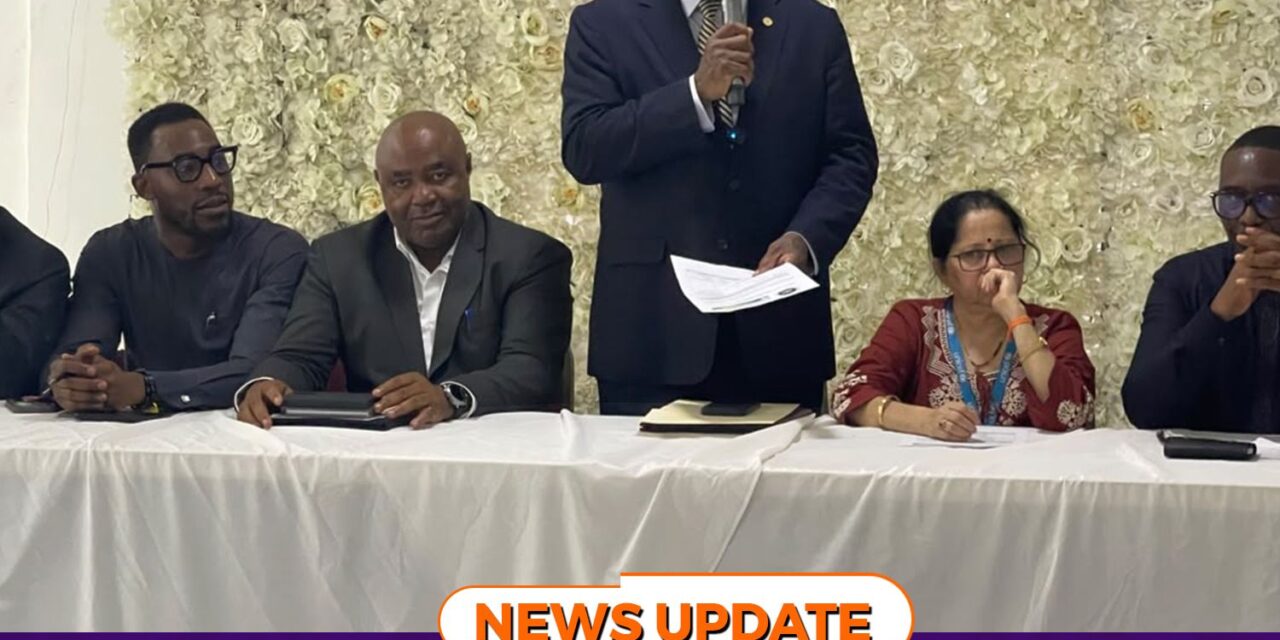
The Ministry of Health and Sanitation, in partnership with Statistics Sierra Leone (Stats SL), officially launched the survey at Theresa Sesay Hall, Kennedy Street, Freetown, alongside training for field workers and supervisors.
Health Minister Dr. Austin Demby urged enumerators to uphold the highest standards of professionalism and accuracy, warning against false reporting or bias. “If we collect the wrong information, the data becomes useless, and the investments made in the survey will have been wasted,” he cautioned.
Dr. Demby emphasized that the DHS, conducted once every five years at considerable cost, is one of the country’s most important sources of evidence for policy and investment decisions. He noted that Sierra Leone’s recent gains — including reductions in maternal mortality — were measured and guided by credible data. Sustaining progress, he said, requires even stronger baselines and continuous monitoring.
Mohamed K. Kamara, Director of Demography at Stats SL, described the DHS as a “vital national undertaking” that will provide high‑quality data on health, population, and nutrition. He explained that the survey will use a stratified multi‑stage sampling design to ensure nationally representative results, with trained teams applying internationally recognized standards and protocols.
Preparations are well advanced, including household listings, pre‑tests of questionnaires, and stakeholder consultations. Kamara stressed that the findings will help government monitor progress toward national priorities and international commitments such as the Sustainable Development Goals (SDGs), while identifying vulnerable communities for targeted interventions.
Kunle Adeniyi, UNFPA Country Representative, reaffirmed the UN’s commitment to supporting the DHS, calling it a “critical investment in Sierra Leone’s health and development agenda.” He noted that seven years have passed since the last DHS and highlighted the survey’s role in providing updated information on maternal and child health, immunization, family planning, and nutrition.
Adeniyi praised the collaboration between government, Stats SL, ICF International, the World Bank, and other partners, and pledged UNFPA’s support from implementation through to data analysis and dissemination.
As Sierra Leone moves forward with the 2026 DHS, stakeholders agree that its success will depend not only on technical expertise and financial resources but also on the integrity, professionalism, and commitment of those conducting the survey.
The government has described the exercise as a critical investment in the nation’s future, with findings expected to shape healthcare delivery, strengthen planning, and improve the well‑being of women, children, and communities across the country.