Hamburg, Germany 2nd July 2026 — Sierra Leone has thrown its weight behind a global campaign to expand food fortification as a frontline response to child malnutrition, with Vice President Dr. Mohamed Juldeh Jalloh urging governments to prioritize interventions that deliver immediate, measurable results while building resilient food systems for the future.
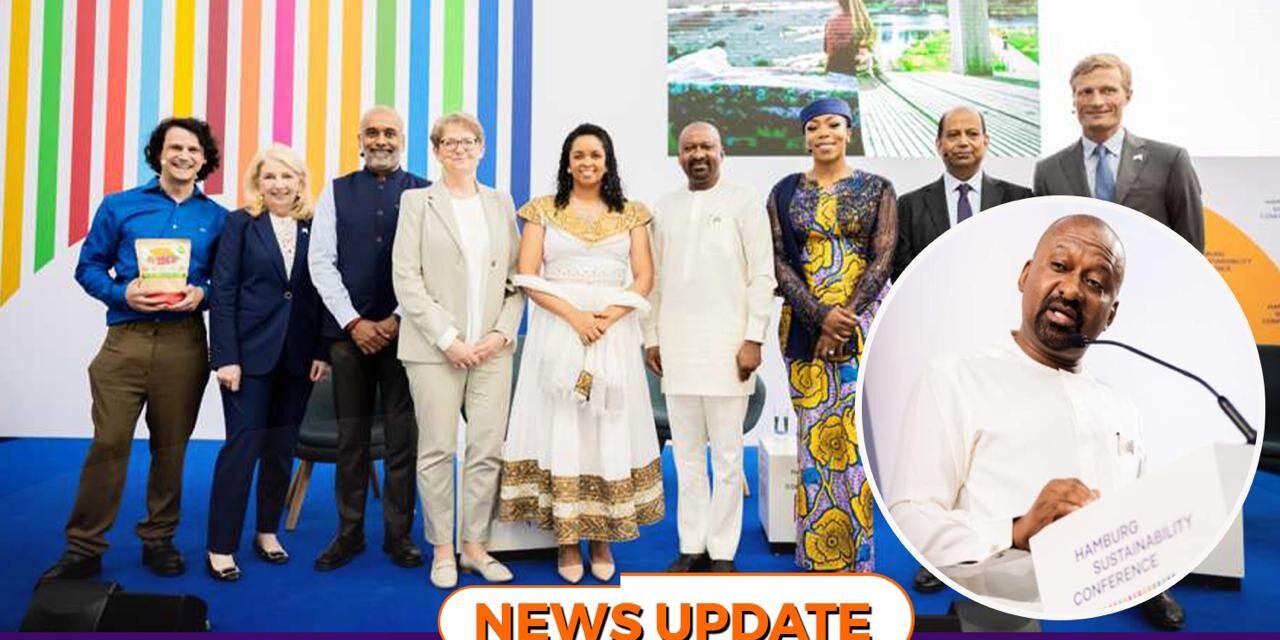
Speaking at the Hamburg Sustainability Conference, during a high-level session titled “The First 1,000 Days: How Nutrition Shapes a Lifetime”, Dr. Jalloh endorsed the Call to Action launched by Germany’s Federal Ministry for Economic Cooperation and Development. He described large-scale food fortification as a cost-effective, evidence-based strategy that leverages existing food distribution systems to rapidly improve nutrition. “We must be disciplined about choosing interventions that work,” he told delegates.
The conference brought together senior government officials, development institutions, the Gates Foundation, the UN World Food Programme, private sector leaders, and civil society organizations to strengthen cooperation on nutrition during the first 1,000 days of life, a period UNICEF and WHO recognize as critical for child growth and brain development.
Dr. Jalloh highlighted Sierra Leone’s progress in integrating nutrition into its broader development agenda, they include: Feed Salone Programme– boosted rice self-sufficiency from 62% in 2022 to 72% in 2024. School Feeding Programme– now reaches more than 929,000 children nationwide. One Egg Per Child Initiative– improving child nutrition while supporting poultry farmers and rural communities and IFC Partnership – a US$19.2 million financing package, including a US$12 million IFC loan, to expand flour milling capacity and strengthen food fortification.
He also recalled a personal visit to a maternity ward where pregnant women left in search of food, stressing: “We cannot separate healthcare from nutrition. If a pregnant woman cannot access adequate nutrition, we are already putting both her life and her child’s future at risk.”
Sierra Leone has introduced multiple micronutrient supplementation for pregnant women, expanded Nyam Nyam Pap a locally produced fortified complementary food and established four solar-powered food processing centres to support women, farmers, and infant nutrition.
According to Dr. Jalloh, the European Union has committed €11.5 million to finance the next phase of nutrition programmes, while Sierra Leone’s government expenditure on nutrition has increased more than sevenfold. Nutrition’s share of the national budget has risen from 2.56% to 8.06%.
Dr. Jalloh emphasized that food fortification must complement long-term investments in resilient food systems. “Food fortification allows us to save lives now, while we simultaneously build the sustainable food systems that will secure our future,” he said, adding that lasting progress requires political commitment, strong partnerships, and ensuring effective nutrition solutions reach every child.