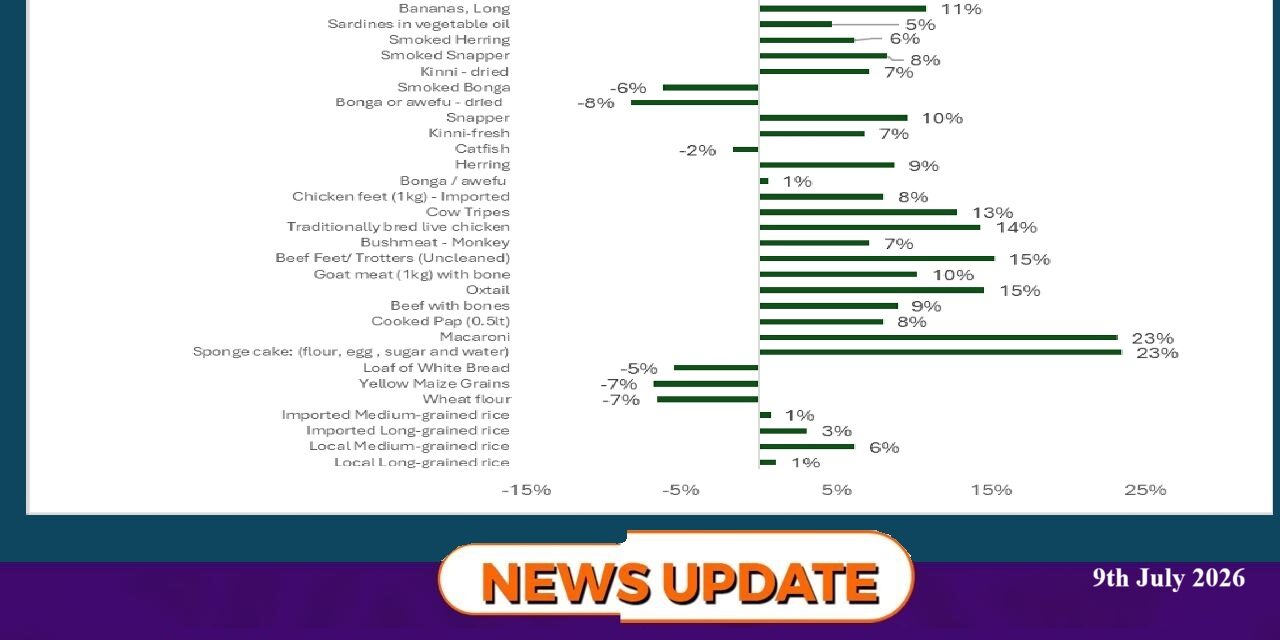
Freetown, 6th July 2026- Sierra Leone’s food and non-alcoholic beverage market has seen sharp price movements across key staples, with recent data showing both steep increases and notable declines. The figures highlight the volatility households face in balancing their daily food budgets.
The standout increases were recorded in macaroni and sponge cake, each surging by 23%, underscoring the rising cost of flour-based products. Meat prices also climbed significantly: beef trotters and oxtail rose by 15%, cow tripe by 13%, and traditionally bred live chicken by 14%. Goat meat followed closely with a 10% increase, while beef with bones rose 9%.
Among fruits, oranges saw the sharpest jump at 18%, with bananas up 11% and pineapples up 7%. Fish products showed mixed trends: smoked snapper rose 8%, while smoked bonga fell 6% and dried bonga dropped 8%. Fresh catfish also declined slightly by 2%.
On the downside, staple grains and bread provided some relief. Loaf of white bread fell 5%, yellow maize dropped 7%, and wheat flour also declined by 7%. Imported rice remained relatively stable, with medium-grained up just 1% and long-grained up 3%, while local rice showed moderate increases of 6% for medium-grained and 1% for long-grained.
The data paints a picture of uneven inflation pressures: while protein and processed foods are becoming more expensive, some staple grains and bread are easing. For households, this means shifting consumption patterns to manage costs, with meat and flour-based products becoming less affordable compared to rice and bread.
The sharp rise in processed and protein-rich foods could strain urban households, while rural communities may benefit slightly from falling grain prices. Policymakers face the challenge of stabilizing food markets to protect consumers from further shocks.