By Davida Spaine-Solomon
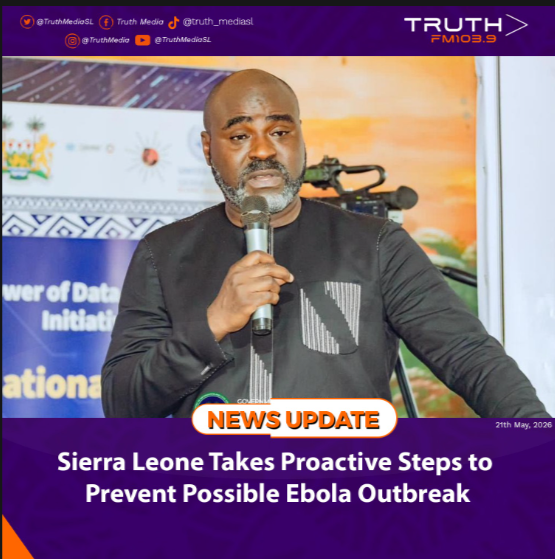
Freetown, 21st May, 2026 – Sierra Leone’s Deputy Chief Medical Officer in the Ministry of Health, Dr. Mustapha Kabba, has assured citizens that Sierra Leone remains Ebola-free, amid concern over outbreak in the Democratic Republic of Congo, stating that government is taking proactive steps to prevent any possible outbreak through heightened surveillance, public awareness, and coordination with international health partners.
Dr Kabba stated that the Ministry of Health is closely monitoring developments in the Congo, urging the public to remain vigilant and maintain proper hygiene practices as part of ongoing prevention efforts.
“We have not recorded any Ebola case in Sierra Leone, but the government has already activated national readiness and response mechanisms to protect the country,” Dr. Kabba stated.
Beyond disease preparedness, Dr. Kabba highlighted progress in strengthening Sierra Leone’s healthcare system, particularly in maternal and child health under the government’s 300 Days of Activism campaign.
He stated that before the COVID-19 pandemic, Sierra Leone operated only one oxygen plant in Kingtom, but now the country has 12 oxygen plants supplying free oxygen to government hospitals nationwide, significantly improving emergency medical services.
Dr. Kabba further revealed that several government health facilities are now solar-powered and equipped with improved sanitation and hygiene systems aimed at enhancing healthcare delivery, especially in underserved communities.
He also announced a sharp decline in maternal mortality, stating that it has dropped from 1,682 deaths per 100,000 live births to 354 deaths per 100,000 live births due to sustained government investment and targeted health interventions.
Dr. Kabba described the 300 Days of Activism initiative as a nationwide drive to eliminate preventable maternal and child deaths through community engagement, improved healthcare access, and stronger accountability systems.
The campaign encourages pregnant women to seek regular medical care, promotes childhood immunization, and supports infrastructure improvements, including better road access to health facilities.
According to Dr. Kabba, governance and monitoring structures have been established at both the ministry and district levels to ensure effective implementation of the initiative.
Highlighting early results, he disclosed that maternal deaths recorded within the first 70 days of the campaign have significantly reduced compared to the same period last year.
“By this time last year, about 80 maternal deaths had been recorded, but current figures show a drastic decline,” he said.
The 300 Days of Activism campaign was officially launched by Julius Maada Bio in March 2026 as part of efforts to achieve zero preventable maternal and child deaths and eliminate “zero-dose” children who have never received routine vaccinations.
Health authorities said the initiative remains focused on rapid healthcare delivery, community participation, and data-driven interventions as Sierra Leone continues efforts to strengthen its healthcare system and improve survival outcomes nationwide.