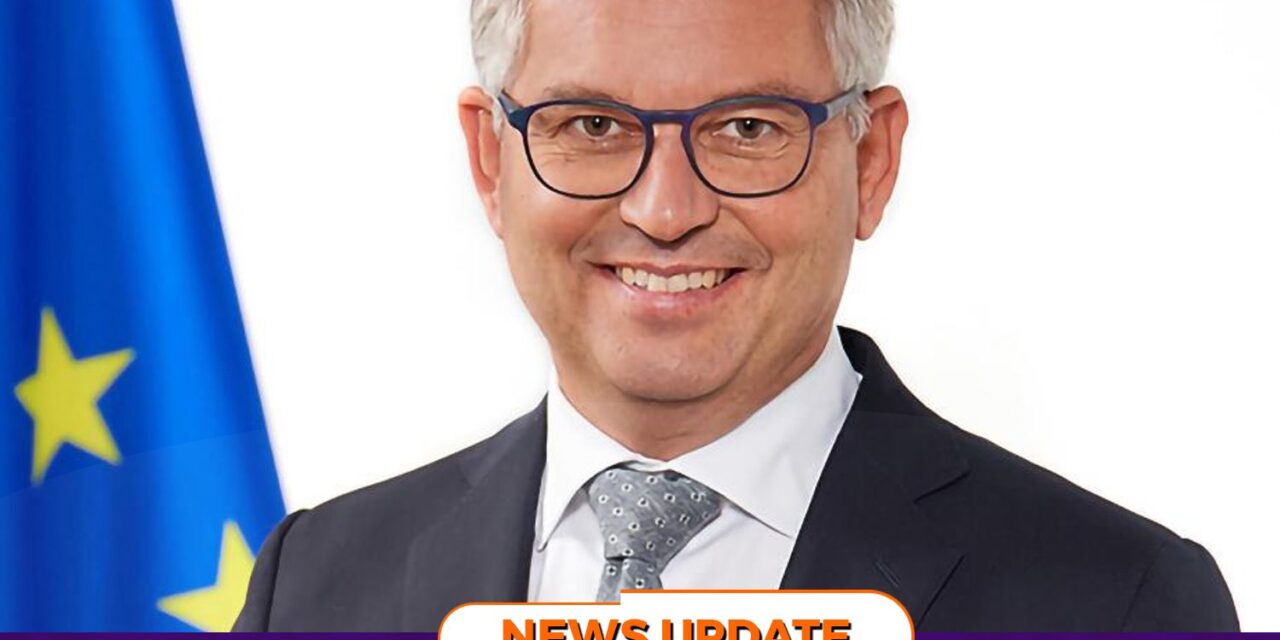
Freetown, 2nd October 2026- European Union Commissioner for Internal Affairs and Migration, Magnus Brunner, has sought to clarify reports linking the suspension of EU budget support to Sierra Leone with allegations that the country is harbouring fugitive Dutch drug trafficker Jos Leijdekkers, insisting that the halt in assistance was triggered by technical factors rather than the Leijdekkers matter.
Speaking during a press briefing following a meeting of EU justice and home affairs ministers in Luxembourg on Thursday, Brunner acknowledged growing concerns within the European Union about organised crime and drug trafficking trends in Sierra Leone but drew a clear distinction between those concerns and the suspension of financial support.
“I think what we need is action against third countries that harbour drug traffickers,” Brunner told reporters. “We are concerned as a European Union about drug trafficking and transnational crime and organized crime trends in Sierra Leone.”
However, he stressed that the suspension of EU support was unrelated to the allegations surrounding Leijdekkers.
“When it comes to the suspension of the support, that’s due to technical reasons,” the commissioner stated.
Brunner’s comments appear to counter assertions made earlier by Dutch Justice Minister David van Weel, who reportedly suggested that EU aid had been suspended because Sierra Leone was allegedly providing refuge to Leijdekkers, one of Europe’s most wanted drug traffickers.
The issue arose during discussions at the Luxembourg meeting, where ministers focused on migration, the EU drug strategy framework and wider security challenges facing Europe. Van Weel did not speak publicly after the official press conference, and his office did not respond to requests for further clarification.
Despite Brunner’s explanation, a Dutch diplomat attending the meeting maintained that Sierra Leone’s alleged harbouring of Leijdekkers was a significant concern in discussions surrounding relations with the country.
Speaking on condition of anonymity, the diplomat said Minister van Weel intends to push for the fast-tracking of a proposed EU sanctions regime targeting organised crime networks operating across borders.
“Organised crime networks operating across borders can be very effective being based in a third country where local authorities might be unwilling to cooperate or extradite them,” the diplomat said.
The proposed sanctions framework, unveiled by the European Commission and the EU’s High Representative for Foreign Affairs and Security Policy in July, is designed to target crimes including migrant smuggling, human trafficking, firearms trafficking, narcotics trafficking and money laundering.
In Sierra Leone, reports of a potential aid suspension have generated concern among civil society actors, who fear that ordinary citizens could bear the consequences of actions allegedly linked to criminal suspects.
Human rights activist and anti-corruption campaigner Abdul M. Fatoma urged international partners to avoid measures that could negatively affect the population.
“Justice and accountability for transnational crimes are non-negotiable, but they must be pursued through strengthened partnership and rule of law, not by withdrawing support from the people of Sierra Leone,” Fatoma said.
Brunner’s remarks are likely to ease concerns in Freetown after speculation that vital EU budget support had been frozen as a direct response to the Leijdekkers controversy. His statement suggests that, while the EU remains concerned about organised crime and drug trafficking in Sierra Leone, the current suspension of support is rooted in technical considerations rather than punitive action against the government.