By Davida Spaine-Solomon
Freetown, 23rd July, 2026 – Sierra Leone has wrapped up the 69th Ordinary Session of the ECOWAS Authority of Heads of State and Government, concluding a summit that produced major policy decisions on regional security, economic integration and governance while reinforcing the country’s standing as a key player in West Africa.
Held in Lungi, the summit brought together 11 Heads of State and Government, ministers, diplomats, development partners, private-sector representatives and hundreds of delegates. President Julius Maada Bio chaired the meeting in his capacity as ECOWAS Chairman, leading discussions centred on regional peace, political stability, economic cooperation and institutional reforms.
At the close of the summit, leaders adopted the Declaration of Commitment on the Future of Regional Integration, reaffirming their collective resolve to deepen cooperation and pursue a more peaceful, united and prosperous West Africa.
The Authority endorsed several far-reaching measures, including renewed commitment to introducing the ECO single currency in 2027 for member states that satisfy the required convergence criteria. Leaders also directed the ECOWAS Commission to fast-track investment-ready projects in transport, energy, digital connectivity and water infrastructure while accelerating implementation of the ECOWAS Rice Agenda to strengthen regional food security.
On security, the summit reaffirmed plans to operationalise the ECOWAS Counterterrorism Force by 2027, approved a Regional Cybersecurity Coordination Mechanism and adopted new regional digital governance frameworks. Sierra Leone’s Ambassador Baba Kamara also received a three-year extension as ECOWAS Special Envoy on Counterterrorism.
Regional leaders strengthened cooperation beyond security by endorsing expanded collaboration with the Mano River Union on cross-border peacebuilding and approving a partnership between ECOWAS and the International Fertilizer Development Center (IFDC) to improve agricultural productivity across the sub-region.
The Authority also welcomed encouraging economic projections for 2026, highlighting resilient regional growth, easing inflation and progress on strategic energy initiatives, including the African Atlantic Gas Pipeline.
A smooth transition in ECOWAS leadership formed another key outcome of the summit, with Senegal’s President Bassirou Diomaye Faye elected Chairman of the Authority. Leaders also appointed General Birame Diop of Senegal as President of the ECOWAS Commission for the 2026-2030 term.
For Sierra Leone, the summit delivered notable diplomatic gains. The Authority welcomed the country’s candidature for a seat on the International Court of Justice for the 2027-2036 term and endorsed the appointments of Francess Piagie Alghali as ECOWAS Commissioner for Political Affairs, Peace and Security and Mr. Mohamed Kenewui Konneh as ECOWAS Permanent Representative to Liberia.
The gathering also showcased Sierra Leone’s capacity to host major international events. Delegates met at the newly inaugurated Julius Maada Bio International Conference Centre and were accommodated in newly built presidential villas. The summit coincided with the commissioning of the ECOWAS Logistics Depot in Lungi, a facility expected to enhance the operational readiness of the ECOWAS Standby Force. China also donated 15 presidential vehicles during the inauguration activities.
Leaders commended Sierra Leone’s efforts to promote national cohesion, citing improved engagement with opposition parties and the government’s decision to discontinue charges against former President Ernest Bai Koroma as positive steps towards reconciliation.
Despite celebrating progress, the Authority expressed concern over the worsening humanitarian situation in parts of West Africa, condemning terrorism, kidnapping and organised criminal violence. Member states were urged to strengthen democratic governance, implement inclusive reforms and support vulnerable populations affected by conflict.
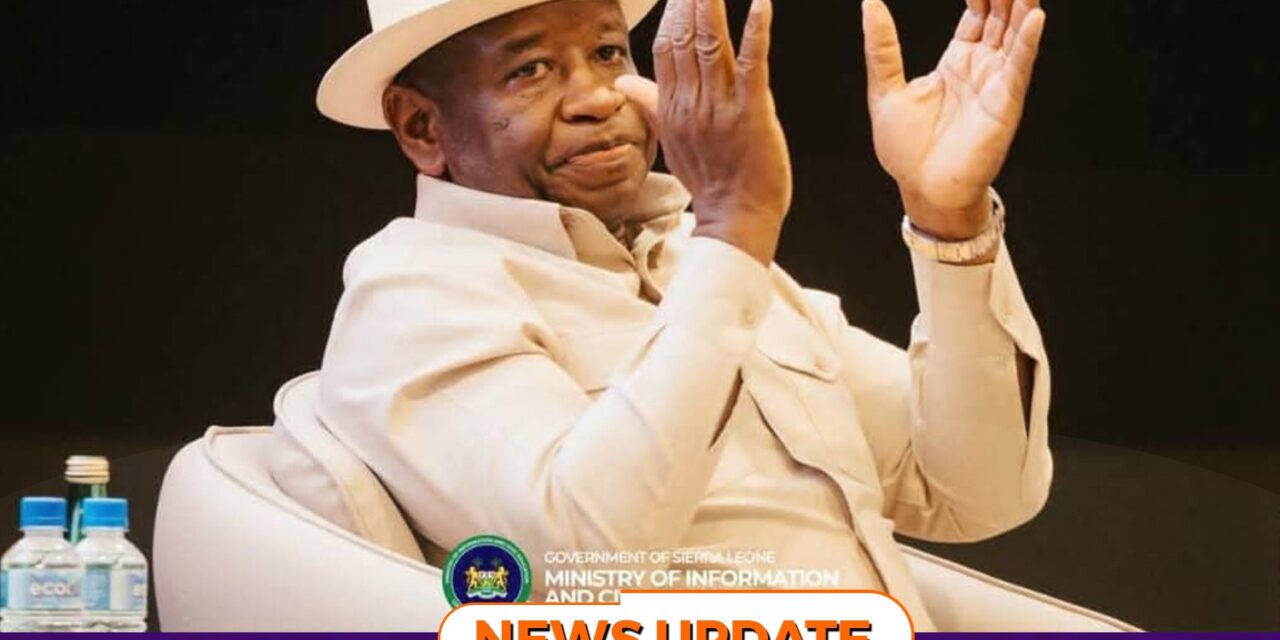
The summit concluded with delegates applauding President Bio, the Government and the people of Sierra Leone for what they described as the successful organisation of the regional gathering and their warm hospitality.
With the successful hosting of the summit, Sierra Leone not only facilitated decisions expected to shape the future of ECOWAS but also reinforced its growing diplomatic influence through new infrastructure, strengthened partnerships and an expanded role in advancing regional peace, security and economic integration.