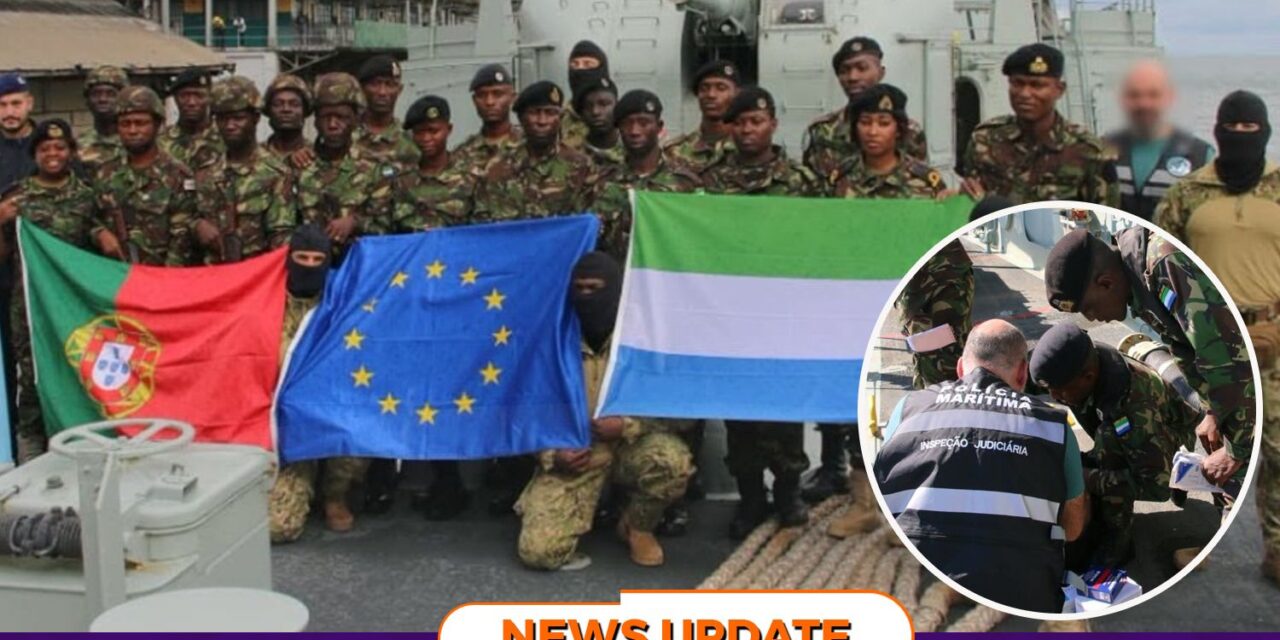
Freetown, 2nd October 2026: Sierra Leone has taken a significant step towards strengthening the protection of its territorial waters following the completion of an intensive maritime security training programme for the Sierra Leone Navy, supported by the European Union and the Portuguese Navy.
The exercise was designed to enhance the Navy’s operational capacity in combating illegal fishing, human trafficking, and other crimes at sea. Training focused on maritime surveillance, boarding operations, evidence management, and the operation and maintenance of Rigid Hull Inflatable Boats (RHIBs), key assets used in maritime patrol and enforcement activities.
The initiative was delivered through the European Union-funded Support to West Africa Integrated Maritime Security (SWAIMS) project, implemented by Instituto Camões. The programme provides specialized training and essential equipment to naval and maritime security agencies across the Gulf of Guinea, intending to strengthen regional security, promote stability, and support economic growth within the ECOWAS region.
To mark the successful conclusion of the training, European Union Ambassador to Sierra Leone, Jacek Jankowski, hosted a reception on Monday attended by senior government officials, members of the diplomatic community, and security partners.
Among those present were Deputy Minister of Foreign Affairs and International Cooperation, Jeneba Bangura, Minister of Internal Affairs, Morie Lengor, and the Commanding Officer of the visiting Portuguese naval frigate NRP Álvares Cabral, Lt. Cdr. Nelson Santos Martins.
Speaking at the event, officials highlighted the critical role of maritime security in safeguarding Sierra Leone’s economic resources and national security interests. They noted that threats such as illegal fishing, trafficking, and other transnational crimes continue to challenge countries in the Gulf of Guinea, underscoring the need for stronger regional cooperation.
Officials further stressed that sustained collaboration built on trust, transparency, and shared responsibility remains essential for protecting territorial waters, tackling maritime threats, and ensuring long-term economic prosperity across the region.
The latest training programme reflects continued efforts by Sierra Leone and its international partners to enhance maritime security capabilities and strengthen collective responses to emerging challenges in West African waters.