By Emmanuel Mbowa
Freetown, 28th September, 2026 – The Vice Chancellor and Principal of the University of Sierra Leone, Prof. Aiah Lebbie, has said that the University of Sierra Leone is starved of resources and called on partners and stakeholders to support the University amid its efforts to meet its digital transformative goals and other pertinent needs.
“As a university, we charge the lowest fee, I must say in the world, except for those who don’t charge fees,” he said. “But what you pay is not enough for me to even pay salaries,” noting that he struggles each month.
Professor Lebbie stated that their wage bill is around Le 8.5 million every month. “That is not what government pays. Government pays something about Le 5 million,” he said, stating that if the wage bill is paid, he would be able to do a lot of transformation across the university. “But it’s the fees the students pay that I have to repurpose to pay salaries; and so, I am starved of resources to achieve transformation,” he maintained.
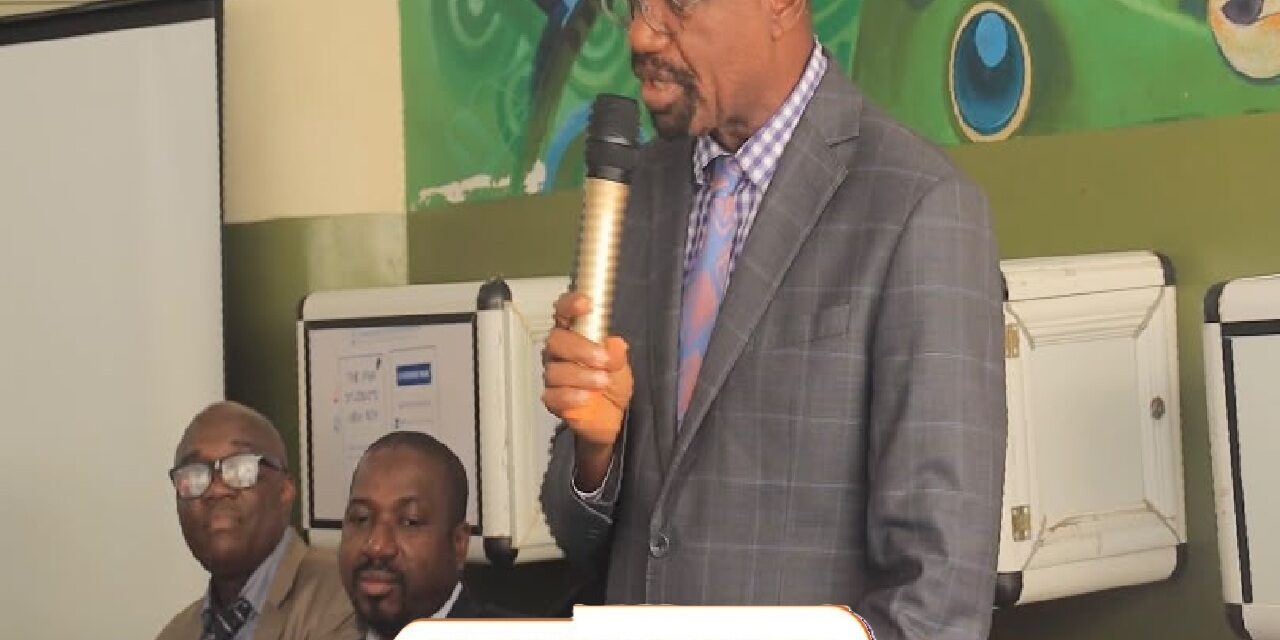
Prof. Lebbie made this disclosure on September 23, 2026, during the launch and commissioning of the IPAM Student and Staff Computer Loan spearheaded by ACTB Savings and Loans; as well as the commissioning of an Africell CUG system booth and the two newly built digital classrooms at IPAM, Tower Hill, Freetown.
Prof. Lebbie further called on stakeholders to support the institution in scaling up its digital transformation efforts. “Digital transformation in the University of Sierra Leone is not something that we are going to take lightly. And this is why I am asking all the stakeholders to come to our aid and assist us,” he appealed.
He urged the alumni to be supportive of the institution, noting the crucial role it could play in USL’s vision and aspirations. “There are challenging moments, but I believe if you don’t do it, the next generation might not have the opportunity, and this is what we are trying to provide here. Whatever my DVC and his team are trying to achieve here is to lay the foundation for the next generation,” he said.