By Alexander Clapp, The Economist, supported by the Pulitzer Center
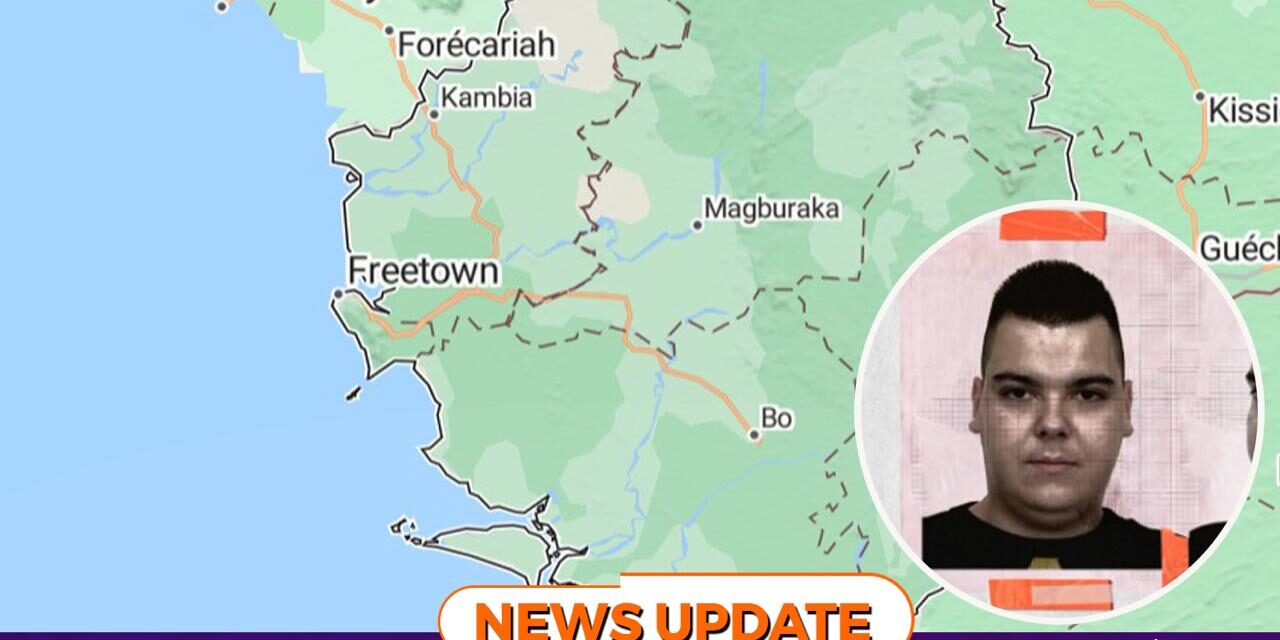
Freetown, 21st September 2026- He allegedly arrived in Freetown under the guise of a Turkish investor named Omar Sheriff. Young-looking, with the cheeks of a teenager, he quickly asserted himself in Sierra Leone’s capital. His black G-Wagon cruised the Atlantic coast, his weekends spent at Sky Bar or the Grand Leone Casino, rubbing shoulders with Chinese gamblers and government ministers alike.
At the luxurious 2 Seasons Resort, envelopes and flowers left with departing officials hinted at the influence he was buying. Fishermen in nearby villages were stunned by his generosity cash handouts of $300, bags of rice distributed from fleets of Land Cruisers.
But beneath the veneer of philanthropy lay menace. On New Year’s Day 2023, one of his bodyguards shot a Lebanese playboy, Hussein Fawaz, in the kneecap at a nightclub. The Lebanese commercial elite diamond exporters, Toyota importers, financiers with ties to Hizbullah realized a new player had arrived, one they could not control. “We tried to punish the man but couldn’t,” recalled Hajj Fawaz, a leading construction tycoon. “By the time we reached his house he had been moved away.”
Two years later, the mystery deepened. On New Year’s Day 2025, the supposed investor was filmed at a Catholic mass in Tihun, seated behind President Julius Maada Bio. Dutch journalists identified him as Jos Leijdekkers “Chubby Jos” one of Europe’s most wanted criminals. “It was like, ‘Wow!’” said Yelle Tieleman of Algemeen Dagblad. “Jos Leijdekkers has been there this whole time? Hiding in plain sight?”
From Antwerp Hitman to Global Narco-Boss- Leijdekkers’s rise is extraordinary. Less than a decade ago he was a hitman in Antwerp. Today, his cocaine empire spans Latin America, Europe, and the Middle East, generating more than $2 billion annually. Bricks of cocaine stamped “Holly” short for Hollywood have surfaced from Ecuador’s banana ports to Rotterdam’s docks. His notoriety has inspired biographies, podcasts, graffiti murals, and YouTube sleuths.
But his boldest move has been Sierra Leone. In just five years, he transformed the country from a post-war state known for blood diamonds into a hub for billions of dollars’ worth of Colombian cocaine. Shipments disguised as rice or plantain chips flow through Sierra Leone’s ports en route to Europe. By funneling profits to political elites and funding state institutions, Leijdekkers has secured perks that rival a Bond villain: a diplomatic passport, motorcades guarded by presidential troops, container ships and submarines at his command. He is even celebrated in local rap lyrics “Ar change di game e name lek Umar Sheriff,” sings Drizilik and last year fathered a child with Agnes Bio, the president’s daughter.
A Nation in Narco-Capture- Freetown today bears the hallmarks of narco-capital. Beaches thrum with nightclubs, empty high-rises loom over the skyline, and luxury cars shimmer on the streets. What took decades in Mexico or Montenegro has unfolded in Sierra Leone in just four years, driven by a 35-year-old Dutch fugitive armed with a smartphone and global suppliers.
The African connection has become critical to Europe’s cocaine trade. Once dominated by Rotterdam and Antwerp, smuggling routes now funnel through West Africa. Guinea-Bissau pioneered the model in the 2000s; today, Côte d’Ivoire, Senegal, Cape Verde and now Sierra Leone are key nodes. One-third of Europe’s cocaine is believed to arrive via Africa.
Sierra Leone’s vulnerabilities made it ripe for capture: an elite open to bribery, a Lebanese diaspora controlling finance and construction, English-speaking institutions, and pristine beaches ideal for laundering drug proceeds through tourism. The influx of narco-capital now equals a quarter of Sierra Leone’s GDP, propping up salaries, military budgets, and infrastructure. “Between the luxury cars, the mining companies, the bribed journalists, and the police units he funds,” one diplomat observed, “how can Sierra Leone ever let the man go?”
Fear, Silence, and Rumors- Inside Sierra Leone, Leijdekkers is both omnipresent and untouchable. Ministers receive cars, immigration chiefs Rolex watches, and military barracks gym renovations. Journalists are bribed or silenced. Foreign correspondents report surveillance, arrests, and intimidation. “I had the strong feeling I was being followed by the secret police,” said Sophie van Leeuwen of RTL News, who was detained for 15 hours in 2025.
President Bio has never publicly acknowledged the man who fathered his grandchild. Opposition leaders refuse to discuss him. Even former central bank governor Kaifala Marah pretended not to hear questions about Leijdekkers. Across the political spectrum, he enjoys the peculiar privilege of not existing.
Dutch authorities confirmed his presence only in 2024, after DNA was recovered from a coffee cup. A bounty of €200,000 now matches the sums he pays assassins. Yet sightings remain rare: a Versace shirt at a Freetown rooftop restaurant, a Rolex gifted to Sierra Leone’s immigration chief. Rumors suggest he migrates between guarded compounds, never staying in one place for long.
The Robin Hood of Tokeh
In coastal towns, Leijdekkers cultivates a Robin Hood image. In Tokeh, he buys schoolbooks, pays fees, and distributes rice and cash during Ramadan. Locals know him only as “Jagaban,” Yoruba for a wealthy chief. At resorts, his eccentricities stand out: forbidding photographs, detesting noise, paying bills for guests who spoke too loudly. He owns fleets of cars, ten mobile phones, and entertains politicians and foreign diplomats.
A Legacy of Violence- Leijdekkers’s past is steeped in brutality. Born in Prinsenbeek, Netherlands, he grew up in a family linked to the sex trade. As a teenager, he was obsessive about proving himself right, indifferent to violence. In 2011, he shot two Moroccan brothers in a pub dispute, serving four years in prison. By release, he had joined the Mocro Maffia, a Moroccan-Dutch gang dominating Europe’s cocaine trade. He became Antwerp’s key operator for Ridouan Taghi, the cartel’s feared leader.
Encrypted SKY ECC messages later revealed his methods: staggering quantities of cocaine, casual violence, threats to kill families, and orders to “dominate” civilians who stumbled upon his drugs. By 2020, he was living in Turkey, forging ties with shipowners, arms dealers, and African officials. He bought villas with gold bars, acquired Turkish citizenship, and traveled by Lamborghini and private jet. Even when Turkish police raided his network in 2023, seizing millions in cash and gold-plated weapons, Leijdekkers escaped untouched.
Sierra Leone’s Future- Today, Sierra Leone stands at a crossroads. The narco-economy has embedded itself into politics, security, and society. Aid workers whisper of car crashes arranged for nosy journalists. Fishermen recount cocaine packages washing ashore after storms. Submarines laden with drugs are hidden by security forces. Locals are paid off to stay silent.
As The Economist reports, the question is no longer how Europe’s most wanted man found refuge in Sierra Leone. It is whether the country, now financially dependent on his empire, can ever imagine letting him go.