By Andrew Chokpeleh
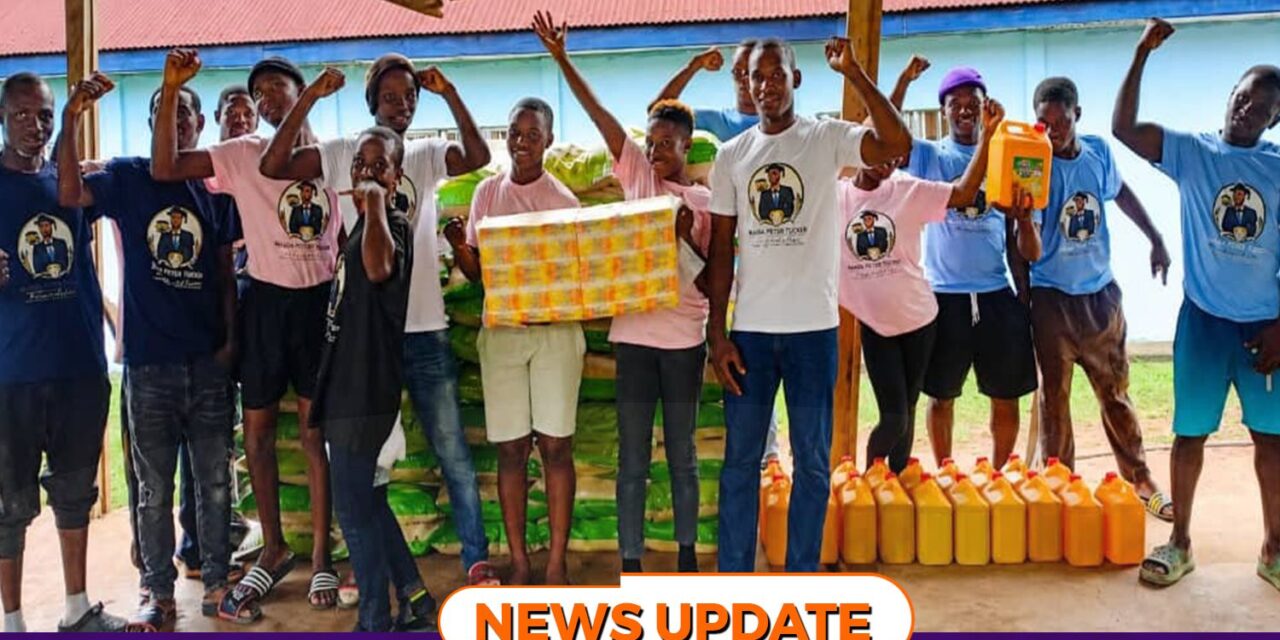
Freetown, 14th August 2026 – The Maada Peter Tucker Foundation, established in memory of the late Maada Peter Tucker, marked International Youth Day with a donation of food and essential items to the Government Rehabilitation Centre at the Peace Mission Training Centre in Hastings on 12 August 2026.
The Foundation, created by Tucker’s family as a lasting tribute, aims to support young people battling substance abuse by giving them hope and helping them rebuild their lives.
Foundation member Hindolo Maada Katta said the organisation deliberately chose the rehabilitation centre because most of its beneficiaries are young people. He explained that the visit was intended to remind those undergoing treatment that they have not been forgotten and that there is hope for a better future after rehabilitation.
Katta described drug addiction as one of the biggest challenges confronting Sierra Leone’s youth and encouraged residents not to feel alone in their struggles. He commended them for the courage to seek treatment and expressed hope that, after completing the programme, they would reintegrate successfully into their communities without relapsing.
He further urged residents to make the most of the eight‑week rehabilitation programme, describing it as an opportunity many young people desperately wish they had. However, he stressed that rehabilitation alone would not solve the country’s drug problem unless authorities intensified efforts to disrupt the supply and distribution of illicit drugs.
Katta added that the Foundation hopes to collaborate with rehabilitation centres across Sierra Leone in support of the Government, development partners, and other stakeholders working to combat drug abuse nationwide.
One of the residents, Edwin Fornah, a father of three daughters, shared his personal journey of addiction and recovery. He said he had experienced significant improvements in his mental health and social well‑being since entering the centre.
Despite his progress, Fornah argued that the current eight‑week rehabilitation period is insufficient for people battling serious addiction. He explained that overcoming drug dependency requires patience, continuous counselling, and long‑term support, and appealed to the Government to consider extending the programme. Referring to countries such as Ghana, he noted that some rehabilitation programmes last more than six months, giving recovering addicts more time to heal before returning to society.
Fornah also recommended vocational training programmes within rehabilitation centres to equip recovering addicts with practical skills for employment after treatment. He warned that many relapse because they return to their communities without jobs or sustainable means of support. Reflecting on his own experience, he disclosed that addiction caused him to lose his job, squander his savings, and separate from his family after spending nearly all his resources on kush. Nevertheless, he expressed optimism that successful rehabilitation would allow him to reunite with his family and rebuild his life.
Ansumana Konneh, Director of Mental Health and Psychosocial Services at the Ministry of Social Welfare, expressed appreciation to the Foundation for its support, emphasizing that the fight against drug abuse cannot be won by the Government alone. He called on development partners, donors, and civil society organisations to join the national effort, stressing that broad collaboration is essential to tackling a problem that continues to undermine the mental health, social well‑being, and future of thousands of young Sierra Leoneans.
Konneh explained that the rehabilitation centre was established to provide treatment and recovery services for individuals struggling with drug addiction, noting that the current group represents the eighth batch of beneficiaries since the programme began in 2024. He further disclosed that another group of 100 recovering drug users is expected to begin rehabilitation immediately after the current batch completes the programme.
While acknowledging the growing demand for treatment services, Konneh said the centre’s limited capacity means thousands of people in need cannot be accommodated at once. He assured the public that admissions would continue in phases as resources permit. He concluded by formally receiving the donated items on behalf of the Ministry before handing them over to social workers supporting residents at the centre.