By Hon Ibrahim Barrie
Freetown,11th August 2026- Fellow Sierra Leoneans, APC supporters, sympathizers, and friends of democracy, Yesterday marked a defining moment in our constitutional history as the APC Parliamentary Group took a principled stand during the debate on the Constitution of Sierra Leone (Amendment) Bill, 2025.
Our walkout was not an act of weakness, but a deliberate constitutional position to safeguard the integrity of Sierra Leone’s supreme law.
Why We Walked Out
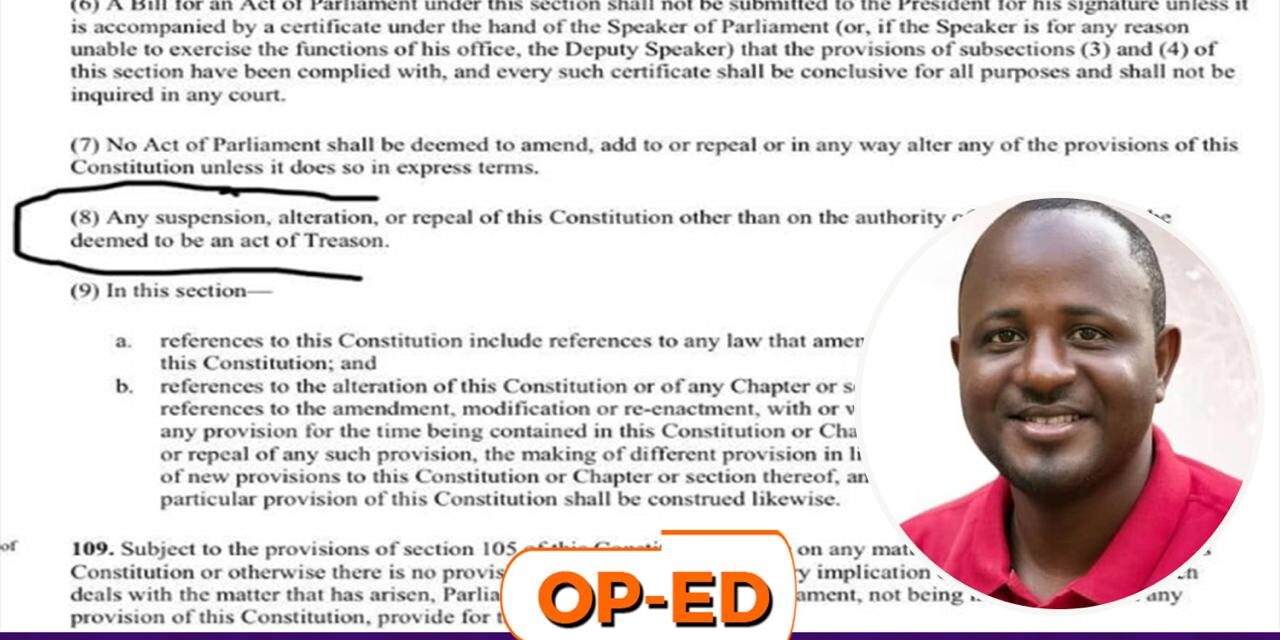
Section 108 of the Constitution requires a two-thirds majority of all Members of Parliament for any constitutional amendment. This safeguard exists to prevent alteration of the Constitution through temporary majorities or procedural manipulation.
We could not participate in a process whose constitutional validity is now the subject of serious legal and public dispute.
The Speaker’s Contradictory Position
A major concern was the Speaker’s ruling on the constitutional threshold, followed immediately by a referral of the same issue to the Supreme Court.
This raises a fundamental question:
If the matter required Supreme Court interpretation, on what basis was a definitive ruling made in Parliament?
Such inconsistency created uncertainty and undermined confidence in the process.
Lesson from Nigeria: The Dariye Case
West Africa has seen similar constitutional disputes. In Nigeria, the Supreme Court case involving Governor Joshua Dariye is instructive.
During impeachment proceedings in Plateau State, a reduced group of legislators attempted to meet the two-thirds requirement after political defections and declared vacancies. They argued that the threshold should apply only to remaining members.
The Supreme Court rejected this view, holding that constitutional thresholds must be calculated on the full membership of the legislature, not a reduced or politically altered number. It warned against manipulating numbers to achieve predetermined outcomes and reinstated the Governor.
The Lesson for Sierra Leone
The principle is clear:
Constitutional thresholds are fixed safeguards, not flexible political tools.
Two-thirds means two-thirds of the full membership of Parliament, not a convenient subset.
Any contrary interpretation risks weakening constitutional governance and democratic stability.
Outstanding Constitutional Concerns
As Dr. Sylvia Olayinka Blyden has noted, Sections 73(1), 106(1), 106(2), 106(4), and 106(6) require strict compliance: a Bill becomes law only after proper parliamentary passage, presidential assent, and publication in the Gazette.
Given the current dispute, it is prudent that all authorities await Supreme Court clarification before treating the Bill as valid law.
Our Position
The APC Parliamentary Group remains firmly opposed to:
– the Proportional Representation (PR) system;
– the 50% + 1 presidential threshold proposal;
– and any electoral changes that weaken accountability or distort fair competition.
We are not opposed to reform. We support reforms that:
– strengthen democracy and accountability,
– protect constitutional order,
– empower citizens,
– and reinforce national unity and institutional independence.
Our commitment remains to a democratic process grounded in constitutional fidelity, transparency, and national consensus.