By Andrew Chokpeleh
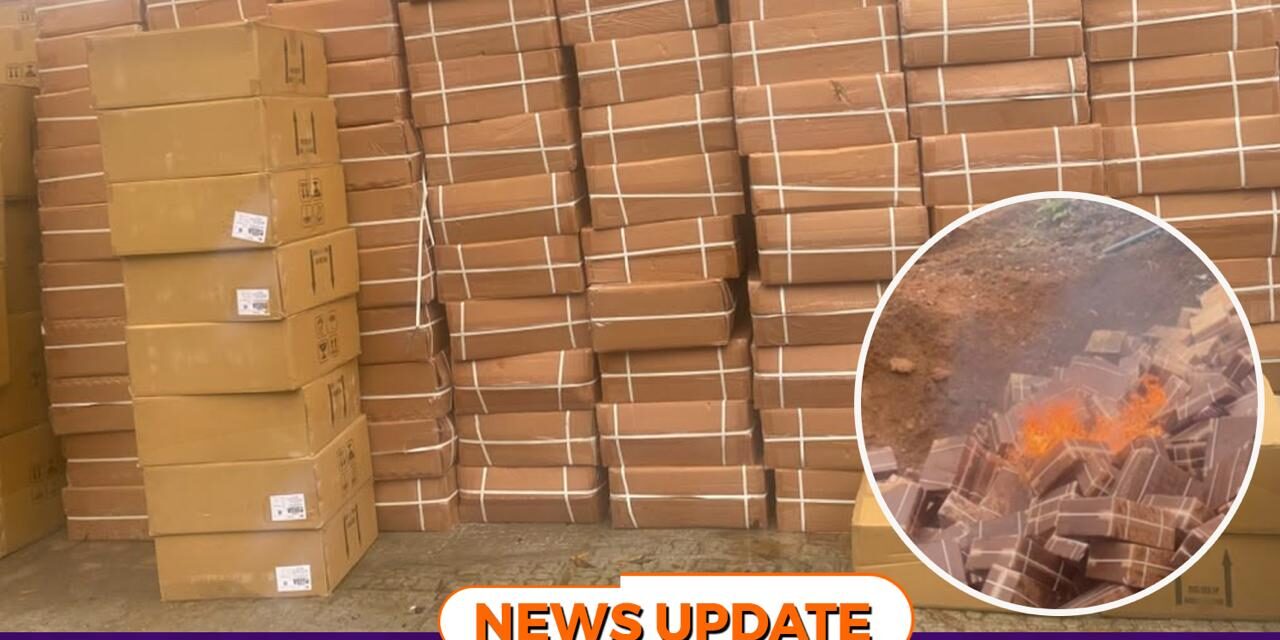
Freetown, 11 August 2026 – Security forces in Sierra Leone have destroyed 396 cartons of Tramadol and other contraband substances seized at the Water Quay, in a major show of force against the country’s growing drug trade.
The destruction, carried out today at the headquarters of the Transnational Organized Crime Unit (TOCU) in Hastings, was supported by the Sierra Leone Ports and Harbours Authority, the Sierra Leone Police, the Office of National Security and the National Drug Law Enforcement Agency. The move comes just days after President Julius Maada Bio reaffirmed his government’s commitment to tackling the supply and distribution of illicit drugs nationwide.
Authorities say the exercise underscores their determination to disrupt trafficking networks and make it harder for dealers to access restricted substances. Since the government announced importation restrictions on Tramadol, officials report that the drug has become scarcer and more expensive on the local market.
Former National Drug Law Enforcement Agency chief Andrew Jaiah Kaikai, recently relieved of duty, warned that traffickers are constantly devising new strategies to evade arrest. He stressed that enforcement must go beyond seizures and destruction, focusing instead on dismantling the networks behind importation and distribution. “The ultimate objective should be to protect communities, especially young people, from the harmful effects of drug abuse,” Kaikai said.
Detective Superintendent Reverend Michael J.K. Laggah, head of TOCU, described the destruction as proof of the security forces’ resolve to confront drug trafficking. He emphasized the importance of transparency in handling seized contraband and highlighted the need for sustained collaboration, intelligence sharing and monitoring of entry points such as the Water Quay.
The seized drugs were destroyed following a court order obtained after their interception at the port. As enforcement intensifies, many Sierra Leoneans hope that strong policing, combined with prevention and public education, will help reduce drug abuse and safeguard the country’s youth.