Freetown, 4th August, 2026 – The government of Sierra Leone has unveiled a series of emergency financing measures worth US$160 million to stabilize markets and protect households as the global oil crisis continues to strain the economy.
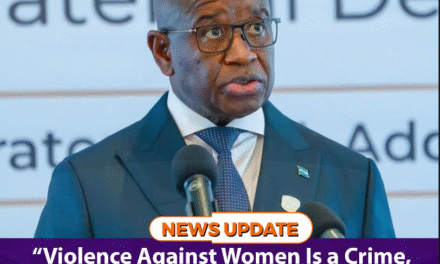
Finance Minister Sheku Ahmed Fantamadi Bangura, presenting the Supplementary Budget and Statement of Economic and Financial Policies for 2026 in Parliament, said the facilities are designed to safeguard livelihoods while reinforcing budget credibility.
Key financing measures include US$60 million trade finance facility secured from the Arab Bank for Economic Development in Africa (BADEA) to support the importation of essential commodities including rice, flour, sugar, and frozen food items. This aims to guarantee uninterrupted supply and stabilize consumer prices.
And, ongoing negotiations for an additional US$100 million trade finance package from development partners to import petroleum products. The facility will help build strategic fuel reserves and ensure stability in the domestic fuel market.
“Government is also in the process of securing another US$100.0 million
trade finance facility from development partners to support the importation of
petroleum products in order to build strategic stocks and ensure the stability of
the domestic fuel market.”
Mobilization of resources through the World Bank’s emergency components and the African Development Bank’s Crisis Response Window to procure and distribute critical agricultural inputs, notably fertilizers, to farmers nationwide.
The measures come as Sierra Leone grapples with the fallout of the global oil shock. Crude prices surged from US$70 per barrel pre‑crisis to US$138 in April, driving domestic pump prices to NLe35 for petrol and NLe40 for diesel. Although a peace deal briefly eased prices to US$72 by June, inflation climbed to 14.8 percent.
Government subsidies introduced in April to cushion households have already forced a reallocation of NLe1.1 billion away from capital projects, while revenue shortfalls pushed the projected deficit to 2.8 percent of GDP. Borrowing from commercial banks has risen sharply to NLe4.2 billion, up from NLe567 million in the original budget.
Despite the fiscal strain, Bangura told MPs that government remains committed to “prudent fiscal policy underpinned by consolidation, while protecting social spending to mitigate the impact of the crisis on the poor and vulnerable.”
The supplementary budget underscores Sierra Leone’s vulnerability to external shocks but also highlights the government’s balancing act, securing trade finance to stabilize markets while preserving macroeconomic stability.