By Davida Spaine-Solomon
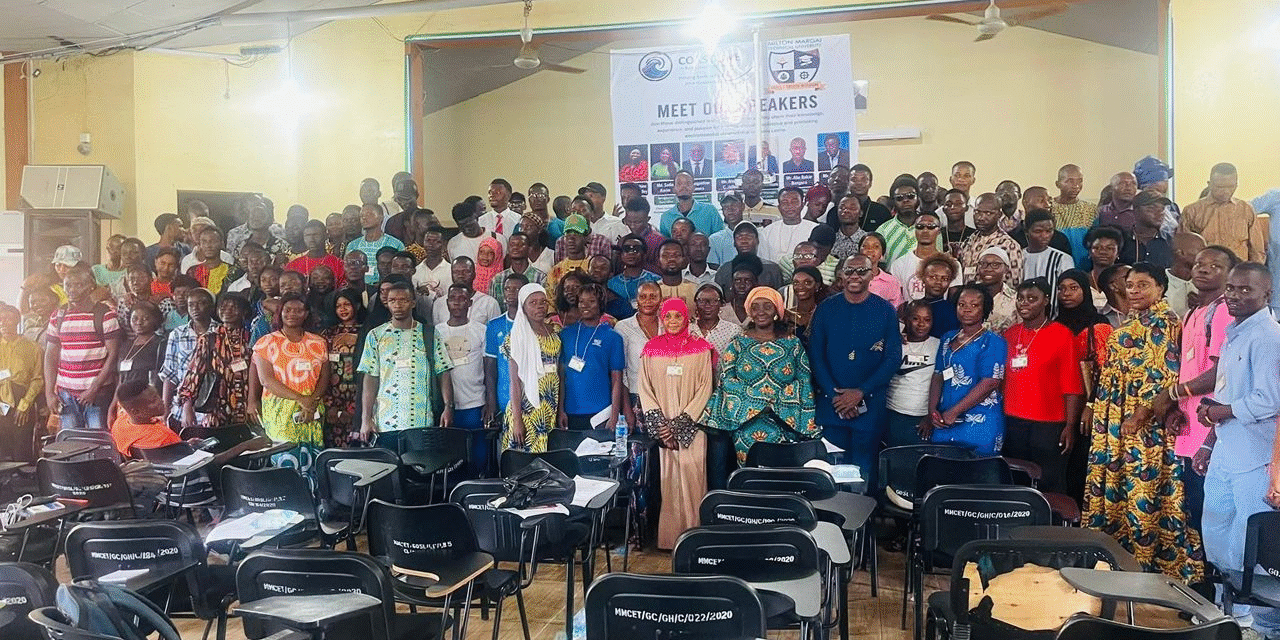
Freetown, 29th June, 2026 — The Coastline Resilience Network (CRN) has held a two-day Youth Climate Resilience and Environmental Stewardship Training Initiative, bringing 250 students from Milton Margai Technical University (MMTU) to strengthen their knowledge and practical skills in climate adaptation, environmental protection, waste management and community resilience.
The initiative seeks to empower young people to become climate ambassadors capable of promoting sustainable environmental practices and leading climate action within their communities.
Speaking at the event held at the MMTU’s Goderich Campus, CRN Executive Director, Tcho Kenah, said the programme was designed to inspire students to become agents of change rather than passive participants in addressing Sierra Leone’s growing environmental challenges. “We believe young people can change the future of this country. Climate change is already affecting our lives through flooding, coastal erosion, biodiversity loss and unpredictable weather, and the solutions will come from informed and committed young people,” he said.
Reflecting his days as a student of the University, Kenah described the institution as instrumental in shaping his career and encouraged participants to use the knowledge gained to influence their families and communities through responsible environmental practices.
Delivering the keynote address, Minister of Youth Affairs, Ibrahim Sannoh, urged young people to take ownership of Sierra Leone’s climate future, describing them as the country’s greatest asset in building resilient communities. He encouraged participants to transform the lessons from the training into practical action by leading environmental campaigns, promoting responsible waste management and mobilising their peers to protect the environment.
Deputy Minister of Environment and Climate Change, Hon. Mima Y.M. Sobba-Stephens, said environmental protection is a shared responsibility that extends beyond government institutions. She stated that Sierra Leone is already experiencing the effects of climate change through flooding, coastal erosion, rising temperatures, biodiversity loss and food insecurity, stressing that young people will inherit both the consequences of today’s environmental decisions and the responsibility for future solutions. She noted that Sierra Leone is already experiencing the effects of climate change through flooding, coastal erosion, rising temperatures, biodiversity loss and food insecurity, stressing that young people will inherit both the consequences of today’s environmental decisions and the responsibility for future solutions.
“The environment does not belong to us; we belong to the environment,” she said. “The choices we make today will determine the future our children inherit tomorrow.”
Sobba-Stephens also highlighted President Julius Maada Bio’s government efforts to strengthen climate resilience through environmental governance, ecosystem restoration, climate adaptation programmes and youth empowerment initiatives, while acknowledging the contributions of institutions including the Environment Protection Agency Sierra Leone (EPA-SL), Sierra Leone Meteorological Agency (SLMA) and the National Protected Area Authority (NPAA).
CRN Deputy Director Muniru Salifu Will stated that the organisation deliberately targeted university students, noting that many young people lack adequate knowledge about climate change and environmental responsibility. He said participants would establish climate clubs after the training to promote environmental awareness on campus and in surrounding communities.
“We want these students to become climate ambassadors,” Will said. “Instead of waiting for others, they will educate their communities, protect the environment and inspire behavioural change.”
Among the participants, Climate Change Ambassador, Amb. Solomon Lahai, a student of MMTU, described the training as practical and transformative. He said the sessions had strengthened his understanding of climate change mitigation, particularly the importance of proper waste management in reducing environmental risks such as flooding.
“I will continue engaging my community and sharing the knowledge I’ve gained here so that together we can reduce pollution and build resilience against climate-related disasters,” Lahia said, adding that community engagement would remain central to his climate advocacy efforts.
The training forms part of the Coastline Resilience Network’s broader vision of building resilient coastal and urban communities through sustainable land management, responsible production systems and climate-smart development.