By Nafisatu Olayinka Deen
Freetown, 18th November, 2026 –
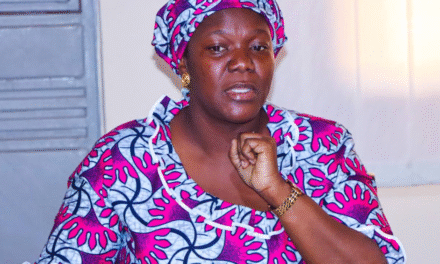
Speaking at a press conference at her residence ahead of the King’s Birthday Party on 12th November, she announced that total trade between the two countries is up 20% to £190 million, while Sierra Leone’s exports to the UK are up 40%. The UK is now helping Sierra Leonean businesses become investment-ready through British International Investment, which has chosen Sierra Leone as one of only three or four focus countries worldwide, after hosting an agriculture investment event in London in October and ahead of UK participation in the West Africa Integration and Investment Summit in Lungi.
UK Trade Lead for West Africa, Mark Smithsom, who is based in Nigeria and visited Sierra Leone for the first time, said he had met stakeholders to understand the country’s constraints and opportunities. He disclosed that exports from Sierra Leone to the UK had increased by 40 per cent over the past year, with bilateral trade also recording overall growth.
He encouraged Sierra Leonean farmers, manufacturers and agro-processing businesses to take advantage of the UK’s Developing Countries Trading Scheme (DCTS), which provides duty-free access for a wide range of products entering the British market. Smithsom said approximately 90 per cent of Sierra Leonean exporters to the UK were already benefiting from the scheme, but more awareness was needed to ensure local producers maximise the opportunities. He also noted the UK has increased its market share in services by about 10%, pointed to creative industries as a major engine for jobs, saying Sierra Leone has no shortage of talent. He said he would visit the port to explore infrastructure partnerships.
Gauld said the UK has just completed solarising 18 hospitals and 25 health centres in every district, including Connaught Hospital and Koidu Hospital, allowing doctors to operate at night without phone torches. With donor funding under pressure globally, the UK is now working more technically with ministries – helping the Ministry of Health spend its budget efficiently, improve medicine supply chains and make the health system sustainable, and helping the Ministry of Environment prepare a bid to a major Climate Investment Fund for coastal resilience, with a result expected this week. On carbon credits, she said the UK helped businesses in clean cooking, mangrove replanting and reforestation to form one association, with projects already on the ground including stove distribution, tree planting around Port Loko by Rainforest Builder, and mangrove restoration around Bonthe by West Africa Blue, all to be governed by a clear framework in the forthcoming Environment Bill.
On revenue, Gauld said the National Revenue Authority is collecting only about 8% of GDP in tax, compared to a regional average of about 15%, and the focus is not on taxing existing taxpayers more but ensuring everyone pays what they owe. The UK’s HM Revenue and Customs has been partnering with the NRA, and a UK-supported property tax pilot, now being rolled out by the World Bank, quadrupled collections by improving processes. She said unlocking that missing revenue could pay for more schools and hospitals, adding: “There is money in Sierra Leone. It is how we can help channel it.”
Gauld also highlighted a recent visit by four UK parliamentarians under the Commonwealth Parliamentary Association to look at women and girls, violence against women and girls, and the role of MPs in legislation, including visits to the Aberdeen Women’s Centre, Mile 91, schools and the Rainbow Initiative, and a documentary on FGM. She said Sierra Leone and the UK are this week co-chairing adaptation negotiations at COP in Turkey, continue to cooperate through judiciaries and a pro bono legal network, and have built a growing alumni network of over 520 Chevening and Commonwealth scholars.
The UK continues to support grassroots work on women and girls through its MOVE programme, as both countries prepare to mark the King’s Birthday as a celebration of their partnership.