By Kelfala Kargbo
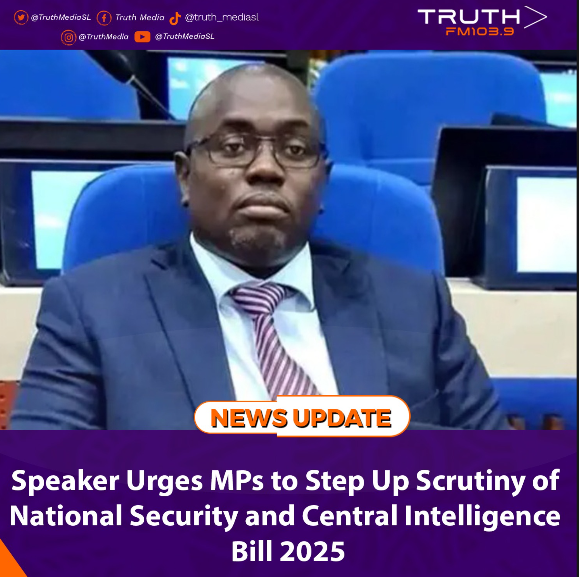
Freetown, 21st April 2026 – As debate intensifies in the well of parliament on the National Security and Central Intelligence Bill 2025, the Speaker of parliament, Hon. Sengepoh Solomon Thomas, has urged members of parliament to “do more” and have the bill ‘properly discussed behind closed doors” before it could be passed.
Upon listening to the various arguments put forward by MPs, the speaker said the issues raised were sensitive, noting that passing the bill at the time was an “extremely difficult decision.”
The debate reached a crossroads when MPs raised concerns on the composition of the National Security Council: The President is the Chairman of the council, while the Vice President, Chief of Defense and other Director Generals in the security sector form membership of the council.
The Deputy Leader of Government Business, Hon. Bashiru Silikie, called for additional officials to be members of the council, stating that the security issue is multi-sectoral and that all sectors involved should have a member, whilst the Chair of the Defence committee, Hon. William Lamin, refuted the decision for additional members, noting that too many people may affect the safety of confidential security information.
“Even around the world, not everybody is allowed in the situation room where security decisions are made. When you talk about confidentiality in a security matter as the numbers get bloated, you are undermined automatically,” Hon. Lamin noted.
The current nature of the bill explains that the council should meet once every three months to provide the least member at the Director General’s level of Government Ministries, Agencies and Departments (MDAs).
MPs, however, citing the bill, called for the National Security Coordinator to be a secretary to the council, describing him as an important security figure.
“You can’t talk about the National Security Coordinator and want him to be just a secretary. He should add his voice and vote,” said Speaker Solomon.
Leader of Government Business and Majority Leader in Parliament, Hon. Mathew Nyuma, urged the Chief Minister, David Sengeh, to further explain the structure of the security, asking for clarification on the role of the Head of Strategic Situation Group in the Office of National Security (ONS) as a civil servant.
In responding, the Chief Minister, David Sengeh, told MPs that security issues touch every line ministry, noting that it was the reason they left it open in consultation with the chairman of the council to allow senior civil servants to have members in the council.
“We are suggesting that it is left open, as the chairman, in consultation with council members, may deem necessary, because security is broader than a “straitjacket definition” as these crucial economic times have an impact on security,” he explained.
The composition of the security at the chiefdom level raised gender-based concerns and also the question of who should be part of the council.
Hon. Mustapha Sellu raised a question about the clause on the composition of the security council at the chiefdom level, asking who should be in the council in communities where police presence does not cover the bill, which provides for a senior police commander to be a member.
The bill is at its climax and disagreements among MPs continue to spark controversy in the political landscape. Whilst some individuals and civil society organizations had called for parliament to send the bill back to cabinet for review, Speaker Thomas had adjourned the matter to 24th April, 2026, with the hope that the bill would be enacted.