Freetown, 27th July 2026- Sierra Leone’s government is preparing for a significant shift in its energy and fiscal policies, as highlighted in the latest International Monetary Fund (IMF) report. The document underscores two critical measures: the gradual increase of electricity tariffs to align with cost-recovery levels, and the termination of temporary fuel subsidies introduced earlier this year.
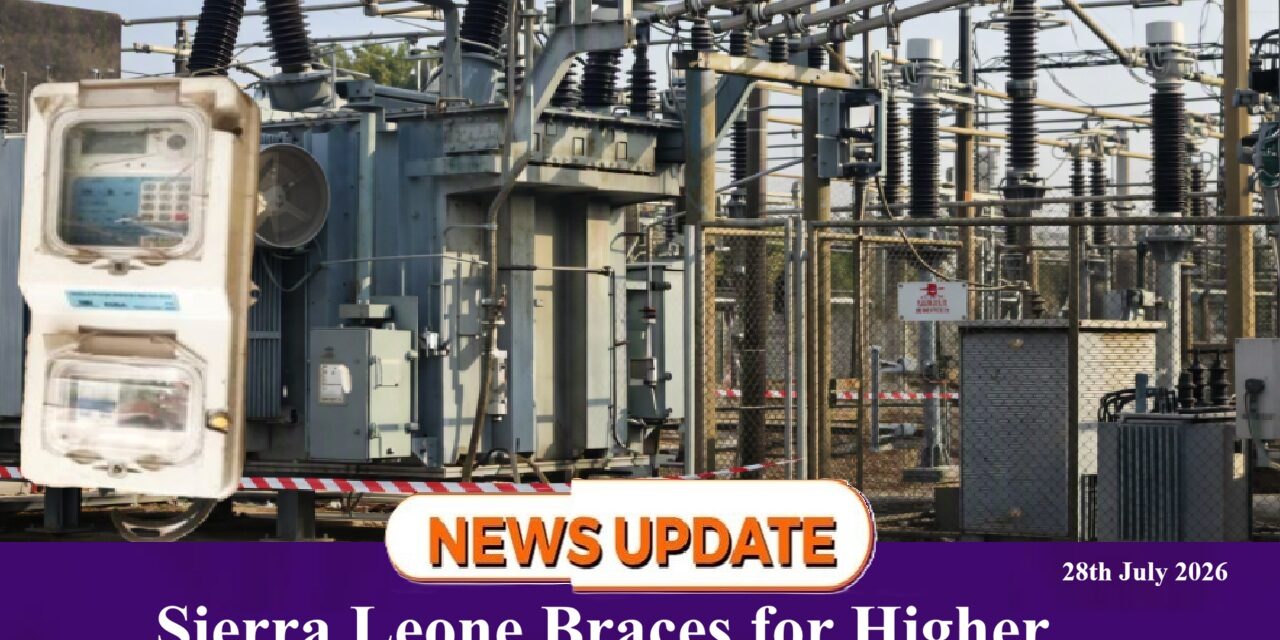
The IMF report makes clear that electricity tariffs will continue to rise. The government has committed to adjusting tariffs upward to reflect the actual cost of generating and distributing electricity. This move is framed as essential for the financial sustainability of the national utility, which has long relied on government subsidies to remain afloat.
One key line from the report states: “Electricity tariffs will be adjusted upward to align with cost-recovery levels, ensuring the viability of the utility.” This signals a policy shift aimed at reducing fiscal pressure while strengthening the energy sector’s resilience. Already, tariffs have been increased, and further upward adjustments are expected to match fuel price changes and reduce reliance on government support.
The IMF report also highlights the government’s decision to introduce fuel subsidies in April 2026 to cushion citizens from sudden spikes in petrol and diesel prices. These subsidies, however, were explicitly designed as short-term measures.
The report notes: “We also introduced fuel subsidies in April to avoid disruptive price adjustments to petrol and diesel. These subsidies are temporary and will be capped at a cost of 0.13 ppts of GDP. We plan to allow for full pass-through of oil prices when this envelope is exhausted.”
This means that once the subsidy allocation, expected to run out by July, is exhausted, the government will stop covering part of the fuel cost. Any changes in global oil prices will then be fully reflected in local pump prices. Already, fuel prices have risen sharply this year, with petrol up 28 percent and diesel up 46 percent, despite the temporary subsidies.
The IMF emphasizes that subsidies distort market prices, drain public finances, and disproportionately benefit wealthier households. Phasing them out is seen as necessary to create fiscal space for priority spending, such as social programs and infrastructure.
The government has pledged to preserve fuel revenues, noting that since March 2026, the fuel pricing formula has accurately incorporated excise duties, import duties, and other levies. The IMF also recommends contingency measures, including reprioritising spending, strengthening tax administration through the Tax Administration Diagnostic Assessment Tool (TADAT), and, if necessary, introducing new tax policies such as higher tobacco taxes or rationalising GST exemptions.
For households and businesses, these changes mean higher costs in the near term. Electricity bills will rise as tariffs move toward cost recovery, while fuel prices will fluctuate more directly with global oil markets once subsidies end.
While painful, the IMF frames these measures as necessary for long-term stability. By reducing reliance on subsidies and ensuring utilities operate on a financially sustainable basis, Sierra Leone aims to strengthen its fiscal position and improve energy sector viability.