The UBA National Essay Writing Competition commenced at 9:00 a.m. at the UBA Headquarters, with the arrival of 24 shortlisted semi-finalists from different schools across Sierra Leone, accompanied by their parents, guardians and teachers.
The opening session commenced at approximately 9:30 a.m. with the arrival of dignitaries, including officials from UBA and representatives from the Ministry of Basic and Senior Secondary Education. The National Anthem was sung by all persons present, after which remarks were delivered by representatives from the Ministry and the Institute for Legal Research and Advocacy for Justice (ILRAJ).
Mrs. Fatima Ashmia Conteh, representing ILRAJ, congratulated the pupils on reaching the semi-final stage of the competition and encouraged them to conduct themselves appropriately throughout the essay-writing exercise. She also provided guidance on what was expected of them during the competition.
The Chief Executive Officer of UBA, Mr. Mohammed Alhajie Samoura, subsequently delivered his remarks and words of encouragement to the semi-finalists.

A representative from UBA then delivered a PowerPoint presentation on the history and development of the UBA National Essay Writing Competition. During the presentation, it was stated that, over the five years of the competition’s existence, a total of 1,759 essays had been submitted. This year’s competition recorded the highest turnout so far, with 518 essays submitted. It was further highlighted that a significant majority of the shortlisted semi-finalists were pupils from schools in the provinces, demonstrating the national reach of the competition and its ability to provide opportunities to pupils from different parts of Sierra Leone. The representative also took the participants through the different stages of this year’s competition, from its launch to the semi-final and final stages.
Following the presentation, the pupils were taken on a tour of the UBA Headquarters. They visited different sections of the bank, including the offices of the Chief Executive Officer and other senior officials. The tour provided the pupils with an opportunity to learn more about the operations of the bank and its working environment.
The Semi-Final
Upon returning to the hall, the shortlisted pupils were briefed on the procedures for the semi-final essay-writing exercise. In order to ensure fairness and impartiality, the pupils were required to ballot for identification numbers. The numbers drawn were to be used as their identification numbers and written on their answer booklets, thereby ensuring that the judges could mark the scripts without knowing the identities of the respective pupils.
The pupils were further briefed on the rules of the competition, the expected standards of conduct and the procedures to be followed during the essay-writing exercise. The question papers and answer booklets were subsequently distributed, and the semi-final competition commenced. The pupils were given 45 minutes to complete their essays.
At the expiration of the 45 minutes, the scripts were collected and handed over to the judges for their assessment and compilation of scores. Lunch was subsequently served to the pupils and their accompanying parents, guardians and teachers while the judges proceeded with the marking process.
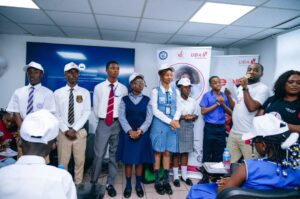
Following the marking and deliberations, 12 pupils with the highest scores from Chesterton Academy of Sierra Leone, The Sierra Leone Grammar School, The Door International Academy, Our Lady of Guadudalupe Secondary School, The Annie Walsh Memorial School, The International School Limited, Cluny Free the Children Secondary School, Providence International School, Government Secondary School Bo, Koidu Secondary School, were selected to proceed to the final round. The 12 pupils who did not qualify for the final round were awarded certificates of participation, school bags containing school items and transportation refunds in recognition of their participation in the competition.
The Final
The final competition subsequently commenced with the 12 finalists participating in another ballot to obtain their identification numbers. Answer booklets and question papers were distributed, and the finalists were reminded of the procedures and rules governing the final round. They were given 45 minutes to complete their essays.
At the end of the 45-minute period, the scripts were collected and submitted to the judges for marking. To ensure that every script received independent consideration from each judge, five copies of each finalist’s script were made, allowing each of the five judges to mark a copy of every script.
While the judges were marking and deliberating on the final scripts, the finalists and their parents were served snacks. Each finalist was also interviewed and video-recorded about their experience, including how they heard about the competition, their journey through the different stages and how they felt after qualifying for the final.
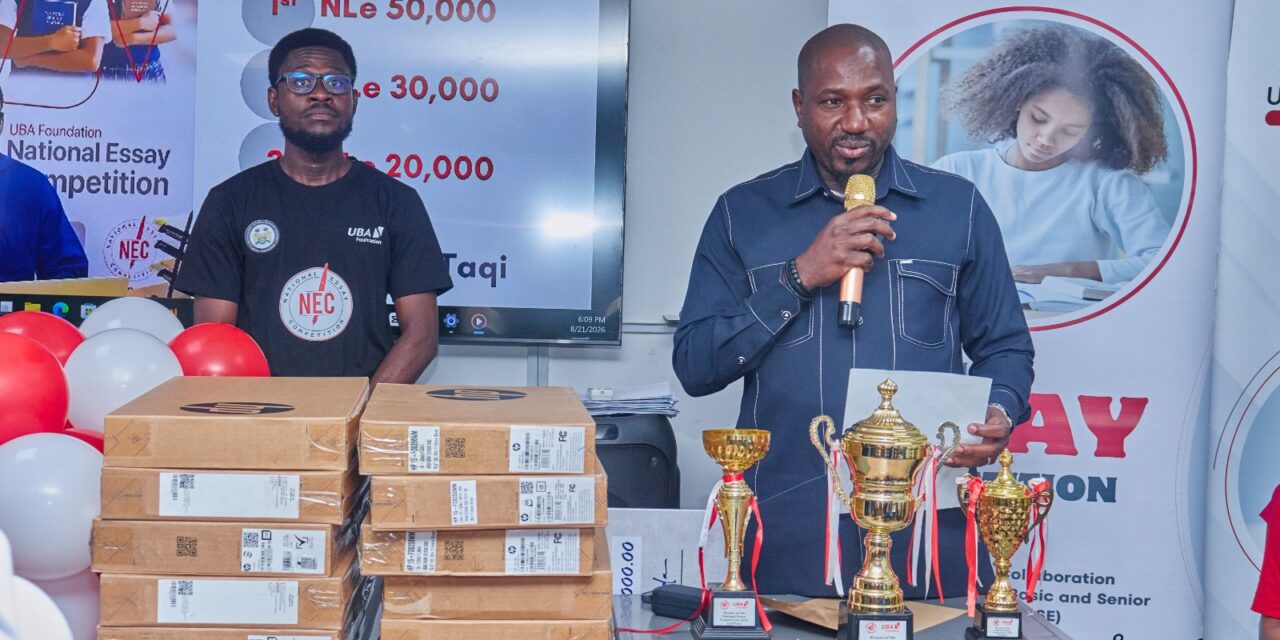
Following the completion of the interviews, marking, deliberations and compilation of the results, the Managing Director of the bank returned to the hall to announce the results. In his remarks, he provided an overview of the National Essay Competition, explaining that it is organised across 20 UBA subsidiaries in Africa.
He explained that the competition had not been conducted the previous year due to unforeseen circumstances and that UBA had decided to organise this year’s competition differently, including bringing ILRAJ on board as part of its efforts to ensure that the competition was fully national in scope. He expressed his appreciation to ILRAJ for its contribution towards making the competition truly national. He noted that approximately 60–70% of the 24 shortlisted pupils were from schools in the provinces, which he described as evidence of the national reach of the competition.
He also commended the girls for being the majority among the shortlisted candidates and thanked all the pupils for participating. He expressed appreciation to the parents and teachers for their support and encouragement throughout the competition.
Each of the 12 finalists was presented with a certificate, a school bag containing school items and an HP laptop. The results were then announced, with Alhaji Saidu Mohamed of The International School Limited emerging as the second runner-up, for which he received a cheque of Le 20,000. Sia Mary Destiny Saquee of Cluny Free the Children Secondary School emerged as the first runner-up and received a cheque of Le 30,000. Jedeiah Rolyn Williams of The Sierra Leone Grammar School emerged as the overall winner of the competition and received a cheque of Le 50,000.
The closing remarks were delivered by a staff member of UBA, who congratulated all the participants and encouraged those who did not finish among the top three to remain motivated and try again the following year. The pupils were reminded that, regardless of their final positions, their participation and achievement in reaching the various stages of the competition made them all winners.
The event concluded with group photographs involving the pupils, organisers, dignitaries, parents, guardians and teachers. The top three winners were also interviewed about their experiences and how they felt after emerging as the leading participants in the competition.