Electoral Oversight and Democratic Accountability: Why Sierra Leone Must Move Forward: Independence Does Not Mean Absence of Accountability
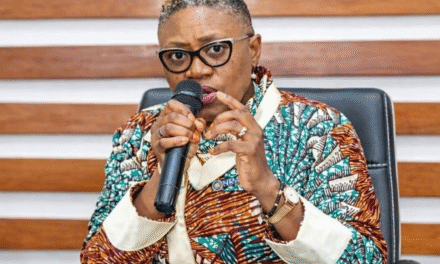
By Honourable Ibrahim Barrie
Member of Parliament, Bombali District, Sierra Leone.
Recent arguments suggesting that the Electoral Commission should not be subject to parliamentary oversight, based on the 1991 Constitution, raise important questions about how we understand democracy—not just as it was designed, but as it must evolve.
Yes, the Constitution guarantees the independence of the Electoral Commission. But independence does not mean absence of accountability. In fact, modern democracies recognize that independent institutions must still be subject to transparent, lawful oversight in order to maintain public trust and legitimacy.
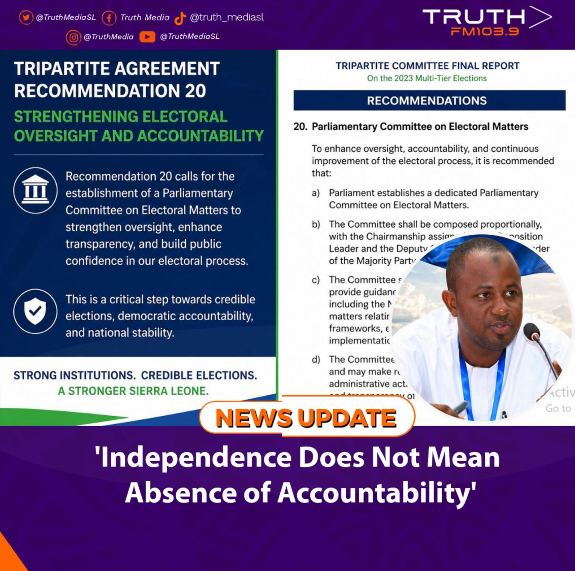
This is precisely why Recommendation 20 of the Tripartite process called for strengthened oversight mechanisms, including parliamentary engagement on electoral matters. This recommendation was not made in isolation—it was a direct response to concerns around transparency, credibility, and public confidence in our electoral system.
The key issue, therefore, is not whether oversight should exist, but how it should be structured to respect independence while ensuring accountability.
Across the world, this balance has been successfully achieved:
In Ghana, Parliament engages the Electoral Commission through oversight committees that review reforms, preparedness, and funding.
In Kenya, parliamentary structures provide scrutiny of the electoral body, especially following contested elections.
In South Africa, the Electoral Commission reports to Parliament, ensuring transparency while maintaining institutional independence.
In the United Kingdom, the Electoral Commission is accountable to Parliament through structured review mechanisms.
These examples demonstrate a simple but important truth: oversight strengthens independence—it does not weaken it.
In Sierra Leone, establishing a Parliamentary Committee on Electoral Matters, chaired by the opposition, would not undermine the Constitution. Rather, it would reinforce confidence, ensure inclusivity, and provide a transparent framework for electoral reform.
Such a committee would:
Strengthen electoral integrity
Promote transparency and accountability
Build trust among political actors and citizens
Reduce electoral disputes
Lay a solid foundation for credible elections in 2028 and beyond
This is not about political advantage—it is about national interest.
Furthermore, we must be mindful of the broader implications of our actions. The Agreement for National Unity and the recommendations of the Moral Guarantors were facilitated in good faith, with the aim of restoring trust and strengthening our democratic processes. We must not send the wrong message or, worse, appear to betray the confidence and commitment of our Moral Guarantors by selectively implementing agreed recommendations.
Sierra Leone must demonstrate sincerity, consistency, and commitment to reform.
I therefore respectfully urge the Rt. Hon. Speaker of Parliament to establish the Parliamentary Committee on Electoral Matters without delay. This is a critical step toward strengthening oversight, enhancing credibility, and ensuring that future elections are beyond reproach.
Our democracy must not remain static. It must evolve to meet the expectations of our people.
The future of Sierra Leone depends on the decisions we make today.