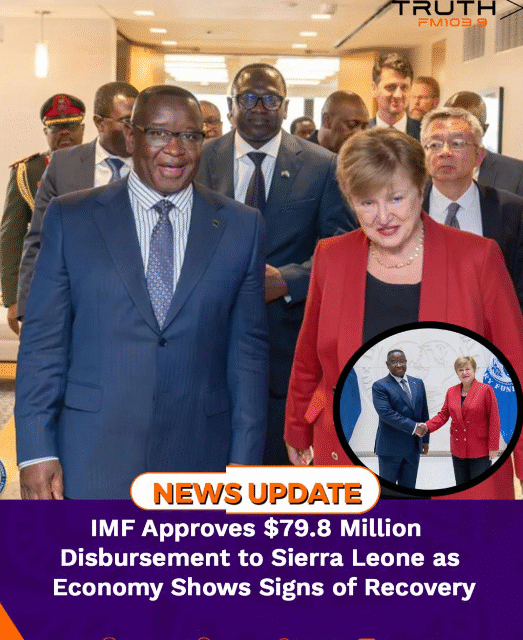
Freetown,19th February 2026– The International Monetary Fund (IMF) has approved the first and second reviews of Sierra Leone’s Extended Credit Facility (ECF), unlocking an immediate disbursement of US$79.8 million (SDR 58.3 million). This brings total disbursements under the program to US$127.8 million (SDR 93.3 million) since its approval in October 2024.
The reviews, completed on December 16, 2025, mark a turning point for Sierra Leone after fiscal slippages in 2024 delayed the first assessment. Spending overruns, partly financed by central bank purchases of government securities, alongside reserve depletion and reform delays had threatened program credibility. However, corrective measures have since restored momentum.
Economic indicators show cautious improvement. Growth is projected at 4.4% in 2025, driven by mining and agriculture. Inflation fell sharply to 4.4% in October 2025, aided by tighter macroeconomic policies and a stable Leone. Borrowing costs have eased, reflecting improved investor confidence. Yet vulnerabilities remain: foreign reserves dropped to just 1.5 months of import cover by September, while debt continues to pose a high risk of distress.
In its statement, IMF Acting Chair and Deputy Managing Director Bo Li praised Sierra Leone’s renewed commitment to reforms but warned of persistent risks. “The authorities have brought the ECF back on track following program slippages in 2024, and the economy is reacting favourably,” he said. “However, debt remains at high risk of distress and reserves have fallen to 1.5 months of imports.”
The IMF emphasized the need for stronger fiscal discipline. Revenue measures, improved tax compliance, and tighter expenditure controls are expected to prevent future overruns. At the same time, social spending must be protected to shield vulnerable households from adjustment pressures.
Debt management reforms will be critical. The Fund urged Sierra Leone to secure more concessional financing, extend maturities, broaden its investor base, and ensure debt securities are issued at sustainable rates. On monetary policy, the IMF noted that continued consolidation allows for a gradual transition to a neutral stance, while rebuilding reserves remains an urgent priority.
Structural reforms are also in focus. The recent publication of Sierra Leone’s Governance and Corruption Diagnostic report was welcomed, with the IMF calling for steadfast implementation to strengthen institutions and reduce corruption vulnerabilities.
Despite the progress, risks loom large. Reform fatigue, given the scale of fiscal adjustment required, could undermine momentum. Still, with inflation under control, growth near potential, and international support flowing, Sierra Leone’s economic outlook is cautiously stable, provided reforms remain on track.