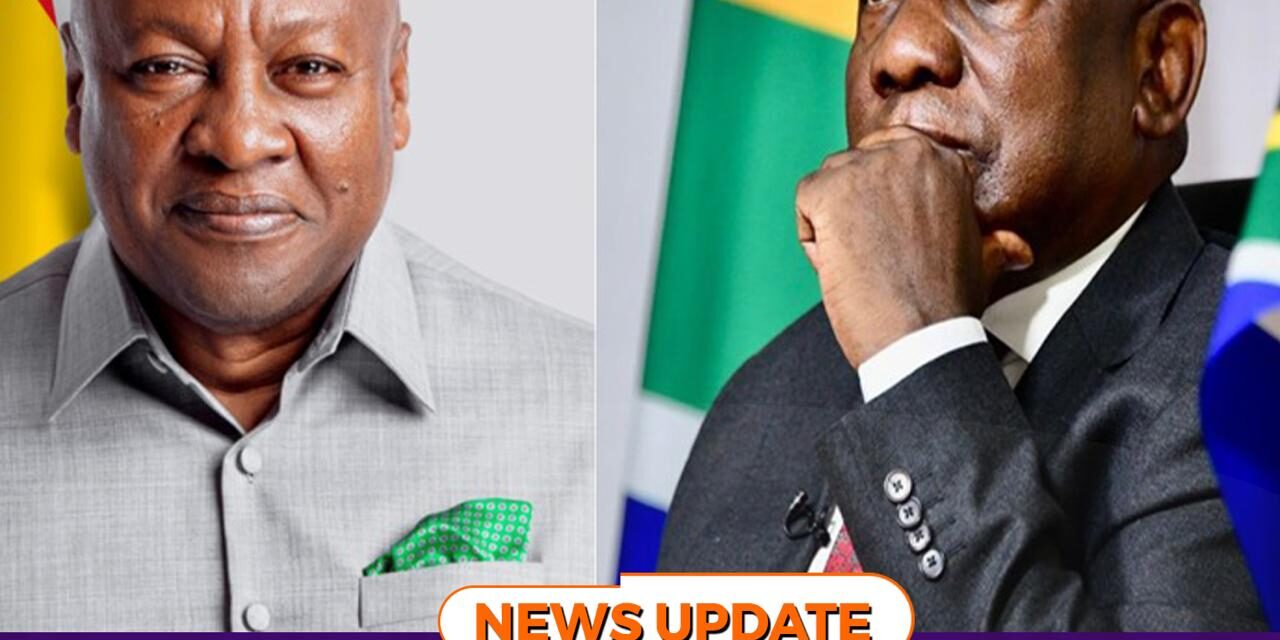
Accra, Ghana, 7th July 2026- Accra has declined a request for a state visit by South African President Cyril Ramaphosa, citing renewed xenophobic attacks against Ghanaians and other African nationals in South Africa.
The decision, Ghana’s local media, including thebftonline.com said was confirmed by a senior source at Ghana’s Ministry of Foreign Affairs, underscores growing diplomatic strain that could ripple into trade relations and Africa’s wider integration agenda.
The refusal comes in the wake of violent demonstrations in South Africa targeting foreign nationals, which have left communities unsettled and at least one Ghanaian dead on June 30. Since the escalation, Ghana has repatriated about 1,000 of its citizens, with hundreds more awaiting evacuation. Officials in Accra deemed it inappropriate to host a high-level visit while concerns over the safety of Ghanaians remain unresolved.
“Ghana has urged Pretoria to take more decisive steps to protect its nationals before discussions on a future visit can resume,” the source said, requesting anonymity as they were not authorised to speak publicly. Neither Ghana’s Foreign Ministry nor South Africa’s Presidency had issued official statements at press time.
The setback threatens to become one of the most significant tests of Ghana–South Africa relations in recent years. Both countries are among sub-Saharan Africa’s largest economies, with South African firms heavily invested in Ghana’s banking, telecommunications, mining, retail and manufacturing sectors. Ghanaian businesses, meanwhile, continue to explore opportunities in South Africa’s market.
Although trade flows remain unaffected for now, analysts warn that prolonged diplomatic uncertainty could erode investor confidence, slow government-to-government engagement, and stall initiatives designed to expand economic cooperation. The timing is particularly sensitive given the rollout of the African Continental Free Trade Area (AfCFTA), headquartered in Accra, which aims to create a single African market by reducing barriers to trade and boosting investment.
While AfCFTA does not guarantee unrestricted movement of people, its success depends on an environment where businesses, investors and skilled professionals can operate across borders with confidence. Repeated attacks against foreign nationals in major economies like South Africa risk undermining that vision by raising doubts about the security of cross-border operations and the free movement of talent.
Whether the diplomatic chill proves temporary will hinge on Pretoria’s response to Accra’s concerns and its ability to reassure African partners that foreign nationals can live, work and invest safely within its borders. For now, Ramaphosa’s postponed visit highlights the fragile balance between domestic tensions and continental ambitions for deeper economic integration.