By: Emmanuel Mbowa
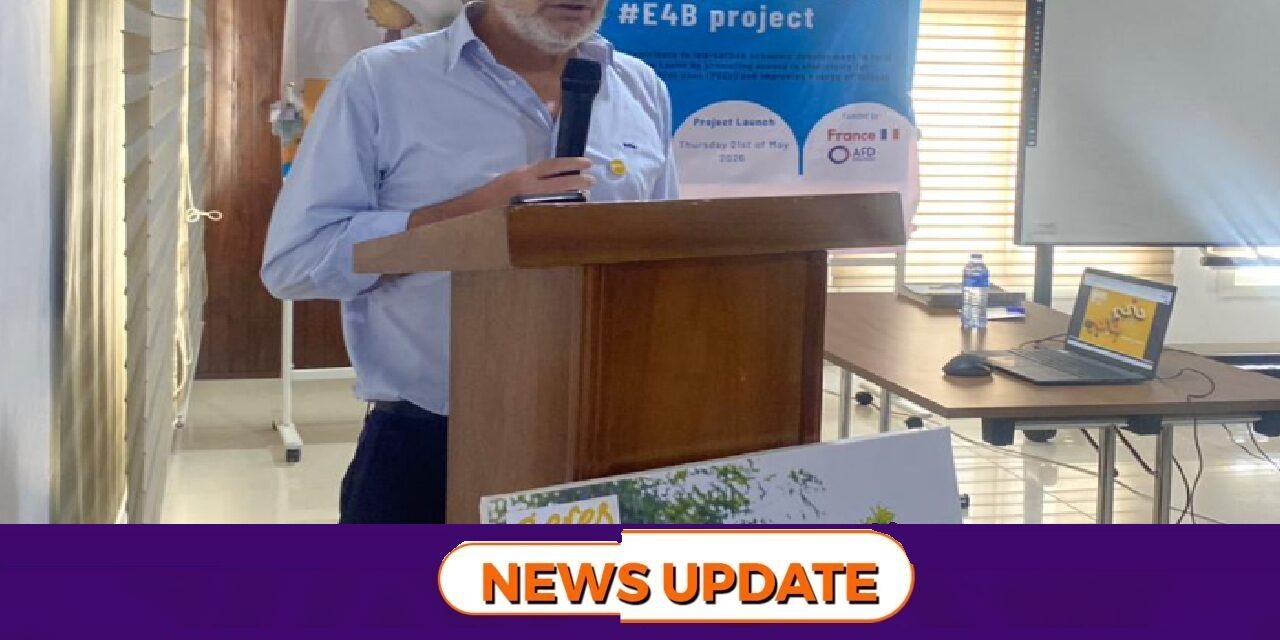
Freetown, 25th May 2026– Geres, a French international NGO specialised in climate change mitigation and energy access, has officially launched its Energy for Business (E4B) project to unlock the productive potential of rural Sierra Leone through clean, sustainable energy.
Funded by France, the four-year project targets rural entrepreneurs, especially women and youth who lack access to reliable power. The pilot phase will roll out in five communities and twenty-five groups and cooperatives, with a goal to directly support 75 businesses and impact nearly 5,000 households, or about 30,000 people.
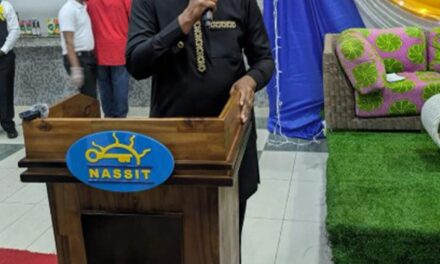
“The overall ambition is to unlock the productive potential of rural Sierra Leone through inclusive access to clean and sustainable energy,” said Philippe Labbé Lavigne, Country Representative and Project Manager for Geres. “We’re providing renewable energy specifically for productive users in rural areas where there is no energy access today and no plan for it in the near future.”
Philippe explained that E4B is structured around three main components. “In expanding sustainable energy access, Geres will develop two new Energy Business Areas, or EBAs, dedicated hubs where 10 to 15 rural enterprises are grouped and supplied with 24-hour solar power,” he said. Each EBA, he noted, will deliver 25 to 35 kilowatts of solar capacity, with generator backups to ensure reliability.
“We’re building these EBAs from scratch in areas with zero energy access,” Philippe said. “Think of the model we’ve already tested in Mali: a central power plant that serves a cluster of businesses.”
In addition, the project will upgrade one existing mini grid site into a hybrid EBA and distribute 25 standalone solar kits to rural entrepreneurs and cooperatives. While agribusinesses are the priority, Philippe noted they remain open to other productive activities like carpentry, tailoring, and bakeries.
“The second component focuses on turning energy into income. Geres will partner with existing mini grid operators like Power Leone, Noa and PowerGen to increase energy access for productive users in two mini grid communities,” he explained.
The key activity includes intensive support for up to 75 Productive Users of Energy, small and medium businesses and cooperatives. “We’re not just dropping off solar panels,” Philippe stressed. “Each business gets tailored training, coaching, and business support over a full year, with a strong focus on women and youth entrepreneurs.”
For farmer and fisher groups, Geres will provide smaller solar kits of about 6 kilowatts. “That’s enough to run 2 to 3 pieces of equipment at once,” Philippe said. “It lets agro processing groups do conservation, drying, or transformation to increase production and reduce post-harvest losses.”
The third component is about long-term impact. Geres is adapting its EBA model from Mali to Sierra Leone to test replicability.
“We’ll document lessons learned, compare this pilot to our past experiences, and work closely with communities to strengthen local governance, management, and inclusion,” Philippe said. “Coordination with the Ministry of Energy and local authorities is critical to align with public policy and rural development plans.”
The E4B team, recruited between late 2025 and early 2026, has already conducted territorial diagnostics in several communities. Site selection criteria include economic potential, like existing markets or small businesses, population size, lack of planned energy access, and crucially, community motivation.
“Four communities are now shortlisted for detailed technical, economic, social, and environmental feasibility studies,” the E4B Team confirmed. “The final two EBA sites will be selected after that process. Throughout all stages, community participation is central. The motivation and commitment of local people are key criteria.”
Geres is also introducing a public private partnership model. For the larger EBA infrastructure, Geres will sign public private partnership agreements with communities and local authorities. “As the implementing company, we’ll manage operations and maintenance for both the solar systems and the buildings,” Philippe said. “But the goal is community ownership. We’re building local capacity so these EBAs run long after the project ends.”
The one-year support package for businesses includes energy, equipment plus training. “Energy alone isn’t enough,” Philippe added. “You need skills to use it productively. That’s how you transform daily life and local economies.”
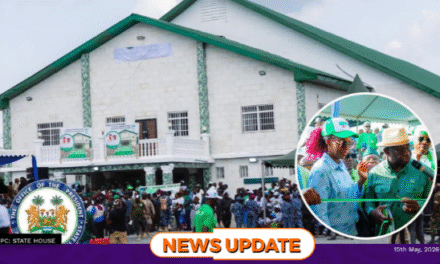
At the launch, representatives from the Ministries of Gender and Children Affairs, Agriculture and Food Security, and Planning and Economic Development (MoPED) welcomed the E4B project, stating it is a timely move to boost energy access in underserved communities and empower women and youth with SMEs. This drive, Pamela Koneh from MoPED noted, aligns with the government’s Medium Term National Development goals. “Energy is central in that agenda, and without reliable, affordable, and clean energy, we cannot drive productivity, create jobs, or uplift the rural community out of poverty,” she stated.
Giving his closing remarks, Antonin Coeur Bizot, Guinea & Sierra Leonean AFD Director, lauded the initiative by Geres, the mini grid operators, CSOs, and the government for supporting the E4B project, stating, “Access to reliable, affordable, and sustainable energy is the key condition for development, and while access to energy is essential for households and public services, it is also a key enabler for entrepreneurship, productive activities, and local economic development. This is particularly true for Sierra Leone.”
Several districts were initially selected, but Geres has narrowed it down for the first studies ongoing to Bo, Moyamba, and Kambia Districts, from which they will kick off the pilot phase in two of the selected communities. However, Geres has shown enthusiasm to expand this drive to other underserved communities as the project runs until 2028