By Davida Spaine-Solomon
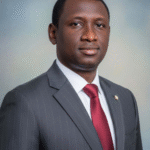
Freetown, 4th August, 2026— The Executive Director of the Coastline Resilience Network, Tcho Kenah, has called on Parliament to ensure that environmental protection is at the center of constitutional reform as lawmakers debate the Constitutional Amendment Act, 2025, arguing that the country’s supreme law must safeguard both democratic governance and Sierra Leone’s natural heritage.
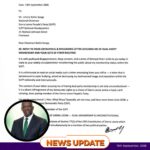
In an editorial titled “A Constitution Must Protect More Than Our Politics,” Kenah said public debate surrounding the proposed constitutional amendments had largely focused on electoral reforms, including the adoption of Proportional Representation or the First-Past-the-Post system, the presidential election threshold, women’s representation, independent presidential candidates, dual citizenship, and other governance issues.
While describing those reforms as important to the country’s democratic future, he argued that the debate had overlooked a critical issue: the constitutional protection of the environment.
In a Facebook post on 29th July, Kenah stated that a constitution should not only determine how political power is acquired and exercised but also reflect the nation’s values and protect the rights, welfare, and future of its citizens. He said Sierra Leone’s growing environmental challenges make it imperative for environmental protection to be firmly embedded in the Constitution.
He pointed to recurring floods, blocked drainage systems caused by plastic waste, coastal erosion, disappearing mangrove forests, polluted rivers, deforestation, and the increasing effects of climate change as evidence that environmental degradation has become a national development challenge rather than simply an ecological concern.
Kenah noted that communities including Moa Wharf and Aberdeen Creek in Freetown, as well as Shenge, Tombo, Yeliboya, and Lungi, continue to experience the consequences of environmental degradation, with families losing homes, children missing school, fishermen facing declining fish stocks, farmers struggling with unpredictable rainfall, and public health being threatened by poor sanitation and contaminated water. He warned that these challenges undermine fundamental rights, including the rights to life, health, and livelihood, and ultimately erode the dignity of citizens.
To address this, Kenah urged Parliament to include provisions in the Constitution guaranteeing every Sierra Leonean the right to live in a clean, healthy, and sustainable environment, while also recognising the shared responsibility of citizens to protect forests, rivers, wetlands, mangroves, beaches, and biodiversity for future generations.
He further argued that environmental protection is not solely an ecological issue but a prerequisite for sustainable economic development. Agriculture, fisheries, tourism, and urban development, he said, all depend on healthy ecosystems, while climate resilience has become an economic necessity rather than a policy choice.
Describing the Constitutional Amendment Act, 2025, as a rare opportunity to shape Sierra Leone’s long-term future, Kenah called on lawmakers to look beyond electoral reforms and political transitions by ensuring the country’s natural environment receives the same constitutional attention as governance structures. “A Constitution should not only explain how we choose our leaders. It should also express what we stand for as a nation,” he stated.
Kenah concluded that if Sierra Leone intends to move from what has been described as a “constitution of survival” to a “constitution of prosperity,” environmental security must form part of that vision. He said a constitution that protects democratic governance while failing to protect the environment leaves future generations vulnerable, whereas one that safeguards both will help build a healthier, more resilient, and prosperous nation.