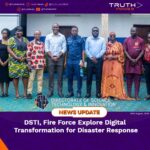
Freetown, 26th August, 2026 – The Directorate of Science, Technology and Innovation (DSTI) has opened discussions with the Sierra Leone Fire Force on advancing digital solutions aimed at strengthening institutional visibility, data management, coordination, and disaster response.
The engagement follows a formal request from the Fire Force for support in developing an institutional website and dashboard. The proposed website would serve as a platform to showcase the institution’s activities, interventions, and achievements, while improving public access to information. Officials noted that government websites are developed through the Ministry of Information using a standard template, meaning the Fire Force must channel its request via the Ministry of Internal Affairs before approval. While that process continues, technical talks on the dashboard and data visualization components are moving forward in parallel.
DSTI clarified that the Fire Force’s dashboard would be distinct from the broader disaster-response data visualization platform currently under development. The institutional dashboard would be tailored to the Fire Force’s operational requirements, users, and information needs.
A key focus of the discussions is the Key Asset Visualization component under the Integrated Geographic Information System (IGIS) project. DSTI and partners are engaging data-holding institutions to secure updated datasets — including Fire Force operational information, rainfall data from Meteorology, and relevant health statistics. Officials emphasized that the availability and quality of these datasets will be critical to producing meaningful visualizations that support planning, coordination, and decision-making.
Beyond immediate solutions, the talks also explored the Fire Force’s long-term digital architecture. Rather than building multiple disconnected applications, DSTI encouraged an integrated enterprise management approach that could eventually connect human resources, payroll, inventory, operations, and other institutional functions. This would ensure that short-term digital tools are developed with future integration in mind, guided by a clear Business Process Map and Product Requirements Document.
The engagement drew lessons from digital transformation efforts in countries such as Rwanda, South Africa, Uganda, Zimbabwe, and Zambia, while stressing the need to adapt solutions to Sierra Leone’s institutional structures and operational realities.
DSTI’s overall objective is to move beyond isolated applications and build sustainable digital systems that enhance visibility, strengthen data management, improve coordination, and enable more effective disaster preparedness and response. The institution will continue working with the Fire Force, the Ministry of Internal Affairs, the Ministry of Information, and relevant data-holding agencies to refine requirements and establish an appropriate digital pathway.