By Davida Spaine-Solomon
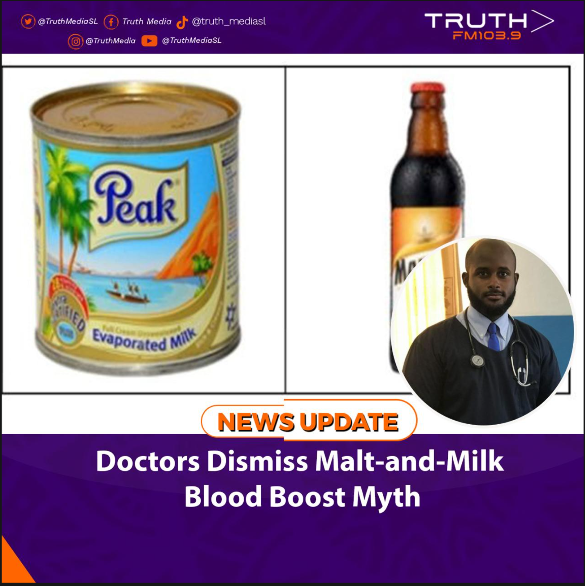
Freetown, 14th April 2026 – Medical Experts have debunked the belief passed down in many Sierra Leonean homes and communities that a mixture of milk and malt can quickly “boost blood” after illness or blood donation, as this is simply not true.
The idea that a malt and milk mixture can increase blood volume has become deeply rooted, often recommended as a quick fix for weakness or recovery. But, according to health professionals, the science tells a very different story.
“There is no scientific evidence that malt or milk can increase blood volume or red blood cell production,” said Dr. Mohamed Lahai Abouhassan Samura, saying that it is just a myth.
Medical experts explained that while both drinks have nutritional value, their role is often misunderstood, noting that malt provides energy through sugars and vitamins, while milk offers protein and calcium. This, they said, “they may help restore energy levels, but they do not replace lost blood or stimulate its production.”
Doctor says the confusion likely stems from what happens after blood donation, stating that blood donors are often given malt or similar drinks. They noted that such practice is not to rebuild blood, but to rehydrate and prevent dizziness.
“When you donate blood, you lose about 450 millilitres (ml) [of blood],” Dr. Samura noted. He clarified that drinking malt and milk afterwards helps with energy and fluid replacement, but it does not restore the blood itself.
Blood production is a far more complex process. Red blood cells are produced in the bone marrow and rely on essential nutrients, such as iron, folate, and vitamin B12. This process takes time, typically four to six weeks, to replace lost blood and cannot be accelerated by sugary drinks.
Health experts warned that believing in the myth may delay proper treatment, particularly for people suffering from anaemia, a condition already widespread in Sierra Leone.
“We see many children brought to hospital too late, especially those under five. By then, the condition has worsened significantly, Dr. Samura said.”
He noted that anaemia remains alarmingly common, affecting a large proportion of young children and women of reproductive age. He said the causes range from poor nutrition to infections, such as malaria, as well as inadequate sanitation.
“A simple blood test can confirm anaemia,” Dr. Samura said. “Self-treatment with malt and milk is not recommended. If diagnosed, follow the treatment and take supplements as prescribed.”
He said instead of quick fixes, doctors recommend a balanced diet rich in iron and vitamin foods, such as beans, lentils, leafy greens, red meat, and fortified cereals, playing a critical role in building healthy blood levels.