By Kelfala Kargbo
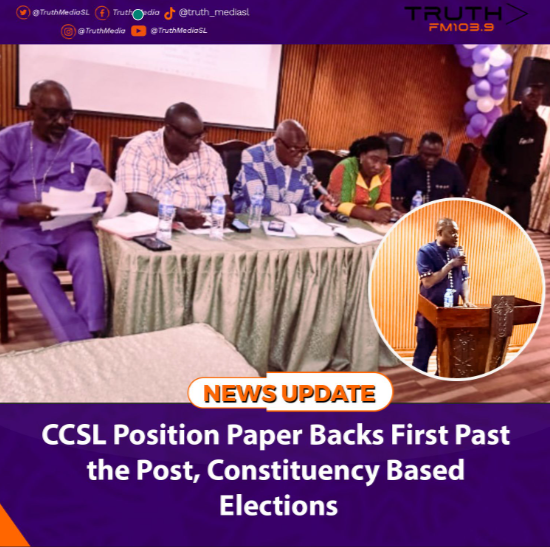
Freetown, 12th March 2026- The Council of Churches in Sierra Leone (CCSL) has stepped into the national debate on constitutional reform, releasing a position paper that outlines its recommendations on the 2025 Constitution Amendment Bill.
The intervention comes as public discussion intensifies over proposed changes to the 1991 Constitution. At the launch of the document, Bishop Magnus Bendu, Chair of the CCSL Advocacy Committee, said the church’s motivation is rooted in its “prophetic role” in national affairs, a tradition it has upheld since its founding in 1924.
Among the most notable proposals is a call to change how the Chief Electoral Commissioner is appointed. CCSL argues that the nomination should come jointly from the Inter‑Religious Council, the Bar Association, and the Sierra Leone Association of Journalists (SLAJ), rather than being left solely to presidential discretion.
The paper also aligns with the Inter‑Religious Council’s earlier stance against the Proportional Representation system, warning that it risks weakening the bond between voters and their representatives. Instead, CCSL favors a first‑past‑the‑post, constituency‑based system, which it says is simpler and more transparent for Sierra Leoneans.
On presidential elections, CCSL supports the requirement that candidates secure 50% +1 of votes nationwide but adds that independents should also meet a minimum 5% threshold in at least half of the districts. The Council further backs the proposal for fixed election dates, recommending the second Saturday in November every five years.
The position paper calls for clearer constitutional definitions of citizenship to avoid ambiguity, and urges the removal of certain subsections in Section 74 while retaining others for clarity. CCSL also questions whether qualifications for electoral commissioners should be enshrined in the Constitution, arguing that such details may be better handled through legislation to allow flexibility in future reforms.
CCSL President Rev. Henry Samuels expressed hope that lawmakers will give serious consideration to the church’s recommendations. “We are hopeful they’ll hear us, and with respect for the church, they will consider our position,” he said.
With the constitutional review process gathering momentum, the CCSL’s intervention adds a strong moral and civic voice to the debate, reinforcing the role of faith‑based institutions in shaping Sierra Leone’s democratic future.