By Davida Spaine Solomon
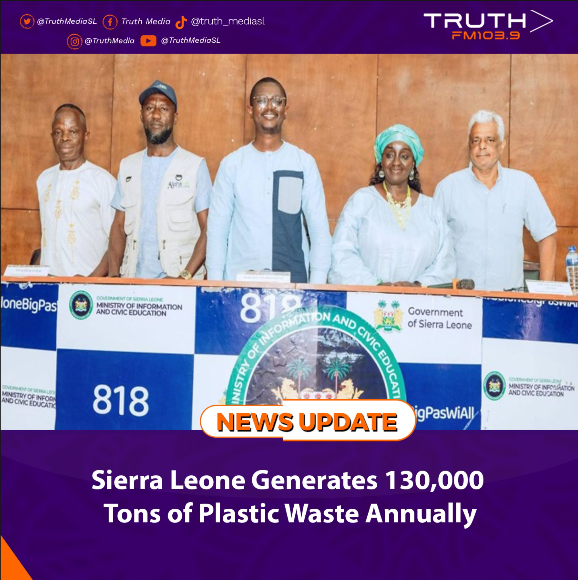
Freetown, 29th April 2026 — The Strategic Communications Adviser at the Ministry of Information and Civic Education, Mohamed Jaward Nyallay, has revealed that Sierra Leone generates an estimated 130,000 tons of plastic waste annually, with more than half ending up in the environment.
Speaking at the Ministry’s weekly press conference at the Miatta Civic Center on Tuesday, 28th April, 2026, Jaward warned that plastic waste poses a serious threat to marine ecosystems and coastal livelihoods.
The Press Conference was dedicated to “Go Circular Week 2026,” placing strong emphasis on plastic waste management and its growing impact on Sierra Leone’s environment and economy.
Nyallay highlighted the tourism sector as one of the hardest hit, consuming approximately 42 million single-use plastics each year, with only about six percent recycled. He noted that the Go Circular campaign had played a key role in raising public awareness about sustainable waste practices.
The Deputy Minister of Environment and Climate Change, Mima Yema Mimi Soba-Stephens, underscored the importance of the initiative, describing it as a national effort to promote recycling and responsible plastic use. She disclosed that awareness campaigns had been conducted in coastal communities most vulnerable to plastic pollution.
She noted that poor waste management contributes to block drainage systems, flooding, ocean pollution, and causes serious health risks. Improper disposal of plastics could expose people to micro plastics in food and water, potentially leading to cancer and other health complications, she said, urging citizens to adopt environmentally responsible habits, including reducing, reusing, and recycling plastics.
A Senior Tourist Officer, Ministry of Tourism and Cultural Affairs, Tamba Sheku Bundor, identified single-use plastics as the leading contributor to environmental degradation, noting that commonly used items such as sachet water plastics and nylon bags are major pollutants affecting both the environment and the tourism sector.
Bundor commended the Ministry of Finance for introducing taxes on plastic imports and providing incentives for eco-friendly businesses, stating that strong policy measures are essential to reducing plastic waste.
The Managing Director of Premier Environ Solution Limited, Walid Bahsoon, said one of the efforts to transform plastic waste into construction materials includes building blocks. He said that the initiative not only promotes recycling but also creates economic value by purchasing plastic waste from the public.
Bahsoon called on the government to strengthen incentives within the national plastic policy, proposing that contractors working on public infrastructure projects should source at least 10 to 15 percent of materials from recycling companies to help create a sustainable market for recycled products.
Swaliho Kanneh, Business Development Executive at Alphatek, emphasized the need for collective responsibility in tackling plastic waste. He revealed that his company currently buys plastic waste from producers and consumers for resale.
The conference concluded with a renewed call for citizens to take ownership of environmental protection efforts, as the country intensifies its push toward sustainable waste management practices.