By: Andrew Chokpeleh
Freetown, June 24, 2026 — The Sierra Leone Artisanal Fishermen Union (SLAFU) has accused the Ministry of Fisheries and Marine Resources (MFMR) of neglecting its responsibility to protect small-scale fishers, despite its mandate to regulate and safeguard the sector.
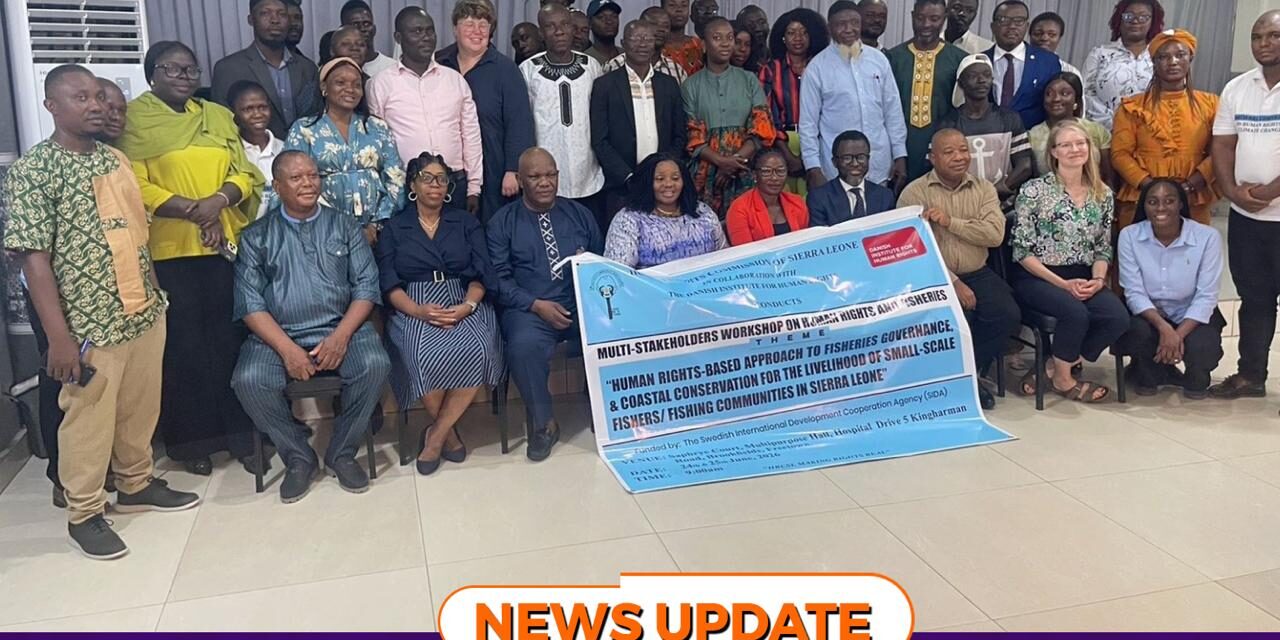
Speaking at a Multi-Stakeholder Workshop on Human Rights and Fisheries organized by the Human Rights Commission of Sierra Leone (HRCSL), SLAFU President Thomas O. Turay alleged that the Ministry prioritizes industrial trawler operators over artisanal fishermen, undermining the livelihoods of thousands of families who depend on coastal fishing.
Turay described the situation as discriminatory, stressing that artisanal fishers contribute significantly to food security and local economic development yet remain marginalized. He criticized what he called excessive annual subscription fees, arguing that the charges are unaffordable for many fishermen and threaten their ability to sustain operations. He urged the Ministry to review the fees and adopt measures that support rather than burden small-scale fishing communities.
HRCSL Chairperson Patricia Narsu Ndanema emphasized that fisheries governance must extend beyond economics to include human rights protection. She revealed that the Commission had received complaints from women in the sector about marginalization and bullying, noting that women form a significant proportion of those engaged in fishing-related activities and deserve stronger safeguards.
Mariatu Sam-Kanagutu, Principal Fisheries Officer at MFMR, acknowledged the critical role of small-scale fisheries in food security and employment. She underscored the need for inclusive governance, fair access to resources, and stronger collaboration among government, communities, civil society, and partners to promote responsible fishing and protect marine ecosystems.
She emphasized that strengthening fisheries governance requires active collaboration among government institutions, fishing communities, civil society organizations, and development partners to promote responsible fishing practices, protect marine ecosystems, and ensure that future generations continue to benefit from the country’s marine resources.
The workshop concluded with calls for greater equity, inclusiveness, and sustainability in Sierra Leone’s fisheries sector. Participants stressed the importance of balancing economic development with environmental sustainability and human rights protection, while ensuring that the voices of artisanal fishermen, women, and vulnerable groups are reflected in decision-making processes that affect their livelihoods.