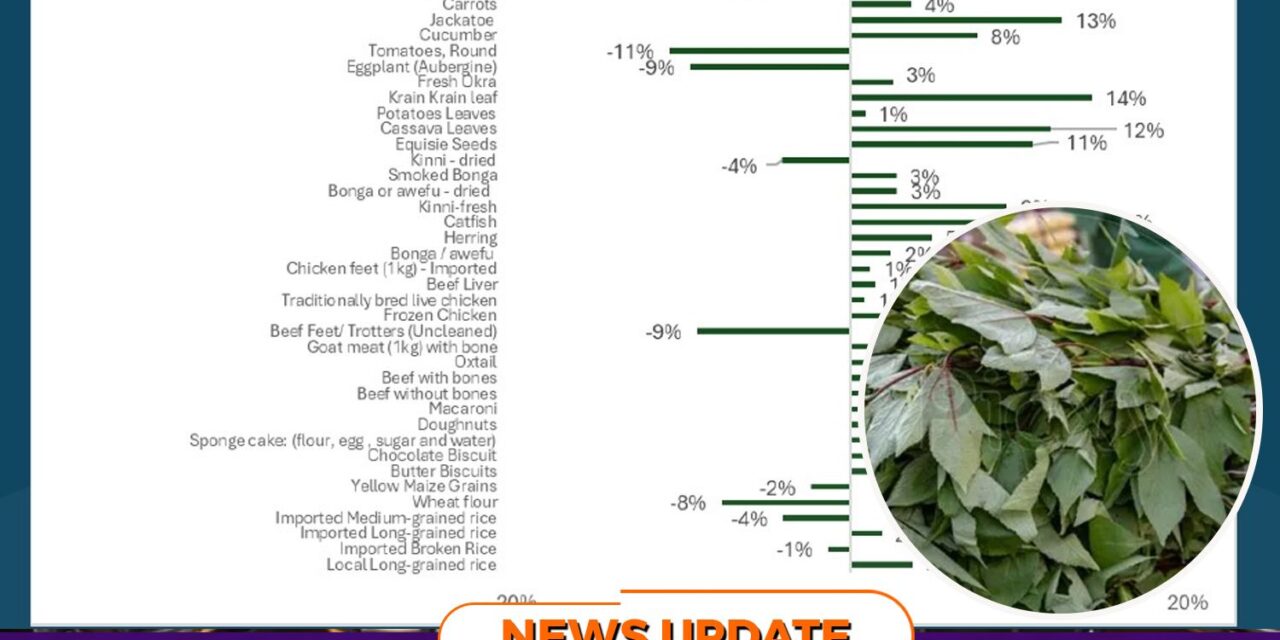
Freetown, 5th October 2026 – Cassava leaves, one of Sierra Leone’s most widely consumed food items, recorded a sharp 12% increase in average prices, data from Statistics Sierra Leone’s recent Consumer Price Index reveals, underscoring mounting cost pressures on a staple that features prominently in household diets across the country.
The increase places cassava leaves among the fastest-rising food commodities, surpassed only by catfish and macaroni, which each rose by 15%, and krain krain leaf and green cabbage, which climbed by 14% and 13% respectively. The rise is significant because cassava leaves remain a daily source of nutrition for thousands of households and are commonly regarded as one of the country’s most affordable local dishes.
The broader vegetable market also experienced notable upward pressure. Jackato increased by 13%, while egusi seeds and garlic each rose by 11%. Leafy green onion recorded a 9% increase, with cucumber rising by 8% and carrots by 4%. The trend suggests growing inflation in fresh produce, potentially raising the cost of preparing common household meals.
Protein-rich foods also became more expensive. Among fish products, catfish registered the highest increase at 15%, while kinni-fresh fish rose by 9% and herring by 5%. In the meat category, beef without bones increased by 10%, goat meat with bones by 9%, and beef with bones by 7%.
Processed food products followed a similar pattern. Macaroni surged by 15%, while chocolate biscuits increased by 6%, butter biscuits by 5%, and doughnuts by 3%. Beverage products recorded more moderate gains, including ovaltine at 5%, while coffee aromatic (ground) and cocoa powder each rose by 2%.
Despite the upward pressure on vegetables and proteins, several staple food items became cheaper. Round tomatoes recorded the largest decline, falling by 11%, while eggplant (aubergine) dropped by 9%. Wheat flour decreased by 8%, offering some relief for consumers and bakeries alike.
Rice prices remained relatively stable, although trends differed by variety. Imported medium-grained rice fell by 4%, imported broken rice declined by 1%, and yellow maize grains dropped by 2%. In contrast, local long-grained rice increased by 4%, indicating stronger price pressure within parts of the domestic grain market.
The latest figures point to a growing challenge for consumers as increases in essential vegetables, particularly cassava leaves, coincide with rising prices for fish and meat products. Because cassava leaves are consumed across both urban and rural communities, the 12% rise is likely to have a broader impact on household food budgets than some of the increases recorded in less commonly consumed items.