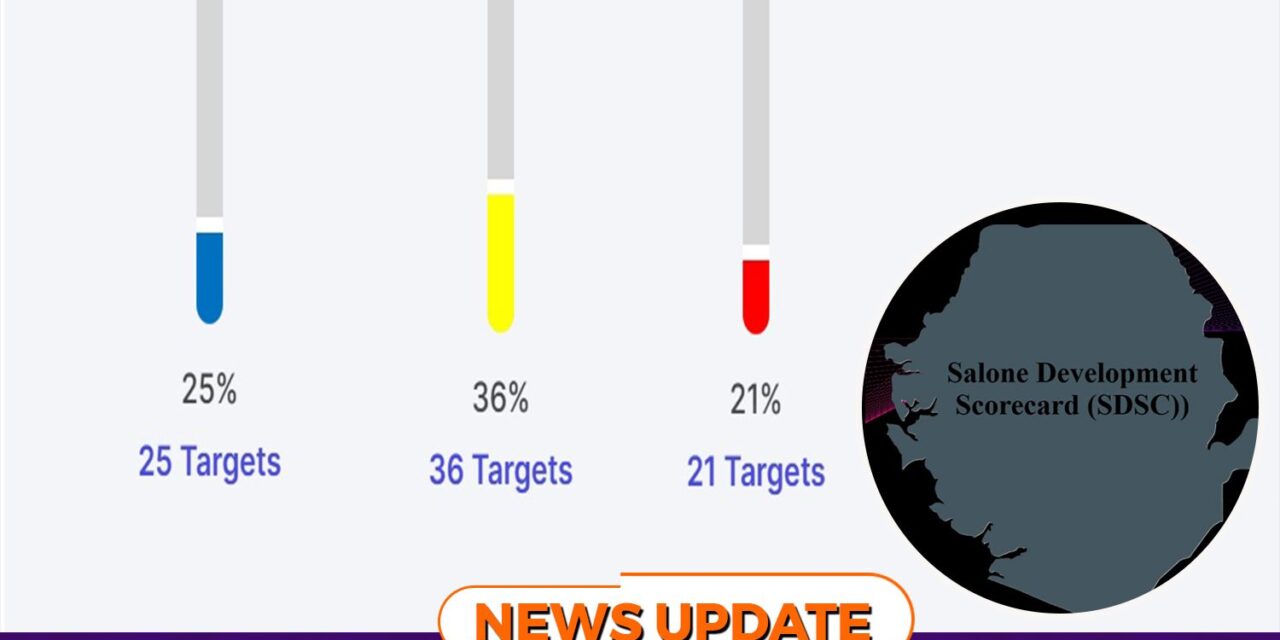
Freetown, 8th June 5, 2026 — The Institute for Governance Reform (IGR) has urged the Government of Sierra Leone to accelerate delivery on key commitments under the Medium‑Term National Development Plan (MTNDP) 2024–2030, warning that 21 out of 100 national targets remain stalled, abandoned, or show no progress.
The call comes after IGR launched the Salone Development Scorecard last week, which tracks progress across government priorities. While acknowledging achievements in several areas, the watchdog expressed concern that after three years of the current administration’s mandate and more than two years into MTNDP implementation, critical targets are lagging.
The stalled targets span critical sectors of national life. In youth development, the government has yet to make meaningful progress in reducing drug abuse among young people by 2030. In mining and natural resources, environmental rehabilitation of five mined sites by 2028 has not begun, nor has the effort to raise domestic mining revenue from six percent in 2022 to ten percent by 2030. Public service reform is also lagging, with the promised migration of workers from paper-based to digital platforms, the uploading of job adverts on a single portal, and the digitization of reporting formats all due by 2026 but still incomplete.
Women’s empowerment and gender mainstreaming targets remain pressing, with commitments to reduce adolescent pregnancy to ten percent and cut physical and sexual assault cases to 1,000 annually showing no progress. Trade and industrial development goals, including raising manufacturing to 25 percent of GDP by 2028 and expanding output and export value, are similarly stalled. Social welfare and protection measures for persons with disabilities, as well as efforts to reduce child abuse and neglect compared to 2023 levels, have yet to materialize.
Security and governance reforms are also behind schedule. The modernization of the Republic of Sierra Leone Armed Forces by 2030 and the reduction of crime rates by 25 percent from the 2022 caseload of 27,018 remain unaddressed. In information and communications technology, the establishment of a Smart City in Bo District by 2028 has not advanced. Economic and financial management reforms, including the creation of a sovereign wealth fund to manage natural resource revenues by 2028, are still pending.
Environmental and climate change targets, such as improving the country’s vulnerability ranking by 2030, have not been met, while foreign affairs reforms to digitize 60 percent of ministry operations remain incomplete. Education reforms to embed technical and vocational training in curricula by 2030, and peace and national cohesion efforts to strengthen democratic practices and tolerance among political parties, are also stalled.
IGR emphasized that the government must expedite delivery on these commitments to ensure the MTNDP remains credible and impactful. The institution notes that the targets are not just policy aspirations but benchmarks for accountability, economic growth, and social stability.