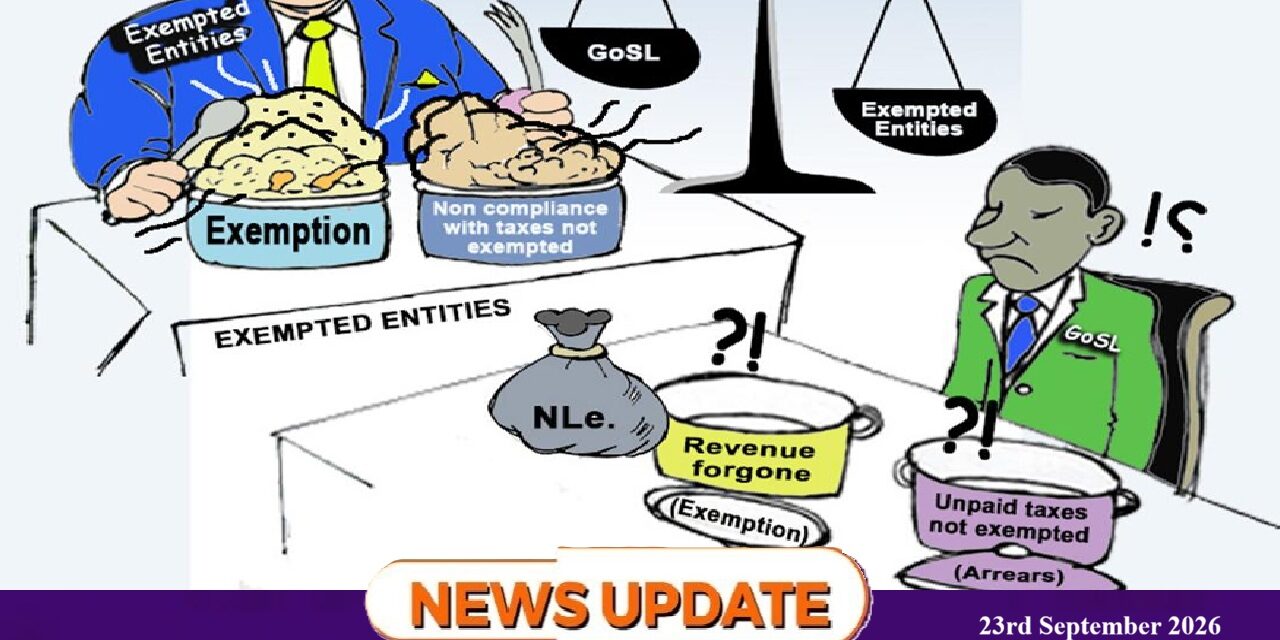
Freetown, 23rd September, 2026 – Sierra Leone’s tax exemption regime is under scrutiny after new evidence reveals billions in foregone revenue, weak compliance among beneficiaries, and mounting arrears in key industries.
A study by the Budget Advocacy Network (BAN) shows that industry‑sector exemptions ballooned from NLe 177 million in 2018 to more than NLe 3.5 billion in 2023, accounting for over 60% of total recorded revenue losses.
Yet compliance remains poor: in 2024, exempt entities paid only NLe 306 million of NLe 554 million due, leaving NLe 248 million in arrears. Electricity and water companies performed worst, paying just 6% of liabilities.
The International Monetary Fund’s Governance and Corruption Diagnostic (2025) echoes these concerns, warning that discretionary concessions negotiated outside transparent rules create governance risks and undermine fiscal performance. The IMF welcomed reforms in the 2025 Finance Act, which eliminated corporate income tax and withholding tax exemptions for new investments, calling it “a move in the right direction.”
Industry dominance: Mining contributed 82% of industrial revenue between 2021–2023, while manufacturing and construction delivered little despite receiving incentives.
Compliance gaps: Filing rates among exempt entities stood at 55% for corporate income tax and 60% for GST, with misconceptions about filing obligations worsening compliance.
Governance risks: Discretionary exemptions, weak monitoring, and incomplete reporting create opportunities for abuse.
Both BAN and the IMF recommend a rules‑based, transparent framework for tax expenditures. Proposed measures include:
Annual Tax Expenditure Report covering all exemptions, waivers, credits, and preferential rates. Public Tax Exemption Register updated quarterly with beneficiary names, legal basis, and fiscal cost. Compliance pre‑conditions requiring entities to clear arrears before receiving new waivers. Performance‑based incentives tied to measurable outcomes such as jobs, exports, and technology transfer and Sunset clauses mandating expiry and cost‑benefit reviews before renewal.
Sierra Leone does not face a choice between investment promotion and revenue mobilisation. The challenge is designing incentives that deliver genuine development benefits without eroding the tax base. As BAN notes, “few exemptions are tied to measurable benefits such as jobs, exports, or technology transfer.”
With arrears mounting and fiscal space tightening, policymakers are being urged to consolidate reforms and ensure every exemption is visible, justified, measurable, time‑bound, and conditional on compliance.