By Kelfala Kargbo
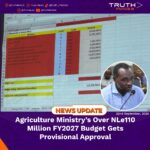
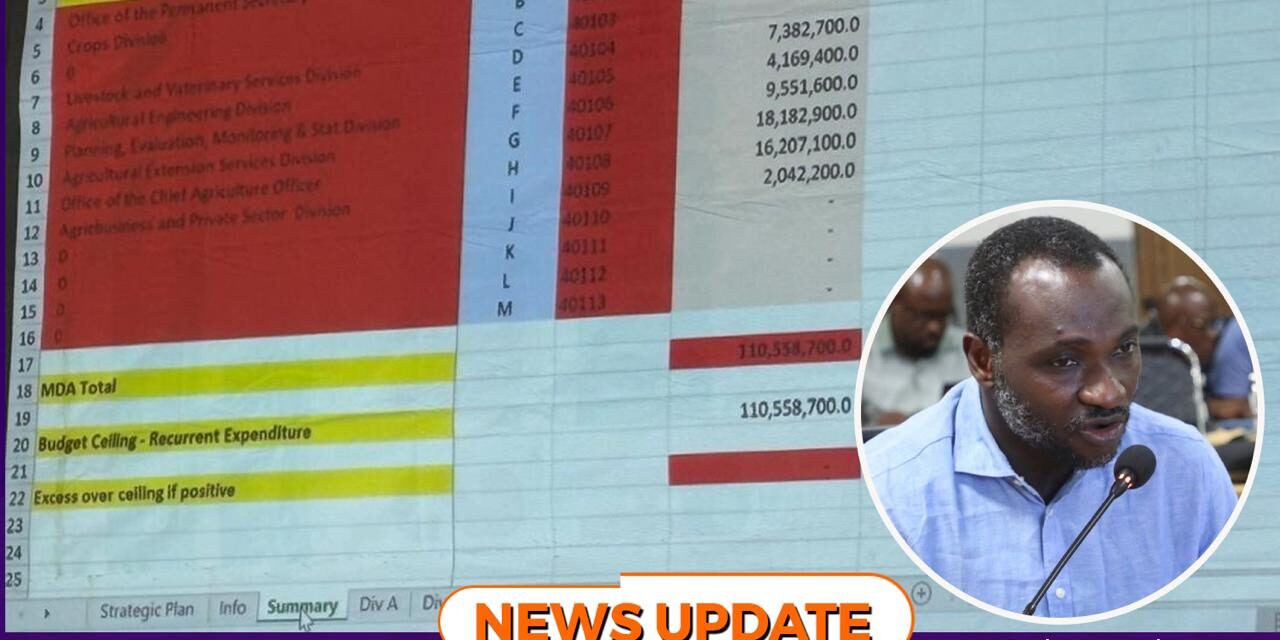
Freetown, 22nd September, 2026 – Sierra Leone’s Ministry of Finance has provisionally approved a budget submission of NLe110,558,700 from the Ministry of Agriculture and Food Security for the 2027 financial year, signalling continued government backing for the flagship Feed Salone program.
The approval follows a formal presentation by the Agriculture Ministry, which highlighted both past funding shortfalls and notable achievements. Chief Agriculture Officer, Professor Abdulai Jalloh, disclosed that in 2025 the ministry received only 33 percent of its recurrent allocation, NLe31.5 million out of NLe95.3 million and just 3.7 percent of its development budget. Despite this, he noted progress in rice production, with output rising by 4.21 percent in 2025, pushing Sierra Leone to 73 percent rice self-sufficiency, among the highest levels in West Africa.
On revenue generation, the ministry reported NLe527,850 in 2025, a decline to NLe297,904 in 2026, but projects a rebound to NLe380,000 in 2027.
Agriculture Minister Dr. Henry Kpaka outlined infrastructure and policy achievements, including the completion of 695 km of farm tracks and feeder roads, construction of three bridges in Bonthe, Kenema, and Kailahun, and near-completion of modern rice milling facilities in Tormabum.
Looking ahead, Dr. Kpaka said the FY2027 budget will prioritize: Boosting rice production to achieve full self-sufficiency, supporting farmers with finance through the establishment of a Development Bank and reviewing the Feed Salone program to strengthen its impact as a flagship initiative.
“Feed Salone as a flagship program will break its ceiling as it will be reviewed,” Dr. Kpaka told National Budget Director Tasima Jah.
Officials confirmed that the Agriculture Ministry will make a few minor adjustments to its budget proposal before presenting it again to the Ministry of Finance for final approval.
The provisional approval underscores the government’s intent to balance fiscal discipline with investment in agriculture, a sector central to food security, rural livelihoods, and Sierra Leone’s broader economic stability.