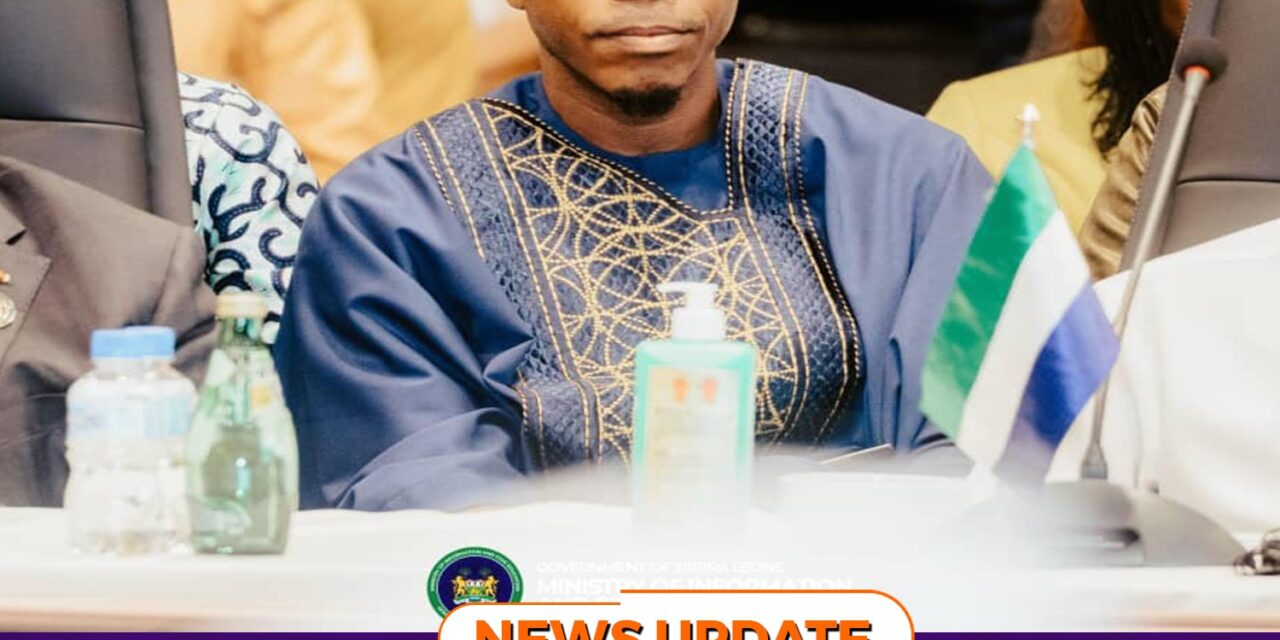
By Davida Spaine-Solomon
Freetown, 22nd July 22, 2026 – Sierra Leone’s government says the country has already begun reaping economic dividends from hosting the 69th Ordinary Session of the ECOWAS Mid-Year Summit, with more than 1,200 Sierra Leoneans employed during the six-month preparation period and a total workforce surpassing 2,000 across hospitality, catering, transport, logistics, and support services.
The figures, announced by Chief Minister Dr. David Moinina Sengeh, come amid public debate over the cost of hosting the summit and the construction of new facilities in Lungi, including the Julius Maada Bio International Conference Centre, presidential villas, and expanded hospitality infrastructure.
Officials argue that the investments extend beyond a single diplomatic gathering, positioning Sierra Leone as a future hub for tourism, business travel, and regional conferences.
Minister of Planning and Economic Development Kenyeh Barlay emphasized that hosting ECOWAS aligns with the bloc’s vision of regional integration and trade expansion. She noted that Sierra Leone deliberately prioritized local hotels and service providers, ensuring direct benefits for citizens and businesses in Lungi, Aberdeen, and Freetown.
“When any country holds an event, citizens benefit economically. Businesses will thrive in Lungi, Aberdeen and town,” Barlay said.
Foreign Minister Alhaji Timothy Musa Kabba highlighted the commissioning of the ECOWAS Regional Logistics Depot in Lungi as a landmark achievement. First proposed in 2005, the facility was realized during Sierra Leone’s chairmanship of ECOWAS, cementing the country’s role in regional supply chains.
“The decision was taken in 2005 in Accra, Ghana, to create a regional logistics hub. It is during our President’s chairmanship, 20 years in the making, that we are actually commissioning it on Sierra Leonean soil,” Kabba said.
The summit also advanced key regional initiatives with potential financial impact for Sierra Leone: ECOWAS single currency rollout by 2027, aimed at deepening trade and integration. Cooperation on the proposed African Atlantic Gas Pipeline, strengthening Sierra Leone’s role in West Africa’s evolving energy landscape.
Government officials maintain that the new infrastructure in Lungi positions the area as an emerging conference destination, capable of attracting investment in hospitality, real estate, and commercial services.
Reflecting on the summit’s outcome, Dr. Sengeh said: “Six months ago, we set out a goal. We said that together we would deliver and together, we delivered.”
While debate over the overall cost of hosting continues, the administration insists the event has already delivered measurable gains through employment, support for local businesses, and long-term infrastructure investments.