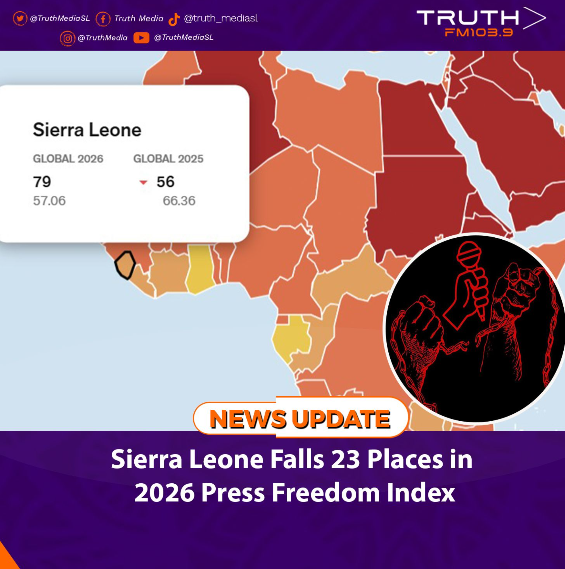
Freetown,30th April, 2026 – Sierra Leone has slipped 23 places in the latest Reporters Without Borders (RSF) Press Freedom Index, underscoring mounting challenges for journalists despite earlier legal reforms.
The country is ranked 79th out of 180 nations in 2026, with a score of 57.06, down from 56th place and a score of 66.36 in 2025. The decline reflects worsening safety conditions for reporters, economic fragility of media outlets, and political pressures that have eroded gains made after the repeal of criminal defamation laws in 2020.
RSF noted that while Sierra Leone’s media landscape remains vibrant, with more than 500 outlets operating nationwide, journalists face increasing harassment, arrests, and intimidation, particularly around elections. The watchdog highlighted the risks posed by new legislation, including the 2025 anti‑terrorism bill, which could impose heavy prison sentences on journalists.
Economic pressures also weigh heavily: most outlets are concentrated in Freetown, poorly resourced, and vulnerable to political influence. RSF warned that low pay and lack of equipment leave journalists exposed to manipulation, while government advertising remains a critical but uneven source of support.
Socially, Sierra Leone’s press remains relatively free to cover issues without ethnic or religious targeting, but disinformation and political propaganda on social media are rising concerns.
The sharpest deterioration came in the security indicator, where Sierra Leone fell from 71st in 2025 to 112th in 2026, reflecting violence and threats against journalists during political events.
Despite these setbacks, RSF acknowledged progress in legal frameworks, with the Independent Media Commission (IMC) continuing to regulate the sector free of direct government control.
The overall message indicates that Sierra Leone’s press freedom, once hailed as a regional success story, is now under strain. As RSF put it, the country’s ranking shows that “legal reforms alone are not enough without stronger protections, independent financing, and guarantees of journalist safety.”