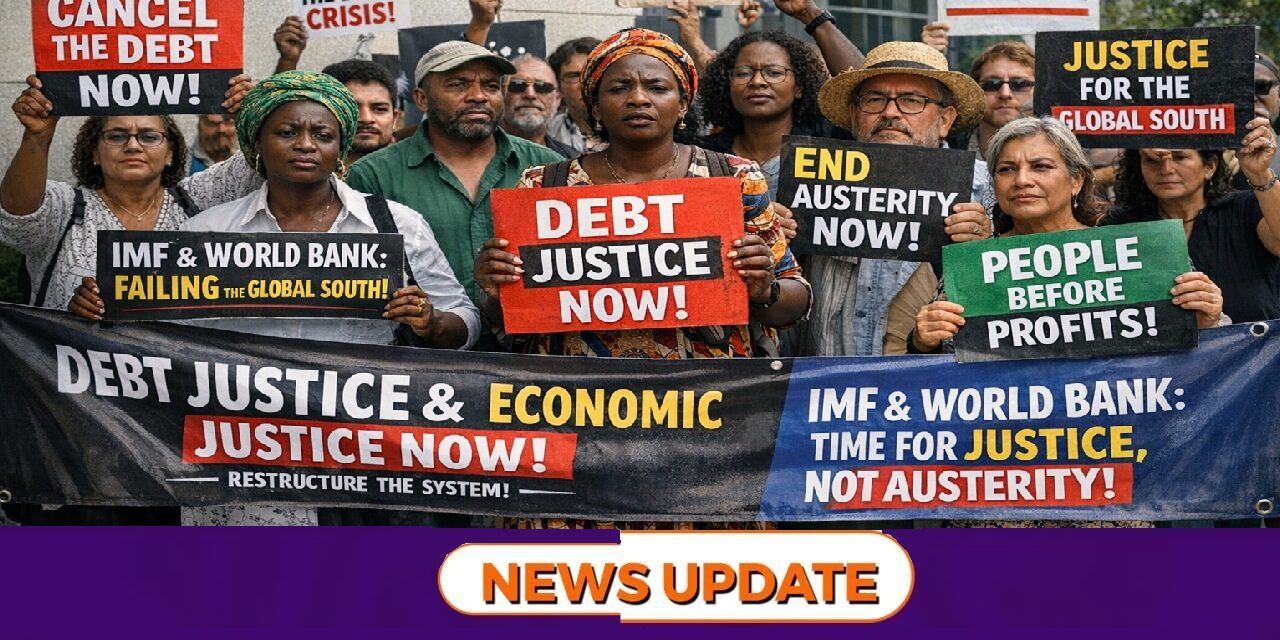
Washington, 30th April 2026 — Civil society organisations from Africa and Latin America have sharply criticised the limited outcomes of the 2026 IMF and World Bank Spring Meetings, warning that the institutions failed to deliver transformative solutions to the mounting debt and development challenges facing the Global South.
The meetings, held in Washington DC in mid‑April, took place against a backdrop of global instability, including the Middle East conflict that has driven up energy and food prices. Analysts described the situation as a “perfect storm” of overlapping crises, rising fuel costs, food insecurity, trade disruptions, and prohibitively expensive debt servicing.
Daniela Berdeja of Latindadd argued that the IMF and World Bank continue to treat these shocks as temporary, rather than systemic. “Every additional dollar spent on debt servicing means one less dollar for healthcare, education, or climate adaptation,” she said, stressing that austerity frameworks are deepening fiscal crises instead of resolving them.
Civil society leaders noted that the Spring Meetings largely reinforced existing instruments, more loans, adjustments to facilities, and reliance on the G20 Common Framework rather than offering bold reforms. Critics warned that debt sustainability is still measured by repayment capacity, not by human development or climate resilience.
Grace Namugambe of FEMNET highlighted the gendered impact of austerity, particularly the IMF’s push to replace broad subsidies with targeted cash transfers. “Removing subsidies is not feasible in the current climate crisis. Women bear the brunt of rising food and fuel costs, which erode incomes and increase unpaid care burdens,” she said.
Diana Mochoge of AFRODAD pointed to one positive development: the launch of a Borrowers’ Platform by UNCTAD, designed to amplify the collective voice of debtor nations. She called for “automatic debt suspension” during crises and reforms to credit rating agencies, noting that biased ratings lock African countries out of markets and inflate borrowing costs.
Civil society groups outlined urgent priorities, including Significant debt relief and cancellation rather than marginal measures. A UN Framework Convention on Sovereign Debt, as proposed by African states and small island nations. Equitable issuance and reallocation of Special Drawing Rights (SDRs) and progressive domestic resource mobilisation to curb tax evasion and illicit financial flows.
Stefano Prato of the Society for International Development went further, suggesting the IMF and World Bank primarily serve geopolitical interests and are unlikely to deliver genuine solutions for Africa.